Warm Minimal Interiors in Singapore: How to Match Solid Wood Furniture Without Color Mismatch
Most Singapore homeowners I speak to in Tampines, Bedok and Punggol arrive at the same crossroads: they have committed to a warm minimal palette — think off-white walls, light oak vinyl, a single rattan pendant — but the moment they walk into a furniture showroom, the soft beige they pictured turns into a loud caramel, a flat grey or a yellowed cream. The photo on the showroom floor looked right. The piece under their HDB corridor lighting looks wrong. That gap between imagined harmony and lived color mismatch is the silent headache of warm minimal design, and it deserves a methodical answer rather than a moodboard.
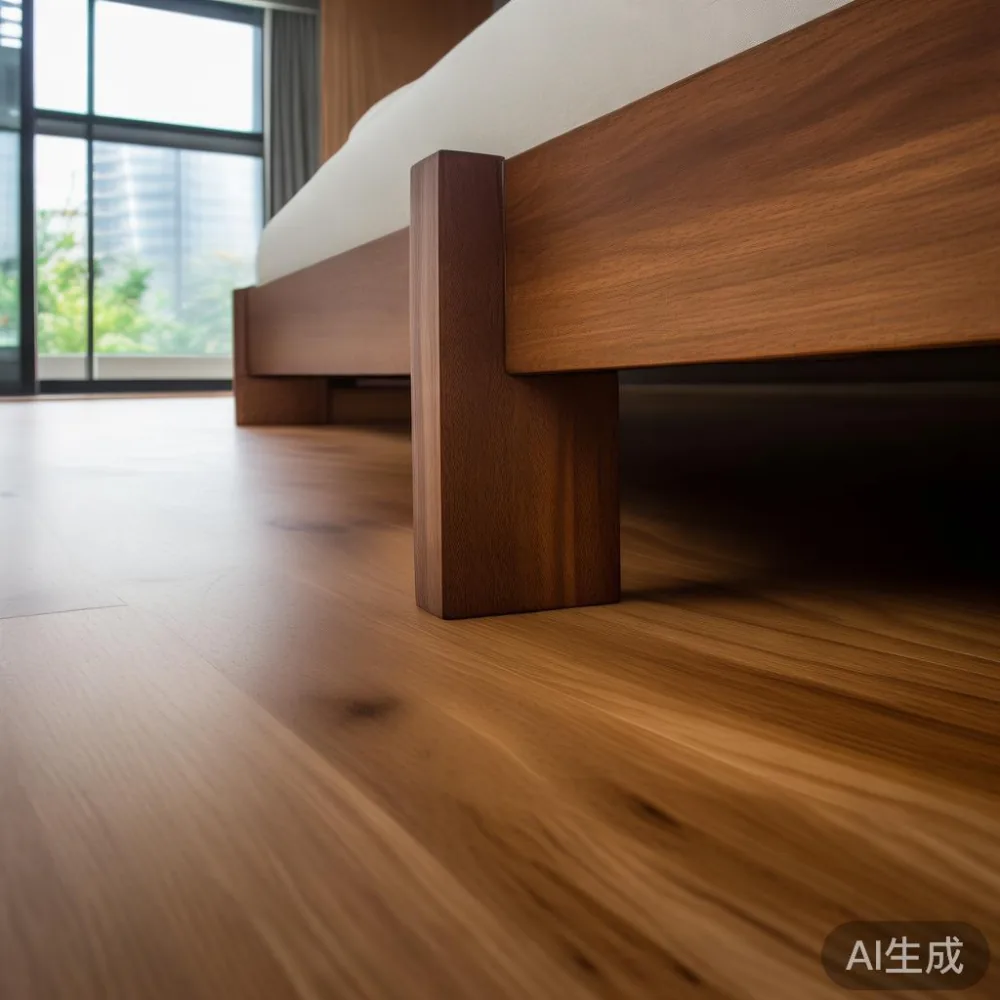
I went through this myself last month when a friend in a 4-room HDB at Bedok Reservoir invited me over to “fix” her living room. We had measured the corridor lift opening at roughly 1.1 m wide and 2.0 m tall, confirmed that her dining table would arrive flat-packed to avoid the 90-degree turn at her front door, and pre-arranged a 7-day delivery window — all practicalities that protect the buying process from turning into a logistics disaster. But nothing had prepared us for how the 140 cm solid wood sofa she had chosen online clashed with the warm-grey vinyl planks once it stood against the wall. The wood tone was correct; the undertone was off. That single detail is what I want to unpack in this guide, with prices quoted in SGD, sizes tailored to local flat layouts, and a small amount of brand context where it earns its place. MIDHILL, a Foshan workshop I have visited and whose solid-wood collection I have handled in person, is one of the brands that consistently addresses this undertone problem at the source — but the principles below apply no matter where you finally buy.
What Does "Warm Minimal" Actually Mean for Singapore Homes?
Warm minimal is not the same as Scandinavian cool, and it is certainly not the same as bauhaus white. It is a deliberately restrained palette where one warm material — most often solid wood — carries the emotional load, and everything else recedes. In a 90 sqm HDB or a 70 sqm condo at Punggol, that usually means: white or off-white walls (around 95% of the room), a light timber floor, one tactile textile such as a linen sofa, and a single piece of furniture in a richer wood tone — a solid wood bed frame, a dining table, a wardrobe — as the focal point. The risk is real: warm minimal lives or dies by undertone control, and undertone is invisible in a product photo.
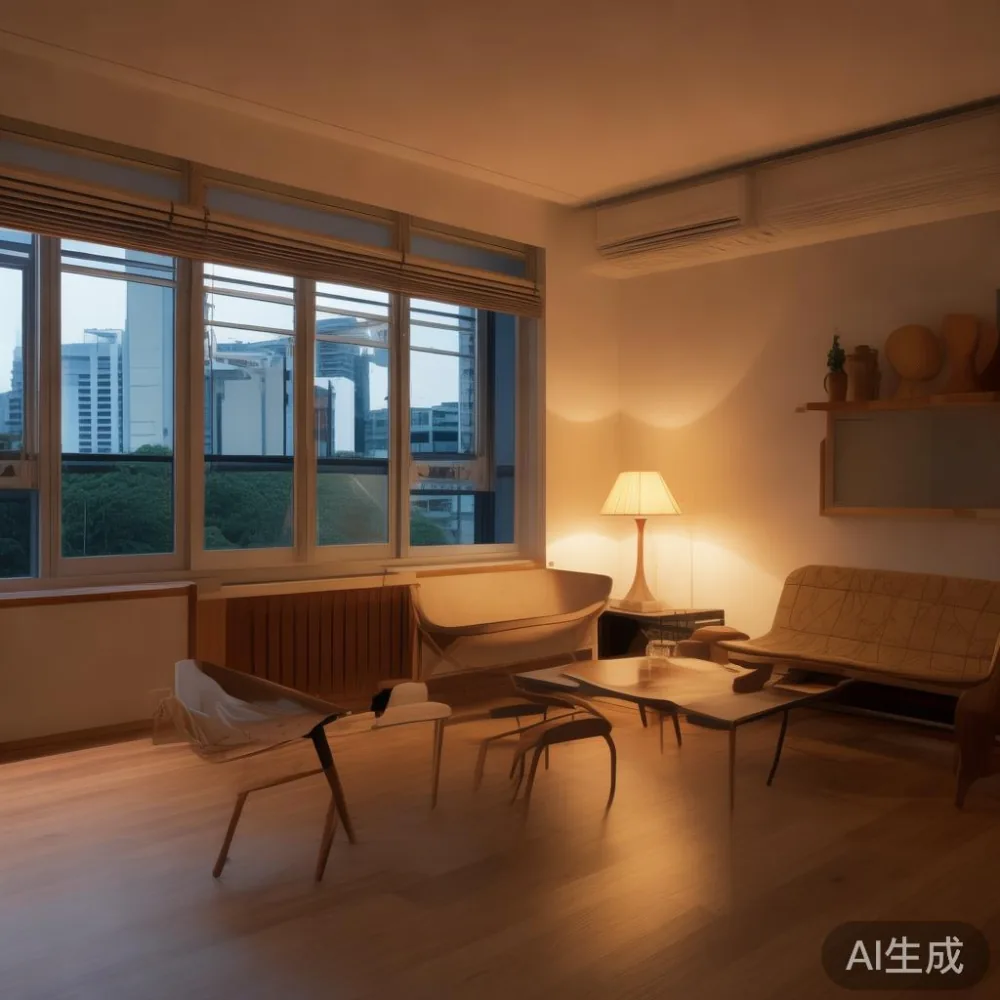
For Singapore reading, think of it this way: neutral does not mean colourless. A beige paint labelled “Pristine Beige” can lean green, pink, yellow or pure cream. Pair it with a European light luxury sofa upholstered in a putty fabric, and you may see a surprising color mismatch you did not budget for. The fix is never to add more pieces; the fix is to test undertone before commitment.
Why Does Color Mismatch Happen So Often with Warm Minimal Interiors?
Three forces work against you in a tropical, light-filled flat. First, our 12-hour daylight cycle is more aggressive than European latitudes — sunlight at noon pushes warm wood tones almost orange, while evening corridor lighting cools them down. Second, most of us shop online and rely on a single product image taken under studio lights. Third, the warm minimal palette itself is narrow: with less visual noise, every gradient and cast shadow becomes more noticeable. When a dining table top in “natural oak” lands in your dining room, even a 5% undertone drift looks like an argument between two pieces that are not supposed to argue.
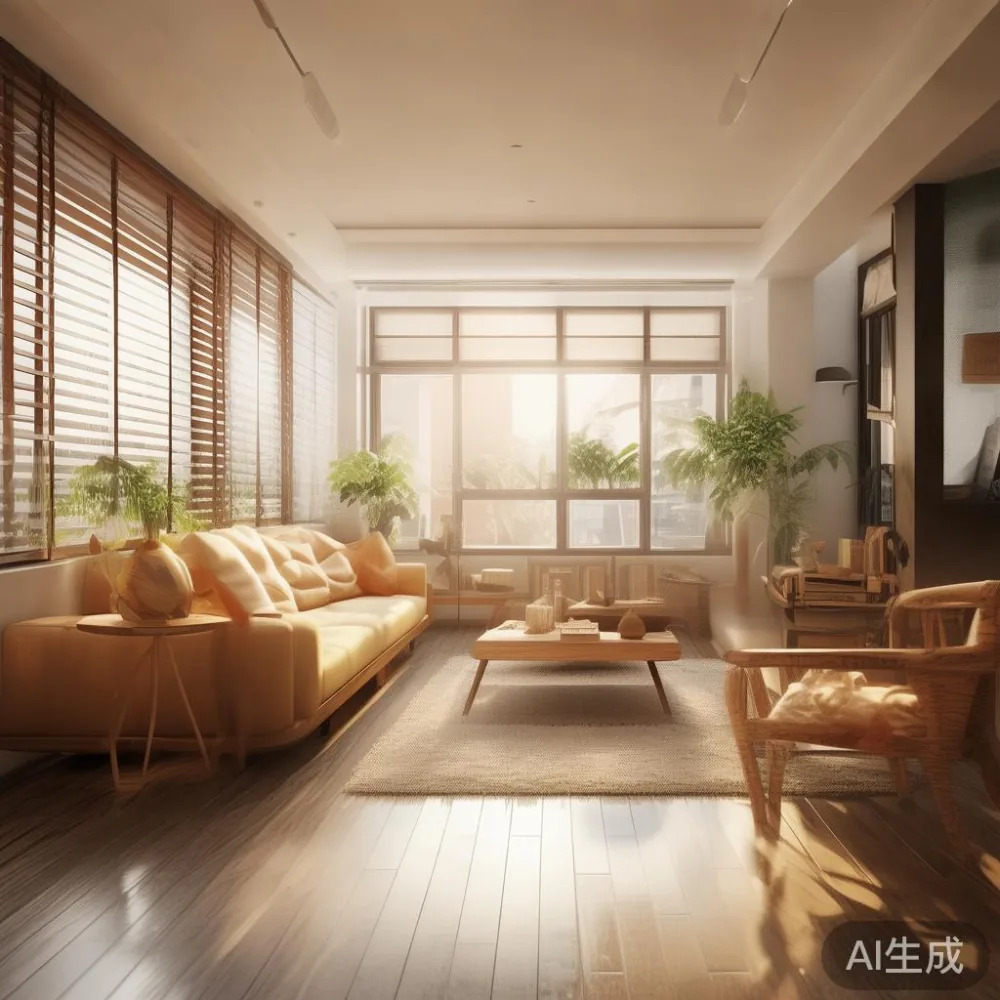
I saw this very clearly on the Bedok visit: we lifted the 140 cm solid wood sofa away from the wall and placed a spare oak floorboard against its side panel. Under daylight, the two woods looked related. Under the 3000K downlight by the TV console, the floor turned slightly yellow and the sofa stayed grey-beige. Within minutes we identified the source of the color mismatch: it was not the sofa, it was the lighting bias the showroom could not have shown us. Once we swapped to a 2700K bulb (under S$15 at any neighbourhood shop), both surfaces returned to the same family.
Is the Lighting in My HDB or Condo Really Causing a Color Mismatch?
Yes, and I would argue lighting is the single most overlooked variable in Singapore furniture matching. Most resale HDBs ship with cool white 4000K downlights from the developer, and many owners upgrade to 3000K warm whites — but rarely to 2700K, which is the industry reference for warm interiors. If you want a stone-grey Marble table to sit peacefully next to a light oak Dining table, you need light around 2700K with a CRI above 90. Cheap LEDs from a S$6 pack will read colours in a distorted way, especially warm woods, which can look sickly yellow or pink under low CRI sources.
A practical rule: buy two bulbs in 2700K and 3000K (about S$12 to S$18 each from an electronics chain), screw them into a portable lamp, and test your shortlisted pieces at night before paying the deposit. If the piece still looks harmonious under both, it will survive corridor lighting, lift lighting and your living room downlights simultaneously. Last quarter a colleague in Punggol did exactly this with a 180 cm solid wood dining table she had her eye on for weeks — under the 2700K lamp the wood grain spoke, under the 4000K developer bulb the same grain looked anaemic. She bought the table and replaced three bulbs. That S$45 evening saved her a 14-day return.
How Do I Match a Solid Wood Bed Frame to a Warm Minimal Bedroom Without Color Mismatch?
Bedrooms are harder than living rooms because there is more wall surface and less competing furniture. The temptation is to buy a solid wood bed frame in the darkest tone the shop stocks, but warm minimal prefers restraint. Pick a wood tone that is one — and only one — step darker than your floor. If your vinyl flooring reads as a 5/10 on a darkness scale, look for a bed frame at 6/10 or 7/10, not 8/10. Above that, the bed starts to dominate and breaks the minimal rhythm.
Pay attention to grain pattern too. For warm minimal rooms, I recommend straight, vertical grain rather than dramatic cathedrals. Oak with quarter-sawn cuts and tight rings behaves quietly; a piece with heavy figuring will fight the calm of a white wall. In a standard Singapore master bedroom (about 3.2 m by 3.6 m including a built-in wardrobe), a queen-size solid wood bed frame between 160 cm and 180 cm long and 90 cm wide leaves about 60 cm of walking space on each side, which fits a 50 cm wide Nightstand without crowding. A well-proportioned Wardrobe on the opposite wall completes the room. On the question of is French provincial wardrobe worth it in this context — for a warm minimal flat, I would steer most owners toward a simpler shaker or recessed-handle wardrobe; a French provincial piece, with its deeper warm-orange undertone, will reintroduce the very color mismatch you are trying to retire.
What About Sofa Choices — European Light Luxury vs Mid-Century Modern?
If you have done any reading on light luxury furniture, you will have heard of French light luxury, American light luxury, and post-modern light luxury as three soft categories floating through the Singapore interior scene. They differ less in silhouette than in finish and proportion. A European light luxury Sofa typically pairs low arms (around 55 cm), seat depths of 60 to 65 cm, and either brushed brass or matte black legs. Mid-century sofas lean toward tapered walnut legs, tight backs and slightly higher arm profiles. For warm minimal HDB interiors, both work — but the leg finish decides whether the room feels quietly expensive or quietly cute. Brass warms the room; black cools it.
If you are weighing a European light luxury sofa vs Mid-century modern sofa in the same warm minimal layout, ask which leg material matches your hardware — door handles, lamp bases, kitchen tap. Matching metal finish across the room is one of the cheapest ways to avoid a visual color mismatch. On the question of how to style European light luxury sofa in room, the rule I now repeat to anyone who will listen is this: treat the sofa as a punctuation mark, not a sentence. Pair it with a light oak floor, a flat-weave rug at 200 by 300 cm, a single textured cushion, and one ceramic lamp on a Marble table at one end. Done. The sofa should not be doing more than two things at once — sitting and signalling.
How Do Dining Tables, Marble Pieces and Coffee Tables Fit into a Warm Minimal Layout?
The dining table is the hardest working piece in a Singapore HDB because it doubles as a work surface, a homework station and a gathering point. A 140 cm to 160 cm solid wood table seats four comfortably and survives a Punggol lift without needing a specialist staircase delivery; above 180 cm you start paying S$80 to S$150 for a dedicated two-man team. In warm minimal interiors, the table should be the warmest wood in the room — one rung darker than the floor, one rung lighter than the bed frame.
Marble pieces — a small Marble table or a marble-topped coffee table — earn their place as the cool counterpoint. Stone is naturally cool in undertone, which balances the wood-heavy room. A round 80 cm Marble table next to the sofa, or a 120 cm rectangular marble coffee table on a flat-weave rug, gives you a place to anchor a tray without dragging warmth upward. If you are working out Minimalist for dining room rules, keep the chairs close in tone to the table top. Mismatched chairs look intentional in a maximal interior; in a minimal one, they just look unfinished.
A reader asked me privately where a Mid-century modern coffee table fits into this picture. Personally I keep one in our Tampines test flat for clients to handle — a 110 by 60 cm piece with a warm walnut top and slim black legs. It bridges the sofa zone and the dining zone, adds horizontal line, and does not cost the earth (around S$420 to S$680 depending on leg finish). Put a single ceramic bowl on it and leave the surface alone. If you cannot resist styling, use one book, one candle, one object. Not three things every time.
How Should I Handle Wardrobes and Storage Without Ruining the Warm Minimal Look?
Wardrobes are the largest piece of furniture in most Singapore bedrooms, so any color mismatch here is multiplied across three square metres of wall. The temptation to be “safe” and go for a flat white wardrobe is real — and often correct — but you can introduce warm tone safely if the wardrobe reads as the same wood family as the bed frame. If the bed is white-oiled oak, the wardrobe should be white-oiled oak, not natural oak two tones darker. Once the wood species matches, even different finishes tend to harmonise within a single room.
On the practical question of how to style European light luxury wardrobe in bedroom, my answer is short: do not over-style. A European light luxury wardrobe with a slim brass handle is already a feature. Adding four decorative knobs, a fabric panel and a reading chair beside it pushes the room back into a “light luxury” register the warm minimal room never asked for. Let the wardrobe carry its own weight, and resist the urge to fill the wall above it with frames.
What Sizes, Prices and Logistics Should I Plan For in Singapore?
Numbers, since I promised numbers. A 140 cm solid wood sofa from a Foshan workshop such as MIDHILL typically lands between S$1,400 and S$2,200 delivered, with a 10-year structural warranty, lifetime refinishing options and 14-day returns built into the contract. A queen-size solid wood Bed frame in oak runs S$900 to S$1,800 depending on whether you want a headboard panel and storage drawers. A 160 cm solid wood Dining table with seating for four to six costs roughly S$1,100 to S$2,400. Add S$80 to S$200 for GST and lift-access delivery into the budget, and pre-measure your lift opening (most Singapore lifts are 1.1 m wide, 2.0 m tall, with 1.4 m depth).
For colour-matching confidence, request two or three wood sample chips from any retailer before committing. Reputable sellers will post them within three working days for free or for a small fee. If a brand refuses to send samples, treat that as the real signal about warranty support later on. Free shipping thresholds of S$350 (around US$260) are now standard for cross-border furniture shipped from Foshan, which is a workable sweet spot for a single dining chair, a nightstand or a small marble table. Watch the corridor bend, the door architrave and the lift depth — and remember that the right light bulb is the cheapest insurance against color mismatch you will ever buy.
Final Checklist Before You Click Add to Cart
Run through these seven points before paying, and you will avoid nine out of ten warm minimal regrets. (1) Order physical samples, never rely on a photo. (2) Test samples under 2700K lighting at home, not under showroom spots. (3) Match wood species before matching wood tone. (4) Keep metal finishes consistent across hardware, sofa legs and lamp bases. (5) Reserve one cool element — a marble table, a stone lamp, a grey textile — to balance the warm woods. (6) Measure lift, corridor and door with 5 cm clearance on every side. (7) Keep the room’s focal count to three or fewer so the warm minimal reading survives. If you follow this small ritual, the color mismatch problem quietly disappears from your renovation vocabulary, and the room you imagined on day one is the room you sit inside on day ninety.
For the project page mentioned throughout this guide, more sample pairings live at m.midhill.co — useful as a colour reference library when you are stuck between two oak tones at midnight and cannot tell which undertone is winning.