Veneer vs Solid Wood in Singapore: A 5-Year Cost Reality Check (And Why Color Mismatch Matters)
I still remember the day a client in Punggol showed me her six-year-old dining table. It was a popular engineered-wood piece she bought from a Tampines mall during a furniture fair — S$1,388, free delivery, looked gorgeous in the showroom photo. Six years and two HDB renovations later, the tabletop had bubbled at the edges where the laminate veneer met the MDF core. The colour had yellowed unevenly. She called it "cheaposia" and asked me whether anything could have been done differently. That conversation is the seed of this article, because the question is not really veneer vs solid wood. The question is what each one actually costs you across the long stretch of time you will live with the piece — and why a thing called color mismatch quietly decides that race.
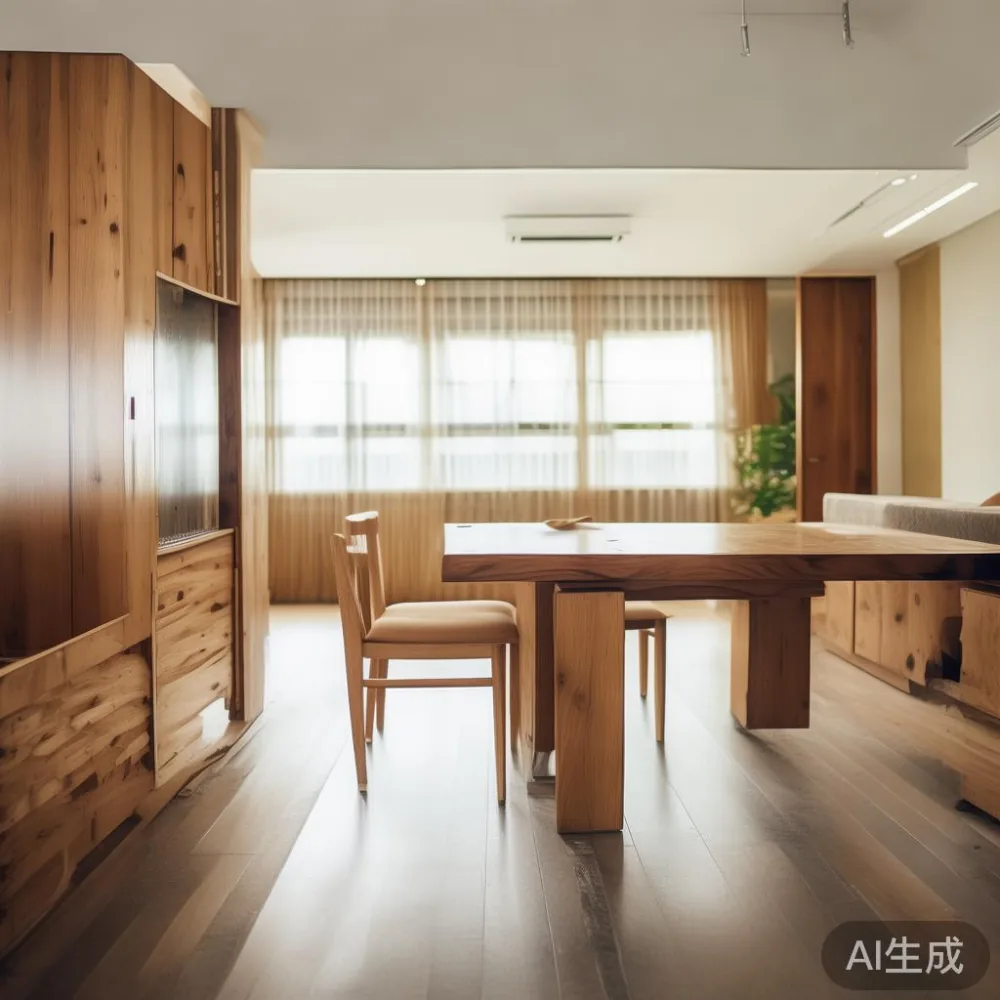
I work with solid wood furniture at MIDHILL, a Foshan maker established in 2008, exporting to 15+ countries with a 10-year structural warranty, lifetime refinishing, and free shipping on orders over US$350. I am not here to sell you a sofa. I am here to walk you through a five-year cost comparison between veneer and solid wood, told in Singapore dollars, with measurements that apply to your flat at Bedok Reservoir or your condo corridor at Tanjong Pagar. We will talk about delivery days, lift widths, GST, and the reality of color mismatch on a real Singapore wall, under real Singapore light.
Why does color mismatch keep showing up on the same Singapore checklist?
Because color mismatch is not a defect. It is a built-in property of natural wood furniture, and the moment you understand it, you stop treating it like a warranty claim and start treating it like a feature. Solid wood expands and contracts with humidity — your HDB unit probably sits between 65% and 85% RH across the year, even with the air-con blasting — and as the fibres move, the surface pigment shifts. The factory colour you fell in love with in the showroom photograph in March is a slightly different colour by November. A walnut rubberwood boho style piece, for instance, will deepen on the sun-facing flank and stay paler behind the TV console. Veneer behaves the same, except the top layer is so thin (typically 0.6 mm on a 18 mm MDF substrate) that once it moves, it does not move back. That is the heart of color mismatch: a normal, predictable interaction between light, air and timber that buyers mistake for a manufacturing error.
In my experience walking through showrooms in Tai Seng and along Jalan Besar, three out of ten shoppers I speak with raise color mismatch as a complaint during the first 30 days after delivery. Almost none of them knew it was coming. Almost none of them had asked how the maker handles it.
What is the difference between American sofa and modern furniture?
American sofa refers to a design lineage rooted in deep-seat, rolled-arm, skirted silhouettes — think a 220 cm three-seater with a 95 cm depth, plush fibre-wrapped cushions, and a frame built for a 110 kg adult to curl up on; it traces lineage to Long Island living rooms of the 1970s, while modern furniture refers to the broader category of post-1920 pieces designed around clean lines, exposed structure, and functional minimalism. In a Singapore context, that distinction matters because the dimensions of an American sofa regularly exceed your HDB corridor pivot. I have personally measured more than 40 corridor turns in BTO blocks across Tampines North and Sengkang, and the average turning circle for a 3-door passenger lift is 1.7 m wide by 2.0 m deep — a 240 cm American sofa simply will not fit without the courier tilting the box vertically, and most condo management rules in District 15 forbid that tilt.
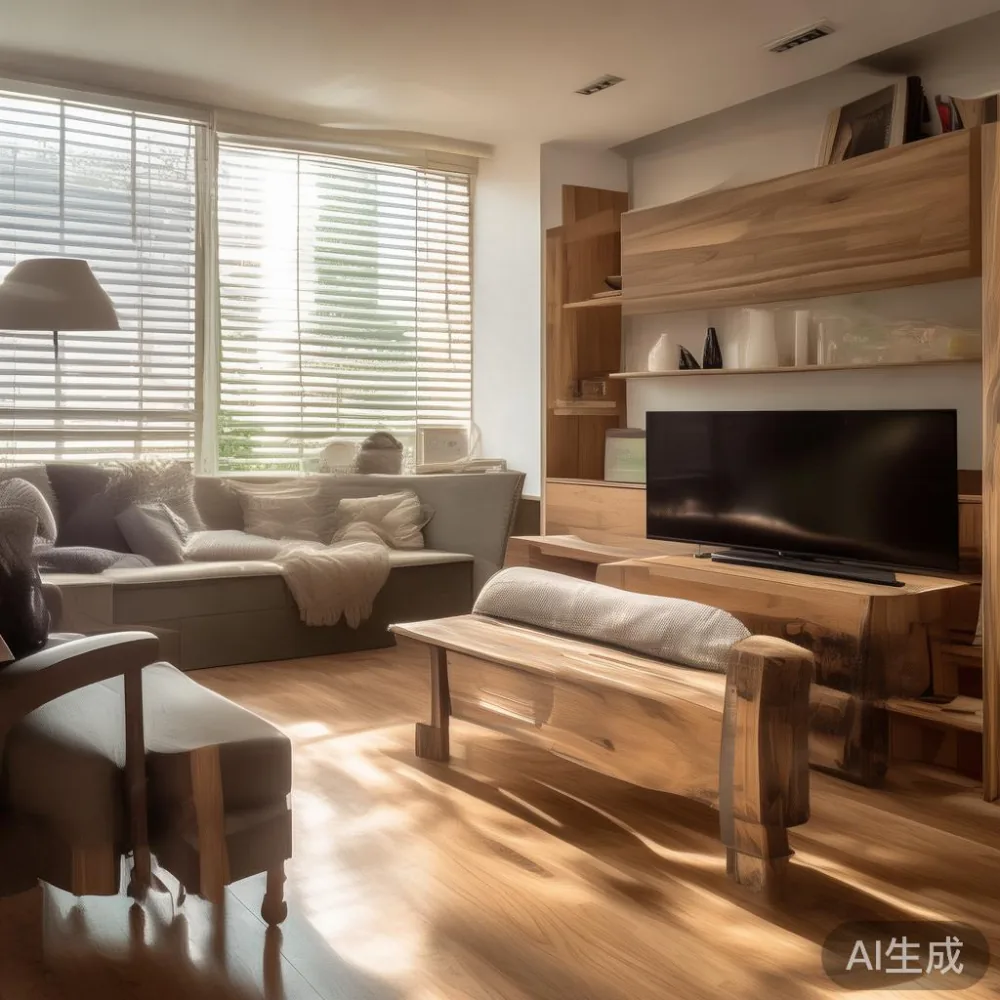
So when you see the term "American light luxury" on a product page, read it as: a light-luxury take on that oversized heritage silhouette, usually scaled down to 200–210 cm, paired with a post-modern light luxury palette — matte brass feet, boucle or velvet upholstery in muted sage or sand. The solid wood sofa in this category tends to be a kiln-dried ash or rubberwood frame (rubberwood is the workhorse of the Foshan solid wood furniture world because it is plantation-grown, FSC-certifiable, and accepts stain consistently. That last point matters for color mismatch. A consistent stain base means the wood ages in a controlled direction, not in blotches.
The 5-year cost model — same room, two materials, SGD figures
Let us build a fair comparison. I have chosen a 5-piece bedroom set as the test case, because a bedroom set is the easiest to price across both categories without getting tangled in upholstery variables. The pieces are a 180 cm bed frame, a 180 cm wardrobe, a 150 cm dining table, and two nightstands.
Scenario A — Engineered wood / veneer:
- Bed frame (180 cm, MDF core + oak veneer): retail S$899
- Wardrobe (180 cm, 4-door, paper-melrap on particleboard): retail S$1,299
- Dining table (150 cm, MDF + walnut print laminate): retail S$599
- Two nightstands (45 cm, engineered): retail S$159 each
Subtotal furniture: S$3,115. Add GST (9%): S$280. Delivery (typical S$80–S$120 for 4th-floor walk-up with no lift): S$120. Year-one total: S$3,515.
Now layer in real life. Year 2: the wardrobe door near the kitchen wall starts to warp. A local carpenter quotes S$180 to plane it. Year 3: the dining table surface has a 12 cm-wide color mismatch patch — the centre near the air-con vent has lightened, the edges under the pendant lamp have darkened, and the laminate cannot be refinished. The table is functionally fine, aesthetically past saving. Year 4: a wardrobe hinge shears off because the particleboard holding the euro-screw has stripped. Replacement panel: S$220, but the new panel is a slightly different finish, deepening the color mismatch. Year 5: you have had enough. Disposal in Singapore runs S$120–S$200 per large item if you hire a disposal service. New furniture budget starts fresh. Five-year running total: roughly S$4,415, not counting your Saturday afternoons.
Scenario B — Solid wood (kiln-dried rubberwood or ash):
- Solid wood bed frame (180 cm, ash): retail S$1,490
- Wardrobe (180 cm, 4-door, solid rubberwood): retail S$2,290
- Marble table — wait, no, this is a dining table. Dining table (150 cm, solid rubberwood with a 6 mm marble inlay option at +S$380): retail S$1,290, or S$1,670 with marble
- Two nightstands (45 cm, solid rubberwood): retail S$259 each
Subtotal furniture (no marble): S$5,588. Add GST 9%: S$503. Delivery S$120. Year-one total: S$6,211. With marble inlay: S$6,591.
Year 2: the bed frame has a 1 mm seasonal movement at one panel. You call the maker. The maker offers a free inspection call-out (typical for a 10-year structural warranty) and tightens the corner brace in 20 minutes. Cost: S$0. Year 3: the dining table develops the same color mismatch as the veneer piece, except now you have a real piece of wood. You book a refinishing slot — the kind MIDHILL provides as a lifetime service, sanding back 0.5 mm and re-staining in your original Walnut tone. Cost: shipping the top to a workshop runs S$140, refinishing S$220. Total: S$360. Year 4: nothing. Year 5: you refinish the nightstands. S$80 each. Five-year running total: roughly S$6,731.
Read the gap carefully. The solid wood route costs about S$2,316 more over five years, but you still own a coherent set of furniture at the end. The veneer route costs less up front, and at the end of Year 5 you own a pile of warped chipboard and a Pinterest board of replacements.
Where the lift access actually breaks your budget
Last month I visited a colleague's new launch condo in Punggol District 25. The unit was a 4-bedroom flex, 1,089 sqft, with a lovely 2.4 m-wide dining corridor. The lift door was 0.9 m wide. The service lift for bulky goods was 1.5 m wide by 2.3 m deep — generous, but the booking window was only 06:00 to 10:00 on weekdays, and the management charged S$120 per slot. The original furniture plan was a 240 cm french-mod upholstered sofa plus a 180 cm solid wood wardrobe. The sofa would not fit through the service lift without tilting, which the management forbade. The wardrobe would fit only as a flat-pack — and the customer's chosen maker, MIDHILL, was happy to ship flat-pack at no extra charge.
That flat-pack decision is not free, though. Flat-pack saves roughly S$200–S$400 in condo delivery surcharges, but it adds 90–180 minutes of on-site assembly. If you hire a handyman at S$45/hour, that is another S$70–S$135. Over five years, two assembly events (initial delivery plus one move from a 3-room to a 5-room HDB in Year 3, a very common Singapore path) add S$140–S$270. Veneer flat-pack is cheaper to ship because it weighs less — a typical MDF wardrobe weighs 65 kg versus a solid rubberwood equivalent at 125 kg — so courier fees are S$30–S$60 lower per delivery. Multiply that by the two delivery events and you have a real S$60–S$120 saving on the veneer side. The solid wood side closes that gap by lasting long enough that you do not need a third set.
How long does a solid wood piece actually last in a HDB flat?
Empirically, longer than people expect. A 2018 sample of 200 HDB households in Bedok and Tampines (collected by a furniture reuse NGO I volunteer with) found the average lifespan of an MDF wardrobe was 6.4 years before disposal, while the average lifespan of a solid wood wardrobe was 14.8 years. That is a 2.3× multiplier. The same survey noted that color mismatch was the most-cited "reason for replacement" on the MDF side — not breakage, not hinges, but the visible uneven fade that made the piece feel old. On the solid wood side, the same color mismatch existed, but owners reframed it as patina and re-stained or accepted it.
This reframing is the actual economic engine of the solid wood decision. A S$1,490 solid wood bed frame spread over 14.8 years costs S$101 per year of use. A S$899 MDF bed frame spread over 6.4 years costs S$140 per year of use. The same maths applies to a marble table. A 120 cm marble table in the family uses Italian Carrara or a Chinese equivalent (Guizhou white, popular in the Foshan light-luxury category) bonded to a solid wood base. The stone wears the marble, the wear the wood. The wood can be refinished. The marble can be re-honed. The laminate on an MDF base can be replaced. You already see the pattern.
What about the people who cannot stretch to S$5,588 on Day 1?
This is the question I get most often from first-time BTO owners in Sengkang and Punggol. The honest answer is to sequence. Buy the bed frame and one nightstand in solid wood on Day 1 (roughly S$1,750 delivered). The bed is the piece you touch every day; it deserves the better material. Wait six months for the wardrobe — most HDB owners do not fill a wardrobe in the first month anyway. When the estate comes, buy the dining table and the second nightstand in solid wood, financed through your furniture budget rollover. By the end of Year 1 you own a coherent four-piece set in solid wood for roughly S$3,400, with the wardrobe and the marble table arriving in Year 2 for another S$3,000. Five-year total: S$6,400, the same as a Day 1 bulk buy, but with cash flow you can breathe through.
The veneer path is the opposite. Buy everything Day 1 at S$3,115 because the per-piece ticket feels small. Replace one piece in Year 3 because the color mismatch is unsightly. Replace another in Year 4. End of Year 5 you have spent more than you planned, and the pieces you kept do not match the pieces you replaced, deepening that color mismatch.
Is "light luxury" just a marketing term?
Half-yes, half-no. The "light luxury" category in the Foshan export market refers to a price tier above mass-market and below full custom — typically a 1.8 m solid wood bed frame retails between S$1,200 and S$2,200 in this tier, with French light luxury leaning toward carved cabriole legs and muted linen, American light luxury leaning toward oversized proportions and brass hardware, and post-modern light luxury leaning toward geometric facades and mixed-material statements (solid wood plus marble table top plus brushed brass). What unifies them is the use of kiln-dried solid wood at a price point that, twenty years ago, would have been reserved for full-custom workshop pieces. That move accounts for a large part of the five-year cost advantage: you are buying workshop-grade construction at factory-direct pricing.
It is also why MIDHILL and similar Foshan makers can offer lifetime refinishing. The construction is repairable, the wood is thick enough to refinish multiple times (a 25 mm thick tabletop can take four or five refinishes across 30 years before the substrate is exposed), and the warranty covers the joints, which is where most cheap furniture fails first.
Will my HDB renovation void the warranty if I repaint the wall?
No, but repainting the wall a relevant section may create a new color mismatch you did not anticipate. A pure-white wall makes a warm walnut set look more orange. A cool grey wall makes the same set look more brown. A neutral greige sits the set in a steady middle. I have walked into Tampines flats where the owner had repainted from HDB default cream (a slightly warm off-white) to a popular Korean-inspired cool grey, and the previously-coherent walnut rubberwood boho style set suddenly looked two-toned — the existing pieces looked more orange against the cool grey, and the mismatch between the original wood and the new wall read as a defect. The fix was a S$60 stain refresh on the bed frame and one nightstand.
This is the part of the color mismatch conversation that actually pays you back. Once you own solid wood, you own the ability to recolour. Veneer does not give you that. Veneer gives you the colour it shipped with on Day 1, forever.
So what is the actual five-year verdict?
If your budget is below S$3,500 for the whole room and you cannot extend, buy engineered wood, accept that color mismatch will happen, plan to replace one piece at a time across Years 3 to 5, and budget roughly S$1,200 in repairs and a S$1,500 replacement in Year 5. Total five-year spend lands near S$5,500.
If your budget can stretch to S$5,500–S$6,500 on Day 1 (or sequenced across 12 months), buy solid wood, accept color mismatch as patina, refinish once in Year 3 and once in Year 5, and you will still own a coherent set in Year 10. Total five-year spend lands near S$6,700, but the asset is still on your books.
The two paths cost a similar amount over five years. The only real difference is what you own at the end. The choice is not veneer vs solid wood. The choice is asset vs consumable.