Small Apartment Styling in Singapore HDBs: How to Furnish Without Feeling Crowded
I moved into a 90 sqm Punggol HDB three years ago, and the first sofa I bought was 2.4 m long. It swallowed half the living room, blocked the corridor to the kitchen door, and forced me to angle my dining table sideways. Within six months I had sold it online and started over. Last month I helped my colleague Yan, who has a 4-room unit in Tampines, go through the same process. We measured every doorway (her lift opening is 0.9 m wide by 2.1 m tall), every corridor corner, and the exact gap between her air-con ledge and the opposite wall. The lesson, repeated across at least a dozen Singapore flats I have walked through, is simple: a small apartment does not feel crowded because it is small. It feels crowded because the furniture does not respect its dimensions.
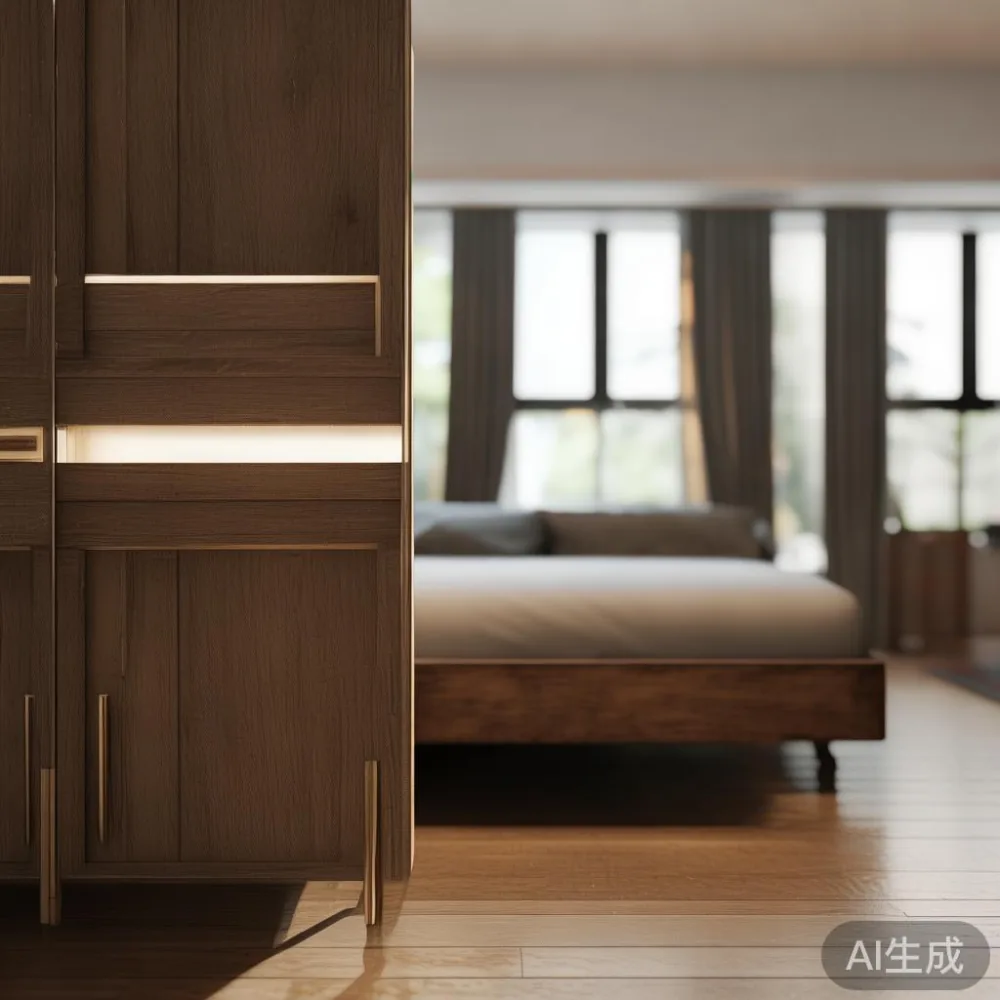
Color mismatch is a quiet culprit behind this. When the wood tone of a solid wood sofa frame, the legs of a bed frame, and the top of a dining table all read as different browns at 7 pm under warm LEDs, the eye stops on each piece instead of gliding across the room. Three slightly clashing woods in a 4 by 5 m living-dining area is enough to make the space feel choppy, even if every piece is well made. The fix is not buying a matching set from one catalogue. It is choosing pieces whose undertones align, leaving breathing room of at least 60 cm around the perimeter, and letting two or three items carry the visual weight while smaller ones (a nightstand, a marble table tray, a fabric ottoman) recede.
Measure Your HDB Before You Measure Your Furniture
Before browsing, write down six numbers for your flat:
1. Living room length and width, in cm, edge to edge.
2. Distance from lift lobby door to your unit door, because anything above 1.6 m wide will not make the turn.
3. Internal door widths; most HDB bedroom doors are 0.8 m, so a wardrobe deeper than 0.55 m cannot be tilted in.
4. Ceiling height, usually 2.6 m for newer BTOs, occasionally 2.8 m for some Punggol units.
5. Corridor width inside the unit, often 1.0 to 1.2 m.
6. Distance from your nearest refuse chute or loading bay to the lift, because delivery teams charge per flight when there is no lift access.
Bring a tape measure to showrooms. A 1.8 m three-seater solid wood sofa, the kind most French light luxury and American light luxury brands sell as standard, occupies a footprint of roughly 1.8 m by 0.95 m. Add 0.5 m on every side for circulation and you need 2.8 m by 1.95 m of clear floor just to seat three people. In a typical 4-room HDB living room of about 3.6 m by 3.2 m, that leaves barely 80 cm for a TV console. If the console is also 40 cm deep, your walking lane collapses.
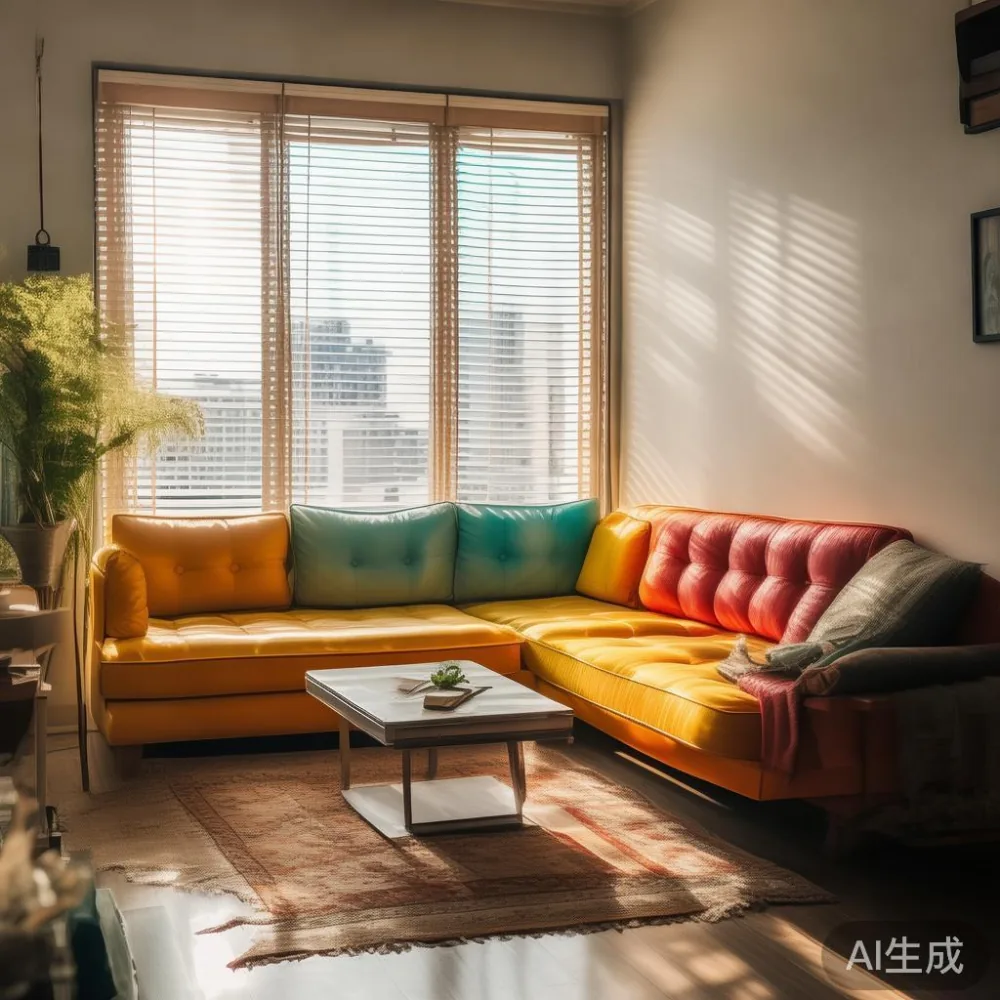
Why Color Mismatch Makes a Small Room Feel Twice as Small
Visual weight is not just about size. Two pieces of identical dimensions can read as very heavy or very airy depending on finish. A solid oak dining table with a clear matte lacquer will feel lighter than the same table stained espresso, because the grain reflects more light and the edges appear softer. In a flat with limited window square metreage, that difference is the gap between "cozy" and "cramped".
Color mismatch between a bed frame in honey-toned oak and a wardrobe in grey-washed ash does not mean the pieces are wrong; it means they fight. Your brain processes the clash faster than it processes the room shape, and the room feels smaller as a result. When I refurnished my place, I picked one dominant wood family (warm walnut) and allowed myself one secondary accent (pale oak) for items under 60 cm tall, such as nightstands and a side table. Everything else went into the same warm walnut family. The marble table in my living room is the only cool element, and it works because it is small, round, and sits at the eye's resting point when I sit down.
Which Extendable Dining Table Fits a 4-Room HDB Living Room?
An extendable dining table that fits a 4-room HDB living room is one with a closed length between 1.2 m and 1.4 m, an open length no longer than 1.8 m, and a depth of 60 cm, which seats four people daily and six when extended; seat depth matters more than total length because HDB circulation lanes need at least 80 cm behind a pulled-out chair.
Anything beyond 1.8 m when extended will clash with the air-con ledge or the sofa back, depending on which wall your dining area sits against. I tested a 1.6 m extending walnut model in Yan's Tampines flat last month. Closed, it seated four at 60 cm depth with 45 cm of knee room per person. Opened to 2.1 m for a birthday dinner with six adults, it still left 70 cm of corridor clearance to the kitchen door. The extension leaf folded down vertically, so no separate storage was needed. The marble table surface version would have been too much for the same room; marble reflects ceiling light and makes the dining zone feel like a separate, louder room, which is the opposite of an open HDB plan.
If you choose an extendable top, check the mechanism twice. Butterfly leafs that store inside the table save 0.4 m of floor space compared to tables with a separate leaf stored against a wall. Storage against a wall is exactly where a wardrobe or a bookshelf would otherwise live, so the butterfly style keeps your storage wall intact.
The Wardrobe, Bed Frame, and Nightstand Triangle
In a 4-room HDB, the master bedroom is typically 3.2 m by 3.0 m, which is enough for a king bed (1.8 m by 2.0 m), two nightstands (0.5 m by 0.4 m each), and a wardrobe up to 2.0 m wide. The trick is depth: choose a wardrobe at 0.55 m deep rather than 0.6 m, and you gain 5 cm of walking lane on the foot of the bed. Over a year of daily use, that 5 cm is the difference between brushing the bed corner with your shins and walking freely.
For the bed frame, a low-profile solid wood platform at 25 cm tall reads as lighter than a 45 cm tall upholstered base, even at the same mattress height. A platform also gives you under-bed drawers, which replace a chest of drawers in flats where a chest would block a window or a power socket. A nightstand at the same 25 cm height as the platform keeps the horizontal line unbroken, and unbroken horizontal lines are what make a small room feel wider.
Color mismatch between a bed frame and a wardrobe is the single most common mistake I see in showrooms and HDB walkthroughs. A bed in pale oak and a wardrobe in dark walnut, both technically "wood", fight each other badly in a 9 sqm room. Pick them within two shades of each other on a standard wood-tone chart, or pick them from the same species with the same stain batch. The undertones should match: warm with warm, cool with cool, never mixed.
Delivery, Lifts, and Singapore-Specific Logistics
An HDB lift in Singapore is typically 1.1 m wide by 1.4 m deep with a 2.1 m ceiling, although newer BTOs in Punggol and Bedok have wider lifts up to 1.3 m by 1.6 m. Anything longer than 1.8 m in a single dimension needs a two-person delivery team and, often, a hoist for upper floors. Delivery fees in Singapore run from SGD 60 for ground-floor walk-ups to SGD 250 for high-floor units without lift access to the lift lobby, especially for items above 80 kg. A solid wood dining table for six typically weighs 60 to 80 kg; a king bed frame in solid oak weighs 55 to 70 kg; a full wardrobe can weigh 90 to 120 kg.
Most Singapore furniture sellers, including MIDHILL, ship solid wood pieces flat-packed with the legs detached, which keeps the longest dimension under 1.5 m and the heaviest single box under 35 kg. That matters because the alternative is white-glove assembly on site, which adds SGD 150 to SGD 300 per room. Ask the seller, before paying, whether the longest box fits your lift. The answer should be in cm, not in vague reassurance.
Customs and GST apply if you import directly. For purchases above SGD 500, GST at 9% is added at the point of delivery. Local Singapore stockists absorb this into the listed price, which is one reason two identical walnut dining tables can differ by SGD 400 between a local supplier and an overseas one, even before shipping.
Returns, Warranty, and What to Ask Before You Pay
Returns in Singapore for furniture are governed by the Lemon Law for goods above SGD 100, but most reputable sellers offer a 14-day return window for unused pieces in original packaging. A 14-day return is enough time to test a sofa, a bed frame, or a dining table against your actual room light at morning, afternoon, and evening. Under fluorescent white at noon, the solid wood sofa you liked at the showroom under warm LEDs may suddenly read as orange. Test under your own lights before the 14 days end.
Structural warranty matters more than marketing language. A 10-year structural warranty on a solid wood sofa or a bed frame covers joint failure, wood splitting, and frame warping. Refinishing service, lifetime or otherwise, covers sanding and re-lacquering, which you may need every 7 to 10 years in Singapore's humidity. Ask in writing whether the warranty is pro-rated after year 3 and whether transport for warranty repairs is included.
For my own refurnishing, I bought pieces from MIDHILL because the structural warranty was 10 years across the range, the refinishing was lifetime, and shipping above SGD 350 was free to my Punggol address. Delivery took 18 days, with two boxes per sofa and one per nightstand, all under 32 kg. The dining table arrived with one walnut oak replacement bolt in a separate bag, a small but telling detail: the company expects small parts to go missing in transit and ships spares without being asked. If you have ever dealt with the phrase walnut oak missing parts, you know that a seller who pre-emptively includes spare hardware has saved you a six-week wait for a single bolt.
A Concrete Small-Living-Room Furniture Plan
Putting it together, here is a plan I have used with three different HDB households in Bedok and Tampines:
• Living room (3.6 m by 3.2 m): a 1.8 m solid wood sofa in warm walnut, depth 0.9 m, with a 0.4 m deep TV console on the long wall. Leave 0.7 m between the sofa front and the console. Add one round marble table, 0.6 m diameter, which replaces a rectangular coffee table and removes hard corners near the walking lane.
• Dining area (2.4 m by 2.0 m, open to living room): a 1.2 m extending walnut dining table, 0.6 m deep, with two chairs daily and four when guests come. Extension to 1.6 m seats six.
• Master bedroom (3.2 m by 3.0 m): a 1.8 m king platform in pale oak, two matching nightstands, and a 2.0 m wardrobe in the same pale oak at 0.55 m depth.
• Secondary bedroom (3.0 m by 2.4 m): a 1.5 m queen bed frame, one nightstand, a 1.2 m desk, and a 1.2 m wardrobe, all in the same secondary wood family.
Total furniture footprint in the living-dining zone: under 5 sqm of occupied floor, with 8 sqm of clear walking area. That is a comfortable ratio for an HDB. Anything more, and the room begins to feel crowded regardless of how good each piece looks.
The Quiet Power of One Wood Family
Post-modern light luxury interiors lean toward one wood family, one metal accent, and one textile accent. In a Singapore HDB, where the floor plan does the heavy lifting and the furniture supports it, that approach translates to two wood families rather than five. A warm walnut family for the larger pieces (sofa frame, dining table, wardrobe) and a pale oak family for the smaller pieces (bed frame, nightstand, desk). One marble table as the cool accent. No more than two metal finishes in the room (brushed brass for handles, black powder coat for lamp arms, for example).
Color mismatch becomes a problem only when the families multiply. Two families is calm. Three is busy. Four is a showroom. Five is what most first-time furnishers end up with, because each piece was bought in isolation. Buy them together, or at least pick the wood tones together, and the small apartment stops feeling crowded long before you add a single mirror or a single wall shelf.
One last note from Yan's Tampines flat after the refurnish: her living-dining zone feels 1.5 sqm larger than before, not because the room changed, but because the eye now moves through it without stopping. The walnut dining table, the walnut console, and the pale oak bed frame all read as related, and the marble table is the single cool point the eye lands on. That is what a small apartment wants: one place to rest, and free movement everywhere else.