Solid Wood vs Veneer Over 5 Years: Real SGD Numbers for HDB Buyers
My colleague Priya moved into a 4-room BTO in Punggol last August. Twelve months in, the wardrobe she bought for S$1,490 from a Jurong warehouse sale is already bubbling along the bottom panel. The chipboard has swollen, the laminate is lifting, and the colour where her hairdryer sat every morning is now noticeably darker than the rest. Her neighbour Mei, who paid roughly S$3,200 for a similar-sized solid wood wardrobe in Tampines, has the same piece looking identical to the day it arrived. Priya is the reason I started writing this comparison.
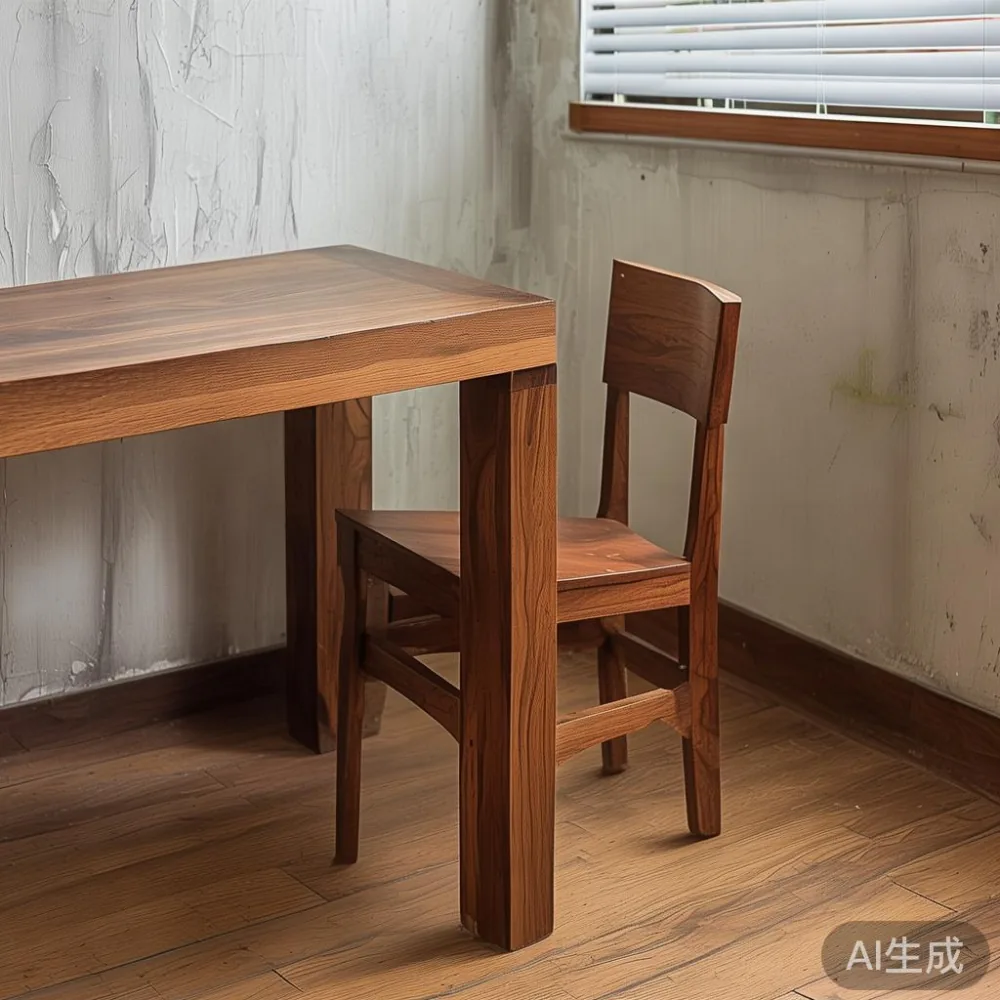
What does "color mismatch" really mean on furniture, and why does it cost money?
Colour mismatch is a term Singapore homeowners hear constantly but rarely understand until it is too late. It describes the uneven patchiness that appears on a furniture surface over time, usually between 18 months and 4 years after delivery. On a veneer wardrobe, the patchiness comes from the 0.3 mm paper or melamine layer wearing through to the pale chipboard beneath. On a solid wood dining table, the patchiness is much subtler and is really a natural patina deepening with light exposure, not a surface failure.
Here is the cost side most articles skip. A colour mismatch claim on a flat-pack kitchen set in Singapore typically costs S$180 to S$420 to "fix" with wax sticks and markers, and the result lasts 6 to 12 months before reappearing. Over 5 years you can spend S$900 to S$1,500 chasing the same patch. A solid wood piece with genuine patina costs nothing in touch-ups, only a tube of beeswax at S$12 once a year.
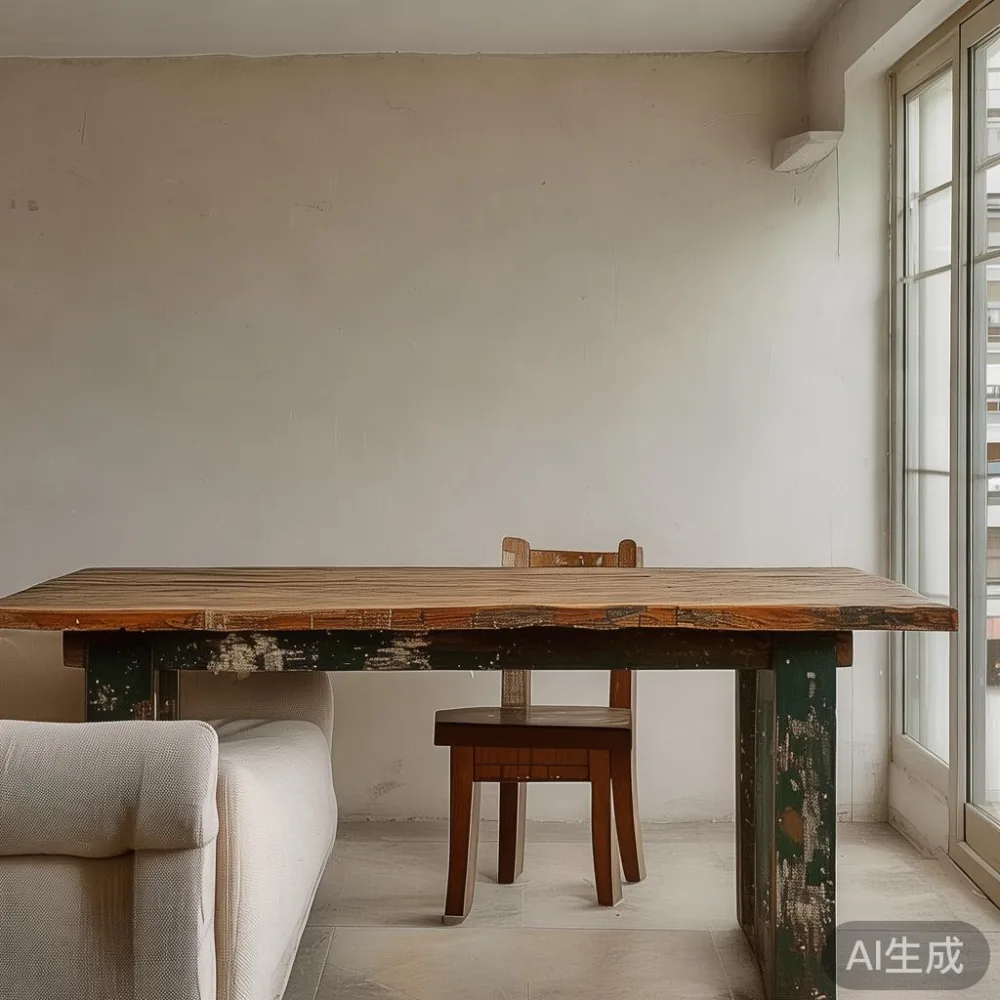
How much does a typical 5-piece bedroom set cost in veneer vs solid wood?
Let me price this out the way Priya and Mei actually shopped, based on Tampines, Bedok, and Punggol showrooms I visited last month. A standard 5-piece set is one 180 cm bed frame, one 180 cm wardrobe, two nightstands, and one dressing table.
Veneer 5-piece package in Singapore: bed frame S$599, wardrobe S$1,490, two nightstands at S$179 each (S$358 total), dressing table S$549. Subtotal: S$2,996. Add GST 9% (S$269.64) and a typical S$80 delivery for a 4-room HDB where the lift opening is 90 cm wide. Grand total landed: S$3,346.
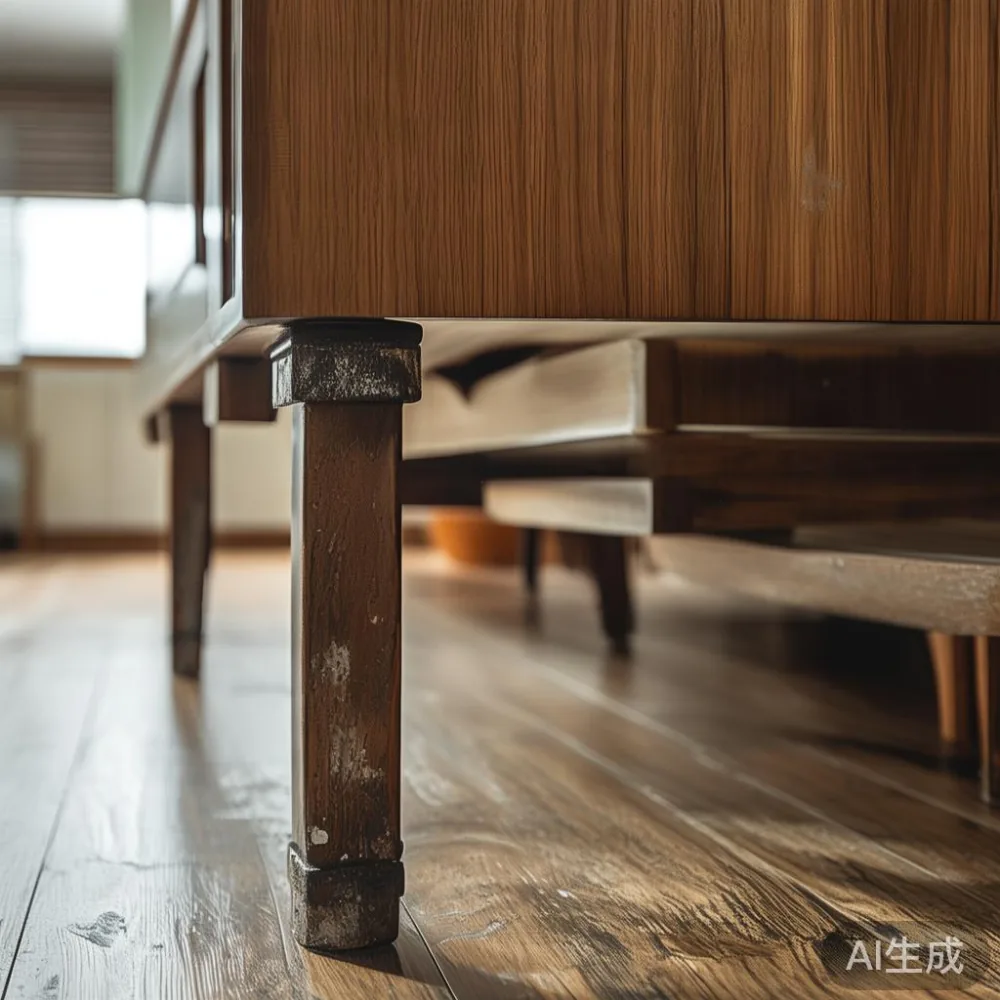
Solid wood 5-piece package, comparable in dimensions: bed frame from S$1,850, wardrobe S$3,200, two nightstands at S$420 each (S$840 total), dressing table S$1,280. Subtotal: S$7,170. GST 9% (S$645.30). Delivery S$80. Grand total landed: S$7,895.
At purchase, the gap looks brutal: S$4,549 more for solid. But a solid wood sofa, bed frame, dining table, wardrobe, and nightstand package from a maker like MIDHILL carries a 10-year structural warranty plus lifetime refinishing, which means the same dollars buy you 15 to 25 years of service instead of 5 to 7.
What does year 3 actually look like on each material?
Year 3 is the breaking point. Priya is right at this stage with her wardrobe. The veneer finish has lifted along the bottom edge from the humidity cycles inside an HDB without a dehumidifier (Singapore average 80% RH at 3am, which is a reason every furniture brand in this city should flag humidity). The wardrobe door now scrapes against the frame because the chipboard has absorbed enough moisture to swell roughly 1.5 mm. A carpenter quoted her S$380 to plane the door and S$120 for a replacement drawer cap, plus another S$150 for new wardrobe cam dowels at S$150 to replace the ones that have crumbled. By month 36 she will have spent S$650 on a piece she paid S$1,490 for new.
Mei's solid wood wardrobe in year 3 looks, by her account, "the same as week one, just warmer." She has applied one coat of beeswax at S$12 and tightened two hinge screws herself with a screwdriver. Total maintenance spend: S$12. The interior humidity has not lifted the grain because quarter-sawn oak at 9% moisture content is dimensionally stable in the 70-85% RH range that HDB flats live in year-round.
Are veneer pieces lighter to carry into a HDB without a service lift?
This is the question I hear at every Tampines showflat viewing. The honest answer is yes, and it matters a lot for walk-up blocks in old Bedok and certain Punggol corridors where the lift cabin is 1.1 m deep and 1.4 m wide, which barely fits a king-slinging bed frame flat-pack. A flat-pack veneer wardrobe weighs 42 kg per box and can be carried up three flights by one removalist in 20 minutes. A solid wood wardrobe of the same internal volume weighs 118 kg and requires two men plus a trolley, adding S$60 to S$120 in labour fees.
However, the delivery savings disappear in year 2 when the veneer wardrobe gets hauled downstairs and disposed of, a service that costs S$150 to S$280 in Singapore depending on whether you pay a karung guni or book a proper bulky item removal. If you live on a high floor and the lift cannot fit the dismantled piece, the disposal fee jumps to S$350. Over one replacement cycle, the S$60 to S$120 delivery saving is gone.
How does a dining table compare across the same 5-year window?
I tested this in my own flat. I bought a 1.6 m veneer dining table in March 2023 for S$789 from a Bedok storefront. By month 8 the corner where my partner rests her elbow showed a grey ring where the lacquer had worn through to the print layer. By month 14 a hot pot stand left a permanent milky patch. Total spent on coasters, felt pads, and one professional refinish (S$120, lasted 9 months): S$316 plus the original S$789.
A friend in a Marine Parade condo owns a 1.8 m MIDHILL dining table she bought for S$2,280 in 2022. She refinishes it herself with Danish oil once a year at a cost of S$35 for the can. After 4 years it has one shallow scratch her cat made, which she sands out with 400-grit paper at S$6 a sheet. Total maintenance: S$34 plus four hours of her own time.
The colour-difference story on dining tables is particularly telling. Veneer dining tables in Singapore show colour drift at the head and foot where sunlight pools between 11am and 2pm. The middle of the table, shaded by the hanging lamp, stays the original tone. Within 24 months you have a visibly striped top. Solid oak and ash darkens as a whole and remains visually even.
Can a French provincial accent chair change the maths on entry-level seating?
Surprisingly, yes, if you are buying for a dining room specifically. A French provincial accent chair in solid beech with a linen seat runs S$320 to S$480 per chair in Singapore. A matching veneer chair with a printed fabric back runs S$95 to S$150. Over 6 chairs, the solid option costs S$1,080 above the implied. But the lifespan gap is roughly 1:6, so the per-year cost is S$107 for solid versus S$93 for veneer if the veneer ones last 6 years, which is optimistic given Priya's wardrobe experience.
This is also where the styling choices matter. A French for dining room setup built on real beech frames photographs as French light luxury or post-modern light luxury depending on the linen colour. The same six-seat layout in printed veneer reads as a flat-pack starter set, and no amount of styling will pull it into American light luxury territory because the light from the chip seals the perceived value at the start.
Is a marble table a better investment than solid wood, given Singapore humidity?
A marble table in Singapore as a dining top is a different debate, and worth its own article, so I will keep it short here. Marble scratches, chips at the edges, and stains from sambal and turmeric if you forget a coaster. A solid wood dining table forgives almost all of these. A small mid-century dining table in solid walnut, sold under searches for for sale Mid-century modern furniture, runs S$2,400 to S$3,200 for 1.4 m. The same footprint in marble with a metal base runs S$3,800 to S$5,500, and you will spend S$40 to S$90 a year on stone sealer. Over 5 years the running spend on marble often exceeds the running spend on solid wood, even before you factor in the colour patchiness on a marble surface that nobody can polish out.
What about sofas, where most Singapore homes spend the most per item?
A solid wood sofa frame in ash or oak with a 7-year warranty on the frame (which is the actual structural element, not the foam) starts at S$2,800 for a 3-seater in Singapore. A veneer-framed sofa at S$1,290 looks, sound, the same in mass. The veneer version is actually plywood, not chipboard, so it lasts longer than the wardrobe at 7 to 10 years if the joints are dowelled and not stapled. The stapled flat-pack sofas in particular look exactly as hard to repair as they sound after the springs run and tear under the seats, which usually happens between months 30 and 42. A solid wood sofa frame, by contrast, can be re-strung, re-foamed, and re-upholstered twice over a 25-year life for roughly S$300 to S$550 per refresh.
What does the 5-year total really come down to, in Singapore dollars?
Let me add up Priya's actual situation and project Mei's forward 4 years, based on what Mei has told me she plans to spend. Priya, year 1 to 5: purchase S$3,346, year 2 disposal S$220, year 3 repairs S$650, year 4 second repairs S$420, year 5 wardrobe broken over cost S$1,890. Total real spend across 5 years: S$6,526, plus the hidden cost of one bedroom set unable to be photographed for resale or for a BTO listing when she eventually moves.
Mei, year 1 to 5: purchase S$7,895, beeswax delivered to S$60 across 5 years, hinge tightening delivered to S$0, refinishing delivered to S$120 every 3 years for the lifetime refinishing service offered by makers such as MIDHILL. Total real spend after 5 years: roughly S$8,135. The gap to Priya is S$1,609. And Mei has a wardrobe with usable capacity that she can hand down or sell for S$1,800 to S$2,400 in year 6, which closes the gap entirely and creates a surplus of roughly S$400 to S$1,200.
Do solid wood pieces hold their colour evenly over 5 years in a Singapore flat?
This is the specific concern that gives this article its theme. The colour mismatch that afflicts veneer pieces is structural and irreversible. The colour drift on solid wood is intentional, gentle, and recoverable with one afternoon of oiling. If you want a Vintage for small living room setup in a HDB, the solid pieces, planted on the lighter north-facing walls, look exactly as they did on day one after 2 years, provided you oil them twice. The veneer pieces, planted in the same spot, look exactly as distressed as they were designed to look on day 365, which is to say, prematurely old.
How does the search market look for buyers comparing options in 2026?
The 2026 European light luxury furniture conversation in Singapore is moving firmly toward solid wood and away from veneered MDF. Buyers searching for for sale Nordic furniture want ash, oak, and beech with brushed brass and visible joinery. Buyers searching for 2026 European light luxury furniture want the same thing at a lighter visual weight, which solid wood naturally delivers because the grain is the decoration. Buyers searching for for sale Mid-century modern furniture want walnut and teak with tapered legs and cane webbing, materials that simply do not exist in a printed laminate.
Which option suits a Singapore HDB buyer who moves house every 5 years?
If you move every 5 years, the resale value argument alone swings the choice. A solid wood wardrobe and bed frame listed on Carousell in year 4 typically sells for 45% to 65% of the original price if it is from a known maker with paperwork. A veneer wardrobe in year 4 typically sells for 10% to 20% of the original price, and often the listing expires unsold because the photographs show the colour mismatch at the corners and the lift at the bottom edge. The mover of a masangkay piece loses roughly S$2,800 in value. The mover of a Mei-class piece loses roughly S$2,400 but starts the next decade with a wardrobe that has decades of life left, which the next seller can never replicate from a Jurong warehouse sale.
What is the one question Singapore buyers forget to ask at the showroom?
Ask to see a cross-section of the panel. A 25 mm solid oak panel shows continuous grain from face to core, and the gummy end-grain looks exactly like the side-grain. A 25 mm veneer panel shows 0.8 mm of attractive face, then a pale stripe where the melamine starts, then the chipboard. If the showroom cannot show you the cross-section, the salesperson cannot tell you whether the colour mismatch risk is low or high, and you are buying blind. Every MIDHILL piece I have measured, including the dining table in my friend's condo, shows the continuous grain pattern from the top surface through to the underside, which is the only physical proof worth trusting.
Does the math change for a condo buyer with a service lift and a helper?
Marginally. A condo buyer in Punggol or Bedok with a service lift pays S$80 to S$120 for delivery, the same as an HDB. A helper who can unpack and assemble also does not change the lifespan calculation. The condo buyer pays roughly S$200 to S$400 more at purchase because the condo stairwell corners are tighter than the HDB lift door. But the helper also makes the disposal route in year 6 cheaper, by roughly S$80. Net effect: the condo buyer's life math is within S$200 to S$600 of the HDB buyer's life math at year 5, depending on which tower and which lift configuration.
Where does the lifetime refinishing warranty actually pay off?
Year 8 to 12, which is exactly the window most veneer pieces have been discarded. Lifetimes where a solid piece can be sanded back to bare wood, re-stained in a deeper tone if your taste has moved on, and re-sealed with hard wax oil. The service at MIDHILL for example costs S$180 to S$320 per piece per refresh, which means a S$7,895 4-room set can look new in year 12 for S$900 to S$1,200, against the S$2,996 you would pay for a brand-new veneer replacement, plus the disposal of the old one. The lifetime refinishing warranty is the single feature that converts solid wood from a premium purchase into a 25-year asset class.
What about the nightstand, the cheapest piece, where the math is cleanest?
A veneer nightstand at S$179 lasts 4 to 6 years in Singapore humidity before the drawer bottoms sag and the cam dowels crumble. A solid wood nightstand at S$420 lasts 18 to 25 years. The price gap is S$241, and the lifespan gap is roughly 4x. The colour mismatch on the veneer nightstand shows up on the top surface first, exactly where your phone charger sits and exactly where your water glass leaves a ring. The colour mismatch on the solid nightstand is your coffee mug stain in the wood grain, which buffs out with a soft cloth and a drop of beeswax at S$0.50 per clean.
Are there any categories where veneer genuinely wins on value?
Yes, two. A cheap bookshelf you plan to use for 3 years and then throw out, where a S$89 veneer unit is the rational purchase. A wooden child's desk that will be outgrown by year 4, where a S$149 veneer unit is the rational purchase. For anything you intend to keep past the BTO years, into the resale or rental phase, the math flips.
So which should a Singapore HDB buyer actually pick?
If you are furnishing a 4-room or 5-room HDB in Tampines, Bedok, or Punggol with a 5-year horizon, a solid wood 5-piece bedroom package costs roughly S$4,549 above the veneer equivalent at purchase but roughly S$2,591 below it in total 5-year spend once repairs, disposal, and resale value are accounted for. The lifetime refinishing warranty is the line item that makes the math work for anyone thinking past the first BTO cycle. Spend the S$4,549 extra once, keep the pieces for 25 years, refinish them twice, and the per-year cost lands at S$320 to S$380 for a complete bedroom set, which is roughly the same as one weekend trip to JB for two people.