Humidity, Color Mismatch, and Solid Wood Furniture in Singapore
Singapore homeowners know the humidity well. Even on a dry afternoon, relative humidity can sit between 65% and 80%, and during the monsoon months it may cross 85%. That moisture affects solid wood furniture in ways photographs rarely explain: panels swell, veneer lifts, lacquer dulls, and a dining table that looked warm honey-brown in a showroom can turn amber beside a wall painted in a cooler beige. The result is often described as color mismatch, but the underlying cause may be environmental rather than a manufacturing fault.
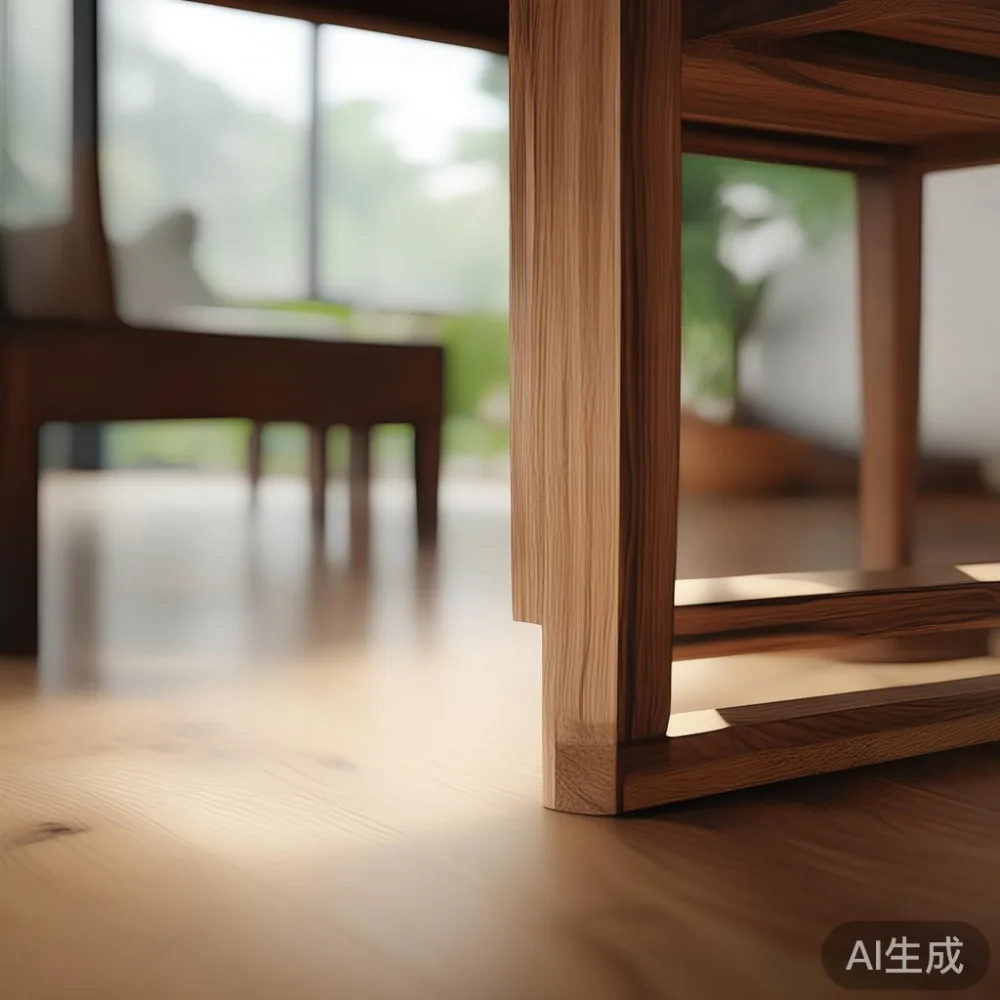
At MIDHILL, a Foshan solid wood maker established in 2008 and exporting to more than 15 countries, we build furniture with this movement in mind. Our pieces are designed for humid conditions, backed by a 10-year structural warranty, and covered by lifetime refinishing. That matters in Singapore, where a HDB flat, a Tampines condo, or a Punggol rental receives moisture from several directions at once.
Why Singapore humidity changes wood color
Wood is hygroscopic. It takes on moisture when the air is damp and releases it when the air dries. A solid wood bed frame with 18 cm side rails may expand 2–4 mm along its width during a humid week. A dining table with a 4 cm top can gain slightly more surface area, while a wardrobe door may no longer sit perfectly flush. The movement is small, but visible around seams, edges, and hardware.
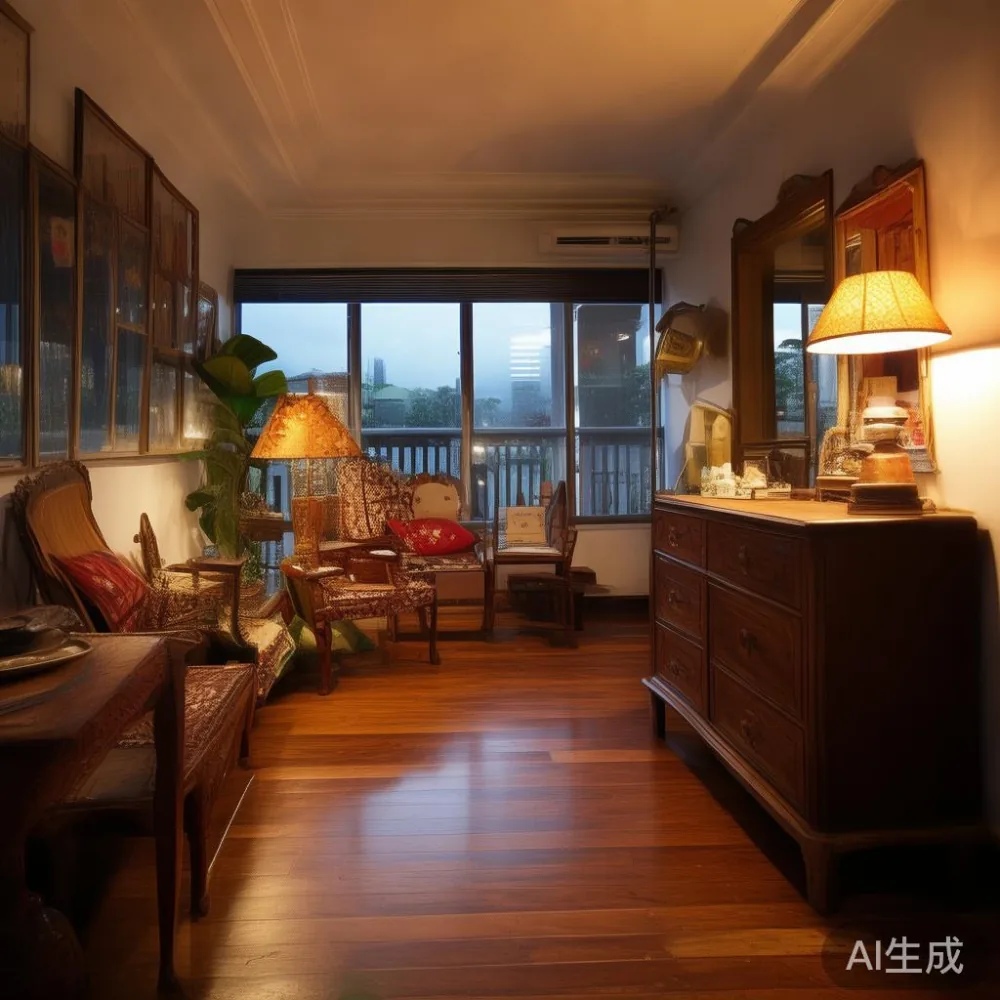
Color change follows the same physics. Oak, walnut, ash, and other open-grain timbers darken as their fibers absorb moisture. Finished surfaces can shift too, especially with matte or water-based coatings. A nightstand displayed at SGD 680 under neutral 4000K lighting may appear several shades lighter than the same model photographed in a warmly lit corridor at 3000K. That is not necessarily color mismatch caused by poor finishing; it may be a comparison between two lighting conditions.
The seasonal pattern is usually predictable. In Singapore, relative humidity often rises during the northeast monsoon from November to March, with overnight readings between 75% and 90% common in April and May as well. Air conditioning lowers indoor humidity during the day to 50–60%, but kitchens, bathrooms, balconies, and laundry areas can remain much wetter at night. Furniture near a corridor window or an HDB lift lobby may experience daily swings that are different from those in an interior bedroom.
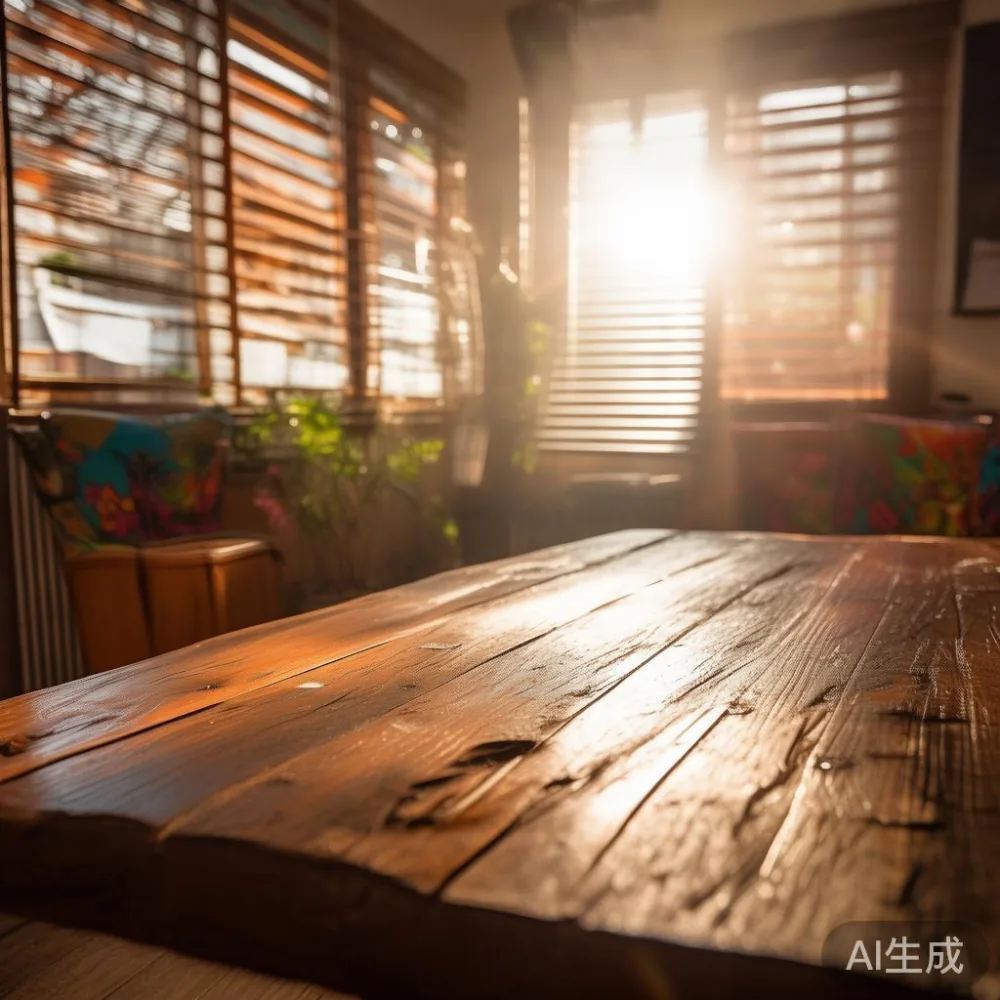
Gaps can also come from photographs. A phone camera may render walnut as reddish-brown, while a cool grey wall reflects blue light onto the same grain. Screens exaggerate saturation, and a photo taken without the original finish sample can make a color mismatch look worse than it is. Ask for a physical finish chip before ordering, hold it against the room's flooring, and compare under the same lighting used at night.
How do I style a French neoclassical loveseat in a small apartment?
Use a French neoclassical loveseat with slim arms, a raised 32–36 cm leg clearance, and a seat width of 120–140 cm, then keep the surrounding palette to 3 colors and 2 textures.
In a compact HDB living room, that silhouette works best when it is visually light rather than physically enormous. Choose a solid wood frame under 80 cm in depth, or a slim upholstered version measuring 75 cm, and place it against a wall rather than in the middle of the room. Keep 75–90 cm of circulation space between the loveseat and a coffee table; the rest can be handled with a 35 cm side table.
For the color-mismatch question, select the loveseat in a restrained finish such as warm ivory, pale taupe, or light ash, and repeat one of those tones in a rug or curtain. French light luxury styling relies on proportion, gentle contrast, and craftsmanship, not on filling every corner. A slim console, 110–130 cm long and 30–35 cm deep, gives the room structure without competing with the loveseat's carved details.
Use one accent material: matte metal, woven cane, or a small marble table. A round marble table with a 50 cm diameter base echoes the loveseat's curves while freeing floor area. Avoid matching every object to the same brown. The deliberate contrast between a cool marble top and a warm wood frame is often what makes the composition feel calm rather than crowded.
What humidity does to solid wood sofa frames and bed frames
A solid wood sofa frame benefits from stable indoor conditions, not aggressive drying. For a family living room in Bedok, aim for 45–65% relative humidity where practical, and keep the sofa at least 30 cm away from a window with persistent condensation. A sofa with a kiln-dried hardwood frame, corner blocks, and dowels is less vulnerable than a flat-pack frame held together mainly by screws.
When checking a solid wood sofa, look at the underside and rear panels. Swelling often appears first as a 1–2 mm gap at a joint, a slightly sticky drawer, or a rail that catches fabric. Cushion covers can wrinkle when the frame beneath them expands. These effects are more likely near a laundry balcony or a frequently opened bathroom door.
Bed frames need more clearance because they are large and often placed against a wall. A queen bed measuring 152 cm by 190 cm leaves 5–10 cm on each side in a typical Singapore bedroom, which can become tight when slats or rails move. A solid wood bed frame with a 20–22 cm headboard can make a small room feel stable, but leave 20 cm behind it for wiring and wall ventilation where possible.
Use a dehumidifier when readings exceed 65% for several days. Set it to maintain 50–60%, place it in an open area, and empty the tank every 2–3 days if it collects 1–2 litres daily. Do not aim at the wood with cold air. Direct airflow can dry one face faster than another and contribute to color mismatch across a headboard.
Mattresses matter too. A polyester or latex mattress can retain more moisture than a breathable cotton cover, particularly in a humid room. Lift the mattress every 3 months, rotate it if the manufacturer allows, and check the frame beneath for mold-like spotting. A small investment of SGD 60–120 in a digital hygrometer gives you better information than guessing from a damp hand on the floor.
Dining tables, wardrobes, and Singapore corridor dimensions
A dining table is the piece most often compared with flooring and walls. Solid oak, American walnut, and teak each respond differently to humidity, so do not expect a showroom sample to remain visually identical in every home. A rectangular dining table of 180 cm by 90 cm can be placed in a dining room with 100 cm of clearance around it; in a compact HDB kitchen, a 140 cm by 80 cm model may be more practical.
Watch the legs. A tapered leg may show a faint ring or darker base if moisture collects at the floor. Felt pads should be breathable and replaced every 12–18 months. Wipe spills within 15 minutes, then dry with a soft cloth. Do not leave a damp cloth resting on the surface overnight; prolonged moisture can stain the finish and exaggerate color mismatch along the grain.
Wardrobes in Singapore bedrooms may face more variation than furniture in air-conditioned studies. A built-in-looking wardrobe with 60 cm doors needs side clearances of at least 2–3 mm on each side, while a freestanding unit should be pulled 5–8 cm from the wall so air can circulate. Hinged doors should be adjusted when the season changes because humidity can change the gap by 1–3 mm.
Delivery planning is part of furniture care. Many HDB lift lobbies and corridors are about 100–120 cm wide, with lift doors around 90 cm. A wardrobe panel wider than 85 cm may need to be turned on its side before entering the lift. Confirm the package dimensions, lift capacity of 500–800 kg, and turning radius before delivery day. MIDHILL can quote delivery in 7–14 days for Singapore orders, with delivery timing affected by stock and customization.
For a Punggol or Tampines condo, loading bays and service lifts often differ from HDB access. Measure the route from the ground floor to the unit, including 2–3 tight corners. Protective blankets, corner guards, and a clear assembly plan prevent damage during the final 20 metres that customers often overlook.
How to tell a finish problem from a color-mismatch problem
A finish problem usually appears as a defect with a boundary: peeling lacquer, a cloudy patch, a rough area, or a crack that follows a joint. A color-mismatch problem is broader. The entire piece may look darker or redder than the sample, while the surface remains smooth and intact. Both issues can occur together, so inspect from several angles.
Compare the furniture with its finish chip under 4000K light, not under the warm bulbs often used in a corridor. Look at end grain, undersides, and areas near doors. If the difference is strongest in daylight, it may be a pigment or lighting interaction. If it is strongest at the edge of a tabletop, moisture or cleaning may be involved.
For solid wood dining tables, ask whether the finish is water-based, oil-wax, or a harder polyurethane system. Each has a different response to spills and humidity. For a marble table, the surface itself is not hygroscopic in the same way as wood, but the wooden cabinet beneath it still needs ventilation. A marble table with a sealed 20–30 mm top can be durable in humid conditions when placed away from dripping air-conditioning condensate.
If you are searching for a specific product reference, a search phrase such as American country king bed dubai can produce design ideas from other markets, but always adapt the dimensions to a Singapore room. A king bed of 180 cm by 200 cm needs at least 90 cm of space on the longer sides for bedside access; a smaller 150 cm by 200 cm bed may suit a condo bedroom better.
Simple care routines that prevent color mismatch
Keep indoor humidity between 45% and 65% where possible. Place a hygrometer in the room where the furniture sits, not only near the air-conditioner. Record one reading each morning and evening for 7 days. This gives you a useful pattern: 52% at 7 am and 68% at 10 pm suggests a building or ventilation issue that needs attention.
Wipe wood with a slightly damp cloth, using no more than 10–15 ml of mild cleaner per litre of water. Dry immediately with a separate cotton cloth. Avoid silicone sprays, ammonia, and furniture oils that leave a sticky film. A clean cloth, used every 2–4 weeks during humid months, is safer than applying a heavy treatment after discoloration begins.
Protect floors and legs with pads that are 2–3 mm thick. Replace them when compressed. Keep rugs from trapping moisture against a wardrobe plinth, and maintain 5 cm between furniture and exterior walls in rooms that receive little air-conditioning. For balcony-adjacent furniture, use a cover during heavy rain but do not wrap it tightly while the surface is damp.
Move furniture at least 20–30 cm from windows with frequent condensation, especially in east-facing Tampines or Bedok units. If a table must sit near a window, use a blind with a UV filter and avoid dark curtains pressed against the wood. These small measures cost less than a refinishing appointment.
Warranty and service are part of the purchase decision. A 10-year structural warranty covers long-term frame failures under normal use, while lifetime refinishing addresses surface wear according to the supplier's terms. Confirm whether scratches, water marks, and color changes are included, and keep the order record. Singapore prices are shown with GST, and free shipping applies over US$350 for qualifying international orders.
Choosing furniture that can handle tropical conditions
Look for kiln-dried hardwood, stable joinery, and finishes that tolerate a wet wipe. Ask how many coats were applied, whether the underside was sealed, and whether the manufacturer offers replacement parts. A 14-day return window gives customers time to evaluate the piece in their own home, away from showroom lighting.
Design should support maintenance. Choose a solid wood dining table with a removable leaf or a stable pedestal if the space is narrow. Choose a bed frame with accessible slats, roughly 12–15 cm apart, so moisture can be checked. Select a wardrobe with adjustable hinges, and a nightstand with a drawer that can be eased rather than forced when conditions change.
French light luxury, American light luxury, and post-modern light luxury all suit Singapore interiors when the scale is controlled. French light luxury favors slender profiles and soft upholstery; American light luxury often uses generous cushions and substantial wood; post-modern light luxury accepts clean geometry with one memorable finish. In a HDB flat, the version with the smallest footprint and clearest circulation route will usually work best.
The practical answer is not to fear humidity or wood. It is to understand the movement, control the moisture where you can, and inspect the finish consistently. With the right measurements, a stable frame, and realistic expectations, a solid wood sofa, bed frame, dining table, wardrobe, nightstand, or marble table can remain attractive for years without turning a minor color difference into a daily frustration.