Realities of Online Wood Furniture Delivery in Singapore
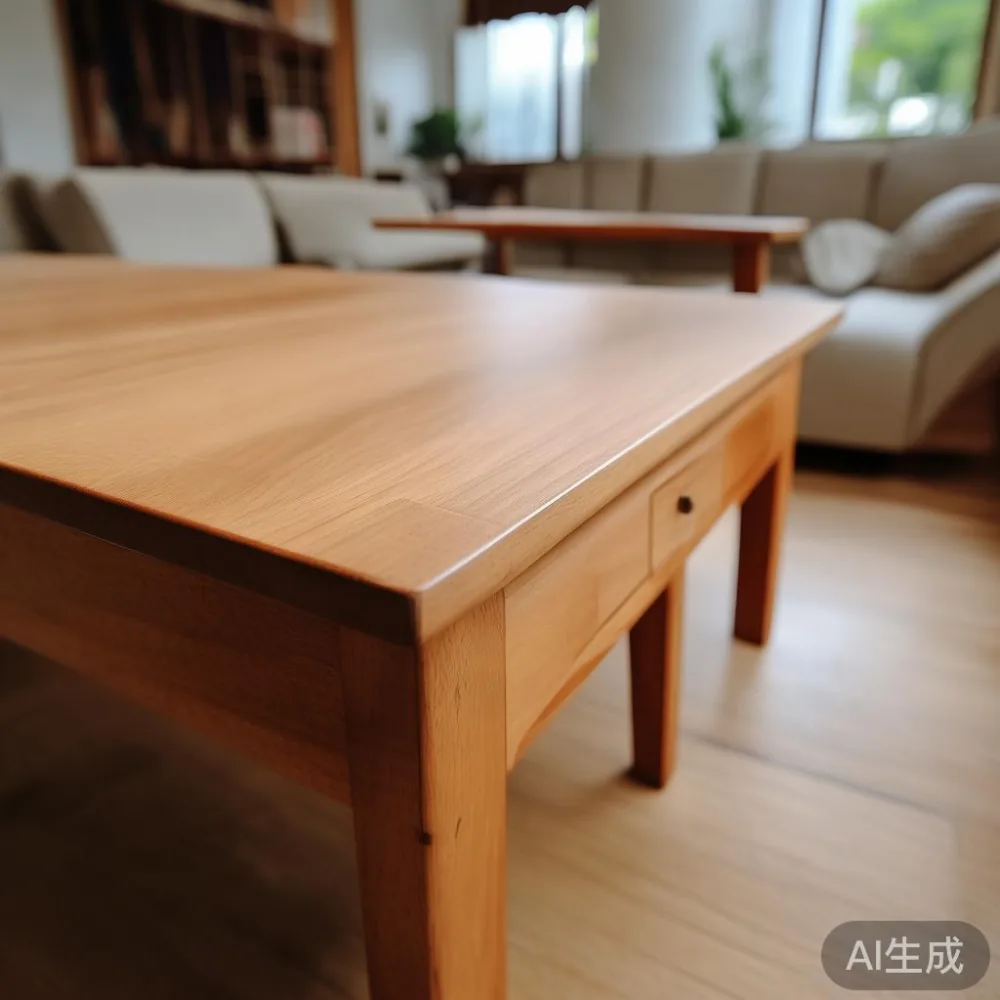
I have spent the last six weeks ordering, rejecting, and unboxing solid wood pieces across Tampines, Bedok, and a fourth-floor walk-up in Punggol, and the gap between the glossy product page and the actual doorstep experience is wider than most Singapore shoppers expect. Last month, I visited a friend's new four-room HDB in Bedok North to inspect her new oak dining table. It arrived on a Saturday morning, two men carried the three cartons up a 1.2-metre-wide corridor, and within forty minutes it was standing in her dining area looking nothing like the image she had saved on her phone. The colour of the legs was clearly warmer than the tabletop, a classic color mismatch caused by two separate batches of the same wood. She kept the table, but she spent the next evening explaining to her husband why S$2,400 had produced a piece that looked mismatched under her pendant light.
That single story frames every issue that follows: lift access, corridor turns, carton dimensions, weight on the lorry, colour variation between batches, and the quiet question of who actually puts it together once the boxes reach the door. Online furniture shopping in Singapore is not difficult, but it rewards shoppers who plan for the realities that no banner image ever shows.
Why Buying Solid Wood Online Feels Different from Showroom Shopping
A solid wood sofa, a queen bed frame, a six-seater dining table, a four-door wardrobe, and a marble-top nightstand all share one uncomfortable truth: they are heavy, they are bulky, and they are made of a material that breathes. A 1.8-metre oak bed frame typically weighs between 65 kg and 90 kg depending on the slat system, while a 2.4-metre solid wood dining table can tip the scales at 110 kg before the marble table variant on the same product page may cross 140 kg. Numbers like these change the entire delivery conversation, because every extra kilogram is another handshake at the bottom of the HDB staircase and another centimetre that has to clear your lift door.
Most Singapore HDB lifts measure roughly 1.1 m wide by 1.4 m deep with an opening of about 0.9 m, and newer executive condos sometimes go up to 1.2 m by 1.6 m. A flat-packed wardrobe box measuring 215 cm long by 62 cm wide by 18 cm thick will physically fit, but the moment you add even a 5 cm buffer for the cardboard overhang, the math becomes uncomfortable. I learned this the hard way when a two-door wardrobe shipment arrived with three outer cartons, one of which measured 218 cm in length and refused to stand upright inside my friend's lift. The delivery team had to angle it diagonally, which meant the protective foam on one corner compressed and a small dent appeared on the top panel.
Working with a Foshan-based maker such as MIDHILL, which exports solid wood sofas, bed frames, dining tables, wardrobes, and nightstands to more than fifteen countries, does simplify some of this. Pieces ship in export-grade corrugated cartons with edge guards, and the company has ten years of structural warranty behind every joint. Yet the experience on the ground still depends on the corridor geometry of your specific block in Tampines or Punggol, and on whether your lift can take a 90 kg load without protest. The older blocks on Bedok Reservoir routinely see lift cars rated at 630 kg or 800 kg, which sounds generous until you add two delivery men, their tool bags, and a marble-topped coffee table.
What Delivery Really Costs in Singapore, and What It Includes
Standard island-wide delivery from a regional warehouse in Singapore typically runs between S$60 and S$120 per order for furniture under 80 kg, and S$150 to S$280 for pieces above 100 kg. Marble-topped variants almost always sit at the top of the band because of the additional crating. MIDHILL itself offers free shipping above US$350, which at current exchange rates works out to roughly S$460, so most dining sets and bed frames clear that bar without effort. Single nightstands and accent chairs often sit just below it, and the S$40 surcharge to cross the threshold is a fair trade for two men who actually carry the box into your home rather than leaving it at the lift lobby.
Delivery windows in Singapore are usually given as a half-day or full-day slot, which is the industry norm and also a source of frustration. Last month I waited between 9 am and 1 pm for a wardrobe delivery to a Punggol Waterway Terrace unit, and the lorry arrived at 12:48 pm with twenty minutes to spare. Knowing that, I now always block an entire day off and warn my colleagues that I will not be reachable. GST of 9% applies on the full delivered price for imports declared above S$400, which most solid wood sets comfortably exceed, so the figure on your invoice is rarely the figure you pay.
Staircase surcharges are where the real surprise lives. Many providers waive the fee for lifts, but charge S$20 to S$35 per flight for walk-up landings. A fourth-floor walk-up with no lift and a 90 kg dining table can therefore add S$80 to S$140 to the bill before you sign anything. Always confirm whether the quoted delivery covers the unit door or the bedroom door, because the difference between those two phrases can be twelve metres of corridor and one narrow turn around a kitchen island.
What is the best queen bed for a small apartment?
For a Singapore HDB or condo under 1,000 sqft, a queen bed frame with built-in hydraulic storage, a low-profile solid wood platform under 25 cm off the floor, and an outer dimension no larger than 165 cm by 215 cm is the safest choice. A compact queen bed frame frees up at least 40 cm of walking clearance on each side compared with a standard king, and the hydraulic lift removes the need for a separate drawer chest in rooms under 12 sqm. Look for solid rubberwood, ash, or white oak construction, slat spacing under 7 cm to support a 25 cm latex mattress, and a headboard height below 110 cm so it does not crowd a wall-mounted fan.
In a small bedroom, a queen bed frame also behaves more politely than a king when paired with a 50 cm-wide nightstand on each side, because the total footprint stays close to 2.6 m wide and leaves room for a 45 cm walkway around three sides. MIDHILL ships queen frames in two cartons, each under 35 kg, which is a real advantage if your lift opening is the standard 0.9 m and your corridor makes a sharp 90-degree turn past the refuse chute. A solid wood queen with a hydraulic base usually lands between S$1,350 and S$2,200 before GST, while upholstered versions with fabric headboards climb into the S$2,600 to S$3,400 band. For shoppers weighing a best chaise lounge singapore reading nook against a more practical storage bed, the bed wins on a per-square-foot basis almost every time.
Assembly: Flat-Pack, Pre-Assembled, or White-Glove
Solid wood furniture online arrives in one of three forms, and the form decides your Saturday. Flat-pack cartons contain the panels, dowels, cam locks, screws, and an Allen key, usually with a QR code linking to a four to eight-minute video. Pre-assembled pieces arrive intact, which sounds ideal until you remember the lift door and the corridor turn. White-glove delivery includes two men who assemble the piece on site and remove the cartons, and in Singapore this typically adds S$80 to S$220 depending on the number of items and the complexity.
A solid wood sofa in flat-pack form usually takes 35 to 60 minutes for two adults with basic tools, while a queen bed frame with hydraulic slats averages 75 to 110 minutes. A four-door wardrobe is the project of an afternoon, easily three hours for first-timers, and a dining table with a marble table top is closer to four hours once you account for levelling the base on slightly uneven HDB flooring. My colleague assembled a six-seater oak dining table in her Punggol condo last weekend and discovered that three of the twelve dowels were fractionally too tight, requiring a rubber mallet and a careful application of force she did not feel qualified to apply to a S$2,100 purchase.
This is where brand support matters. MIDHILL includes printed manuals in English, links to bilingual video walkthroughs, and lifetime refinishing on solid wood surfaces, which means a scratch sustained during assembly can be sanded and re-oiled rather than lived with. Most Singapore assemblers charge S$45 to S$80 per hour for on-site help, so a complicated wardrobe that takes four hours can quietly add S$200 to S$320 to the real cost of ownership. Refused-assembly penalties also exist: if the delivery team arrives and the area is not cleared, or if the access path is blocked, a S$40 to S$80 redelivery fee is standard.
Color Mismatch: The Quiet Risk Nobody Warns You About
Color mismatch is the single most common complaint I hear from friends who have bought solid wood furniture online in the last two years. Two pieces of furniture ordered from the same product page can arrive in noticeably different shades because they were produced weeks apart, and oak, ash, and walnut all oxidise at different rates when exposed to Singapore's year-round humidity of 70% to 85%. A dining tabletop machined in week one can read a full tone lighter than the extension leaf produced in week fourteen, even though both carry the same SKU.
The risk is amplified for sets. A bed frame, two nightstands, and a six-drawer wardrobe ordered together are usually drawn from the same batch and arrive matched. Order the wardrobe a month later as a back-ordered item, and the colour drift can be visible within a day. Even the marble table category carries the same hazard, because the veining patterns of natural stone are unique per slab, and replacing a damaged top eighteen months later will never produce an identical pattern. Photographs online are also colour-corrected under 5,500 K studio lighting, which is noticeably cooler than the 3,000 K warm-white LEDs most Singapore households install.
Three habits reduce the pain. First, ask the supplier whether the entire set ships from a single production batch, and request batch numbers in writing. Second, request a production-line photo under daylight rather than the marketing photo, and ask for at least three real customer images taken in HDB interiors. Third, confirm the return window: a fourteen-day return policy, which MIDHILL offers, allows enough time to inspect the colour under your own lighting before committing. Light luxury positioning in the French light luxury and American light luxury traditions also tends to embrace natural variation rather than fight it, so a mild color mismatch between two adjacent pieces can read as intentional character if you lean into post-modern light luxury styling with mixed wood tones and contrasting metal hardware.
How Long Does Delivery Take, and What If Something Goes Wrong?
Lead times for solid wood pieces shipped from regional warehouses in Singapore run three to seven working days for stocked items, while direct shipments from Foshan take 35 to 55 days by sea plus four to seven days for last-mile delivery. During peak season, between October and January, sea freight can stretch to 70 days, so ordering a dining set in early November for a Chinese New Year gathering is risky. Air freight upgrades are available at a S$280 to S$550 surcharge per cubic metre and cut the timeline to twelve to eighteen days, but the cost wipes out the savings of buying online in the first place.
Damaged-in-transit claims are the part nobody enjoys. Inspect every carton before the delivery team leaves, photograph any crushed corner or torn cardboard, and write the damage clearly on the delivery order. Reputable sellers replace damaged parts within seven to fourteen days at no cost, and a structural warranty of ten years covers joint failure, slat cracking, and drawer runner defects. Less reputable sellers ask you to keep the original packaging for thirty days, which is impossible in a 90 sqm HDB, and offer store credit rather than replacement.
If the wrong item arrives, the right move is to refuse the delivery and document the refusal with photos and the driver's acknowledgement. Do not attempt a partial return, because that complicates the claim. For color mismatch complaints after unboxing, take photographs under daylight, under your home LEDs, and under the specific lamp nearest the furniture, then email all three to customer service within forty-eight hours. A return label and a scheduled pickup are usually arranged within three working days, and refunds clear in seven to ten working days after the warehouse receives the piece.
Five Practical Checks Before You Click Buy
Run through this short list before paying for any solid wood sofa, bed frame, dining table, wardrobe, or nightstand online:
1. Measure the lift door and the corridor turn, not just the room. A 90 cm opening can swallow a 215 cm box only if the corridor is at least 1.1 m wide at the turn.
2. Confirm the gross weight per carton, not just the net weight of the piece. Anything above 45 kg per carton usually means two people on the lorry and a clearer expectation at the door.
3. Ask for batch numbers and real customer photos to manage colour expectations, especially for marble tables where every slab is one of a kind.
4. Read the assembly scope: flat-pack with included tools, pre-assembled on a pallet, or white-glove. Each tier changes the real total cost.
5. Understand the return mechanics, including who pays return shipping for a 110 kg dining table, because a fourteen-day window means little if the redelivery cost is S$220.
Buying solid wood furniture online in Singapore is not a leap of faith, but it is a small construction project. Treat the delivery, the assembly, and the colour matching as three separate decisions with three separate risks, and you will end up with a piece that feels quietly expensive rather than quietly disappointing. The address on the invoice is the easy part; the corridor outside your front door is where the project really begins.