Matching Solid Wood Furniture to a Warm Minimal Interior Without Color Mismatch
Walk into any newly handed-over BTO in Punggol or a resale flat in Bedok and you will see the same thing: vinyl flooring in a pale honey tone, off-white walls, and a ceiling fan in brushed nickel. The space is calm, but it is also blank. That blankness is where most homeowners lose the plot. They buy a sofa online because it photographs well in a white studio, then unbox it at home and discover the beech tone of the legs clashes with the warm-grey vinyl, while the fabric clashes with the existing wardrobe in a darker walnut. That is the color mismatch problem in its purest form, and it costs Singaporeans real money every year in returns, restocking fees, and the small but persistent regret of living with something that never quite settled.
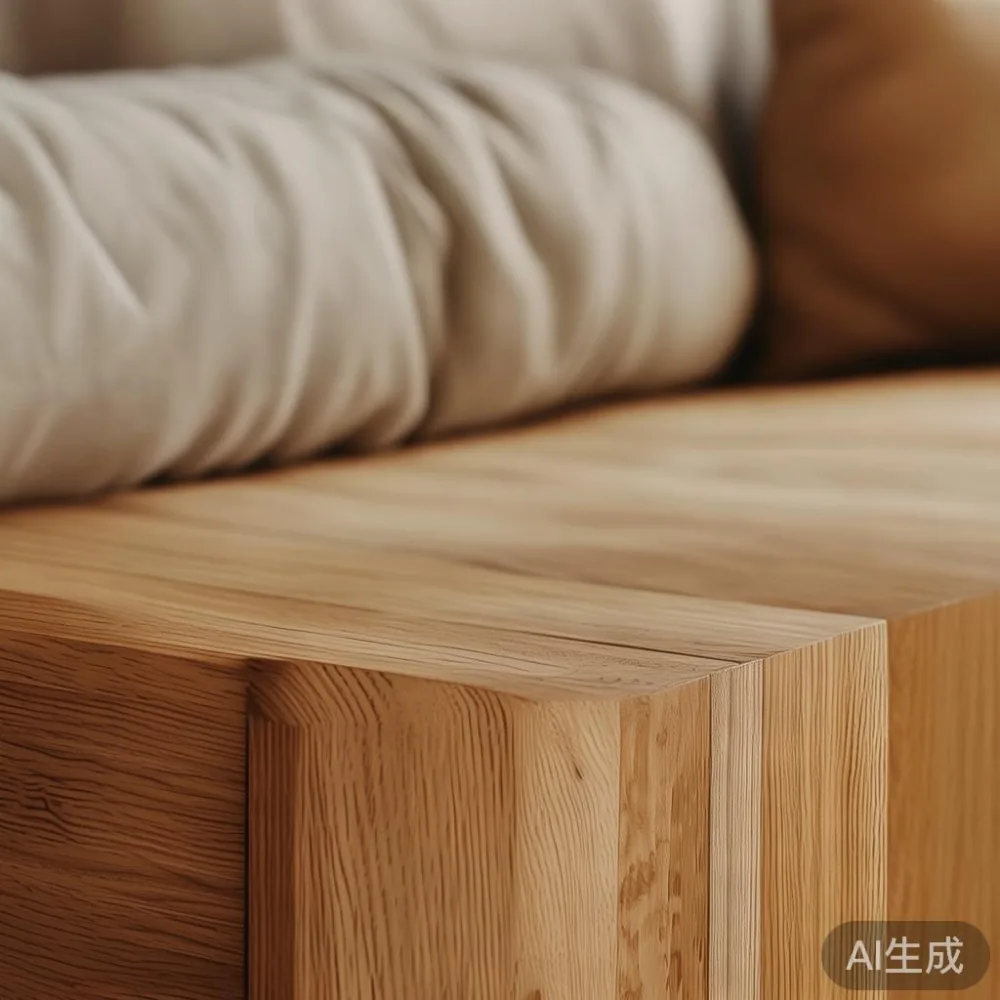
I watched this happen to my colleague last month. She ordered a four-seater solid wood sofa in a caramel tan from a Taobao live-stream, paid S$1,480 including GST, and then spent three weekends moving it 40 cm forward, 40 cm back, and finally into the guest room because the beige of the frame fought the putty color of her curtains. A 2.13 m lift opening and a 1.2 m corridor in her Tampines HDB swallowed the delivery fee of S$45, but no delivery fee can fix a tonal argument. The fix is upstream: pick the wood, fabric, and finish as a set, against your specific floor and wall, before the first cent is spent.
This guide is written for Singapore homeowners who want the calm of warm minimalism but the warmth of real wood, and who would rather not learn the hard way. We will walk through wood undertones, fabric pairing, finish matching, and the small measurements that decide whether a 2.4 m dining table fits through your service lift or spends the night on the loading bay. Along the way I will reference how a Foshan-based maker like MIDHILL thinks about its collections, because their solid wood sofa, bed frame, dining table, wardrobe, and nightstand ranges are intentionally designed to sit inside the same tonal family, which is exactly the discipline that prevents color mismatch.
What does warm minimal actually look like in a Singapore HDB?
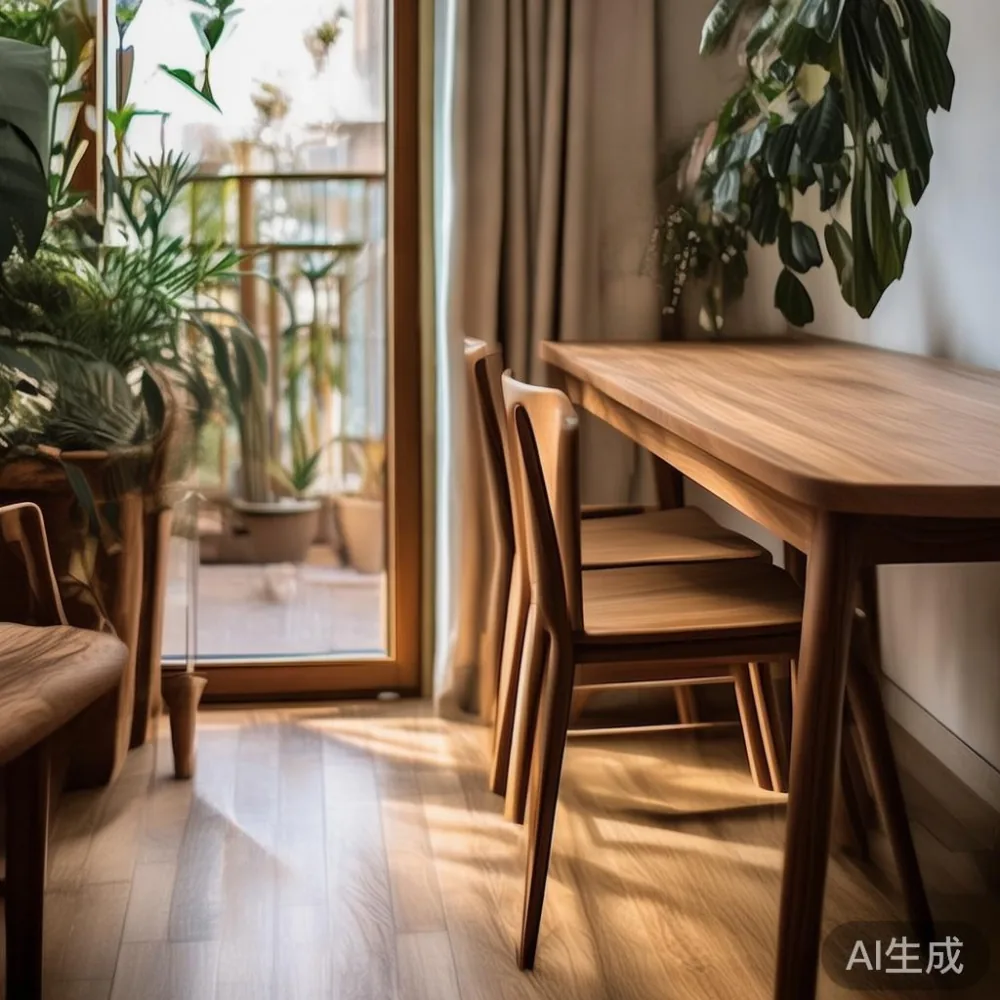
Warm minimal is not the all-white Instagram box. It is a controlled palette of three to five tones, where every surface is either a soft neutral or a quiet version of a natural material. In a 92 sqm four-roomer in Bedok you might see walls in a warm white such as Dulux Natural White, vinyl planks in a pale oak around 240 cm wide, a sofa in oatmeal boucle, a walnut TV console, and a single travertine marble table by the window. Nothing shouts. Everything echoes.
The trick is that warm minimal relies on tonal cohesion rather than color matching. A beech floor and a walnut console do not need to be identical; they need to be within a band of about 10 to 15 percent in lightness and chroma, so the eye reads them as cousins rather than strangers. Get this right and a S$1,200 four-seater solid wood sofa looks like it was always there. Get it wrong and the same S$1,200 sofa looks like it teleported from a different apartment.
Which wood undertones pair with which warm-minimal walls?
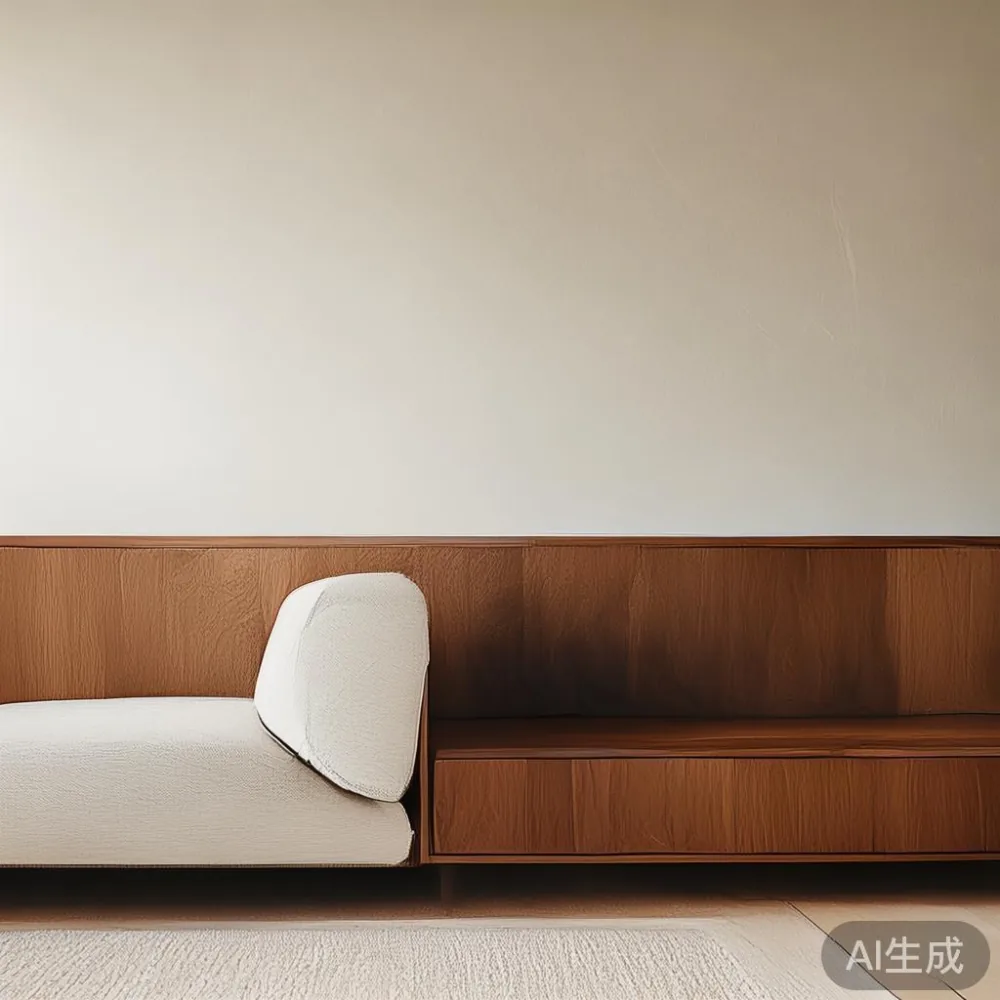
Wood has three undertones: yellow, red, and neutral. Yellow undertones read as beech, ash, and pale oak. Red undertones read as cherry, mahogany, and some rosewoods. Neutral undertones sit in the middle as natural walnut, white oak with a clear finish, and ash with a grey wash. Singapore's most popular vinyl planks, from brands like Gerflor and Berry Alloc, usually lean yellow or neutral, never red. That single fact decides 60 percent of your color mismatch risk.
If your floor is a yellow-toned oak, choose a walnut bed frame or a smoked-oak dining table rather than a reddish cherry. The walnut will read slightly darker but stay in the same family, while the cherry will look like a stain spill. If your floor is a cool grey-oak, you can go warmer with a honey-toned ash to balance the room, or stay neutral with a white-oak piece and let your textiles do the warming. A common rule I use on site visits: hold the wood swatch against the floor at a 45-degree angle in daylight. If the floor looks noticeably yellower or pinker than the wood, swap one of them.
For wardrobes, this matters even more because a 2.4 m tall wardrobe covers 1.8 to 2.2 sqm of wall. A wardrobe in the wrong undertone will dominate the bedroom for the next 15 years. If you are wondering how to choose Japandi wardrobe pieces for a Singapore flat, the answer is almost always a neutral or slightly warm walnut, never a pink cherry, and never a yellow pine in a room with grey-oak floors.
How do I prevent color mismatch between sofa fabric and wood frame?
The fabric is the larger surface, the wood is the visual anchor. They need to agree. With a solid wood sofa, the rule I give clients is simple: pick the wood first, then pick a fabric that is either in the same warmth band or one step lighter. If your frame is a medium walnut at around 6 on a 1-to-10 darkness scale, your fabric can be a 5 (lighter oatmeal) or a 6 (matching taupe), but not a 3 (pure white) or an 8 (dark espresso).
Texture matters as much as color. A boucle or linen-blend fabric softens a hard wood edge, which is what you want in warm minimal. A high-shine velvet on a heavy walnut frame pushes the room toward post-modern light luxury, which is a legitimate direction but a different one. If you are chasing the French light luxury look in a 1,200 sqft condo in the Novena area, lean velvet in stone or champagne over a limed-oak frame. If you are chasing the American light luxury look, pick a brushed-cotton slipcover over a smoked-oak frame.
Where most Singapore buyers slip is they order a fabric swatch, look at it under their kitchen LED at 9 pm, and approve. By noon the next day, with full daylight pouring through the north-facing window, the same swatch looks 20 percent greener. Always compare swatches in the actual space, in daylight, against the floor and the wall, before you confirm. A single S$10 swatch has saved my clients an average of S$600 in returns over the past few years.
How to style Japandi bed in bedroom without creating a color clash?
The bed is the heaviest piece in the room. In a typical Singapore master bedroom of 13 to 16 sqm, a 1.8 m by 2.0 m king-size bed frame will take up roughly a third of the floor. Whatever tone you choose here sets the ceiling for everything else. If you are working out how to style Japandi bed in bedroom without color clash, treat the bed frame as the anchor and pull up, not down.
Concretely: a 1.8 m solid ash bed frame in a natural clear finish reads pale and yellow-warm. Pair it with bedding in ivory, oat, or a single accent of dusty terracotta. Avoid bedding in cool grey or icy blue, because the cool textile against the warm wood creates exactly the color mismatch you are trying to avoid. A walnut bed frame at 1.8 m, on the other hand, can carry cooler bedding in sage or slate because the walnut has enough red-brown depth to absorb the contrast.
Nightstands are usually where the second mistake happens. A pale ash bed with a dark walnut nightstand is a tonal jump that the eye reads as two separate rooms. Either match the nightstand to the bed frame within 10 percent in tone, or match the nightstand to the floor. The latter is the Japandi move, and it is the one I recommend in most Tampines and Punggol flats where the floor and the bed frame are already in dialogue.
What is the right dining table finish for a Japandi dining room?
For a 1.8 m to 2.4 m dining table that seats six to eight, the finish should follow your floor and your chairs. If your chairs are wood, the table should be within 15 percent of the chair tone. If your chairs are upholstered, the table can travel further, but still not into red-cherry territory unless the rest of the room is strong enough to absorb it. Japandi for dining room settings usually means a 2.2 m solid oak or ash table in a matte hardwax-oil finish, paired with paper-cord or oak chairs, and lit by a single linen pendant. This is the palette that resists color mismatch because every element is within the same neutral-warm family.
Measure twice. A 2.4 m table needs at least 90 cm of clearance on every side to pull out a chair. In a 1,000 sqft three-bedder, that usually means a 1.8 m table is the realistic ceiling unless you are willing to push the table against a wall on one side. Lift access is the other ceiling: most service lifts in HDB blocks take a 2.1 m by 1.2 m panel, so a 2.4 m table will need a jointed top or a single-piece top craned up the stairs, which adds S$120 to S$200 to your delivery bill and is worth knowing before you click pay.
Is a French wardrobe worth the money in a Singapore bedroom?
The question of whether a French wardrobe is worth it really depends on three numbers: your ceiling height, your floor area, and your tolerance for visible hardware. A French wardrobe usually means a tall, sometimes mirrored, sometimes paneled piece with a slightly decorative cornice and a warmer wood tone than the typical Scandinavian flat-pack. In a 2.6 m HDB ceiling, a 2.4 m French wardrobe will leave 20 cm of gap that you can either box in or leave open. In a 3.0 m ceiling in a private condo, the same piece reads correctly. So is French wardrobe worth it? In a condo with the ceiling for it, yes, because the warmer tone integrates with warm-minimal walls in a way a flat-pack white wardrobe never does. In an HDB with low ceilings, the same wardrobe will feel like it is leaning on your head.
MIDHILL makes a French-style wardrobe range in solid walnut with soft-close hinges, and the collection sits alongside its solid wood sofa, bed frame, and nightstand lines so the undertone is consistent. That consistency is the real value. You are not just buying a wardrobe, you are buying into a tonal family where a 2.0 m wardrobe in walnut will not fight a 1.8 m walnut bed frame in the next room.
Why do so many deliveries end in a color-mismatch return?
Returns cost Singaporeans real money and real time. A typical 14-day return window sounds generous until you realise the courier collects on day 10, the warehouse inspects for two days, and the refund hits on day 14, leaving you with a bedroom with no wardrobe for two weeks. Add a 15 percent restocking fee, plus the original S$45 to S$80 delivery, plus the S$30 to S$60 for the second delivery of the replacement, and a single mismatch can cost S$250 in pure logistics before you count the lost weekends.
The two most common causes I see on site visits are undertone drift between the screen and the wood, and sheen drift between a matte floor and a glossy frame. A solid wood dining table photographed under 5,000 K studio light will look yellower on a phone than it does in a room with 4,000 K downlights. A glossy lacquered wardrobe photographed against a white wall will look lighter than it does against a warm-grey wall. The fix is the same in both cases: order swatches, see them in your room, and check the finish under your own bulbs.
This is also why structured suppliers with real warranty terms tend to be a safer bet. A 10-year structural warranty and lifetime refinishing, for example, signals a maker who expects the piece to stay in the home for a generation. Refinishing is your safety net against color mismatch ten years from now when you repaint the walls and the wardrobe suddenly looks off. If your wardrobe cannot be refinished in place, you are looking at a S$1,200 replacement in 2035.
How do I coordinate a marble table, a wooden dining table, and a wooden TV console in one flat?
Marble is the wildcard. A travertine marble table at 1.2 m by 0.7 m brings a creamy, slightly yellow tone that can either bridge your wood tones or fight them. To bridge, choose a marble with warm veining rather than cool grey veining, and pair it with a dining table within 15 percent undertone of the marble base. A walnut dining table next to a cool Carrara marble top is a classic color mismatch waiting to happen.
A wooden TV console in the living room is the third variable. The console should usually sit between the floor and the dining table in tone, because it is the bridge between the two zones. If the floor is pale oak and the dining table is walnut, the console should be a smoked oak in between. If the console is the same walnut as the dining table, the eye reads the open-plan space as one room, which is the goal in warm minimal.
If you are browsing Nordic furniture for sale online, watch for the term "smoked oak" in the spec sheet. Smoked oak is a neutral-warm tone that sits comfortably between pale oak and walnut, and it is the single most forgiving finish in a warm-minimal interior. It also photographs close to how it looks in real life, which reduces the screen-to-room color mismatch risk significantly.
Can one supplier really cover sofa, bed, dining table, and wardrobe in the same tone?
Most flat-pack makers sell each category from a different sub-supplier, which means a sofa frame in beech, a bed frame in ash, a dining table in oak, and a wardrobe in walnut. Four pieces, four undertones, four chances to clash. The reason I keep returning to MIDHILL on site visits is that their collections are designed in one tonal family. Their solid wood sofa range, their bed frame and nightstand range, their dining table range, and their wardrobe range all draw from the same oak and walnut palette. That kind of range discipline is rare.
If you are shopping across brands, the only way to fake this discipline is to physically line up wood swatches from each supplier and check them against your floor before you order. Bring a magnet (most hardware on quality pieces is brass or steel, both neutral), bring your paint chip, and bring a piece of A4 paper as your white reference. Spend 20 minutes at the swatch stage and save 20 weekends of rearranging.
What about delivery, lift access, and the real cost of getting it home?
Singapore logistics matter as much as color. A 2.4 m dining table will not fit a 1.9 m by 1.1 m HDB service lift, so confirm the dimensions before purchase. A 1.8 m wardrobe usually clears, but a 2.4 m wardrobe often does not and needs to be delivered flat-pack with on-site assembly, which adds S$80 to S$150. Corridor widths in older HDB blocks can be as tight as 1.1 m, so a 2.0 m sofa delivered fully assembled will not make the corner at the stairwell. Disassemble-friendly frames save real money.
Free shipping above a reasonable threshold helps, but check whether it includes assembly and whether the stairwell access is included in the quote. A typical MIDHILL delivery to a Singapore address runs around 14 to 21 days from order, with full tracking, and includes lift access in the base quote. Returns inside 14 days are accepted, which is the safety net most buyers actually need while they verify the undertones in daylight.
Budget honestly. A warm-minimal living-dining of a solid wood sofa at S$2,400, a 2.0 m dining table at S$1,950, six chairs at S$180 each, a 1.8 m TV console at S$980, and a small marble side table at S$620 lands around S$8,030 before delivery and GST. Add 9 percent GST on the landed value, add S$120 to S$240 for delivery depending on access, and you are looking at S$8,950 to S$11,050 for a coherent room. The number that surprises most owners is that the same set bought across four different suppliers, with one eventual return, usually lands 12 to 18 percent higher.
How do I future-proof my color choices against a 2028 repaint?
Walls change. Floors change. The one thing you want to stay constant is the undertone of your major wood pieces. Pick a neutral or warm undertone rather than a yellow or red one, and you will be able to repaint from warm white to cool grey to soft greige without replacing a single piece. Pick a strong yellow or red undertone, and you are locked into a narrow wall palette for the next 15 years.
Refinishing is your escape hatch. If your taste shifts, a walnut piece can be stripped and re-oiled in a different tone for roughly S$600 to S$1,200 per piece, less than a replacement. This is one reason a maker offering lifetime refinishing, like MIDHILL, removes a real risk over the life of the furniture. The pieces you buy today should still work in the apartment you have in 2035, and the way to guarantee that is to choose the undertone carefully and keep the option to refinish open.
Is French light luxury the right direction for a small Singapore condo?
French light luxury, in furniture terms, means soft curves, slightly warmer wood, occasional brass or champagne hardware, and textiles in stone, oatmeal, or dusty rose. In a 700 sqft two-bedder in Punggol, French light luxury reads correctly because it brings warmth without bulk. A curved-back solid wood sofa in oatmeal boucle, a round 1.2 m marble table, and a slim walnut console is a complete French-light-luxury living room in under 18 sqm of footprint. The risk is over-accessorising; one or two brass moments are enough.
If you are evaluating where best Modern light luxury furniture for a Singapore home sits on the spectrum, think of it as the cooler cousin of French light luxury, with cleaner lines, less ornament, and a heavier reliance on the stone-to-wood tonal bridge. Post-modern light luxury sits between the two, with stronger silhouettes and a touch more contrast. For a warm-minimal interior, any of the three will work as long as the undertone discipline is kept, which is the whole point of the exercise.
What should I check on the day of delivery?
Three checks. First, check the finish in the actual space before signing the delivery note. Daylight, against your wall, against your floor. If the undertone is wrong, refuse on the spot; after the courier leaves, your use drops by half. Second, check every joint and every soft-close hinge while the delivery team is still in the apartment. A 10-year structural warranty is only useful if the defect is logged at delivery. Third, measure the path from the lift to the door with the team leader before they bring the piece up. A 2.4 m wardrobe and a 2.1 m lift ceiling is a math problem best solved at the loading bay, not in your living room.
Finally, live with the piece for seven days before you judge. A new wood tone can read as too warm for the first 48 hours simply because it is new. Move the curtains, add a textile, and let the room settle. If on day seven you still see a color mismatch, use the 14-day window. The whole point of warm minimal is that the room feels settled, and you will know within a week whether it does.
Is there a one-page checklist I can use before I click pay?
Yes, and it is shorter than you think. Confirm the wood undertone against your floor in daylight. Confirm the fabric against the wood in your actual room, under your actual bulbs. Confirm the sheen of the finish against your existing pieces. Confirm the dimensions against your lift, your corridor, and your room with at least 90 cm clearance for chairs. Confirm the undertone will still work if you repaint in 2028. Confirm the warranty terms in writing, including refinishing. Confirm delivery includes assembly and lift access. Confirm the return window and the restocking fee in writing. If any of those eight checks fails, do not pay.
Warm minimal is a discipline of restraint, and the furniture has to be chosen with the same restraint. A single tonal family across sofa, bed, dining table, wardrobe, and nightstand, anchored by a solid wood maker with a real warranty, will outlast three paint jobs and two flooring changes. That is the test, and it is the test most Singaporean interiors fail because the buying decision happens in a showroom and the living happens at home. Close the gap and the color mismatch problem disappears.