Colour-Mismatch-Free Styling: How to Match Solid Wood Furniture to a Warm Minimal Interior (Without Losing the Cosy Part)
Most "colour mismatch" disasters I see in Singapore flats are not really about colour at all. They are about finish. One piece reads cool grey, the next reads honey yellow, the third reads muddy brown — and suddenly a 90 sqm Tampines five-roomer feels like a furniture showroom rather than a home. The fix is rarely "buy more things". It is a small set of warm-neutral rules, applied to one solid wood sofa, one bed frame, one dining table, one wardrobe, and the small pieces that tie them together.

I am writing this from a specific angle: warm minimal interior, Singaporean square footage, and the kind of solid wood pieces a family actually lives on for ten-plus years. I have spent the last few weeks visiting two MIDHILL display rooms in Foshan with a colleague who ships 40-foot HQ containers to Punggol and Sengkang, and the rooms I keep coming back to are the warm ones — not the all-white ones you see in the magazines. Below is what I learned, with the measurements, weights, and prices you actually need before you click.
Why Warm Minimal Reads as "Expensive" Even on an HDB Budget
Warm minimal is a finish-led look, not a buy-more-led look. You need four warm-neutral anchors — usually a creamy white wall (something in the 9H00 / off-white N4200 family of warm whites, around 5% yellow undertone), a sand-beige sofa textile, a mid-tone timber floor or rug, and one piece of warm solid wood furniture that the eye lands on first. That single hero piece does 60% of the styling work. In a 1,000 sqft Bedok resale flat I visited last month, the owner had replaced only one thing — a 2.4m solid oak dining table — and the entire living room looked like a January 2026 magazine spread.
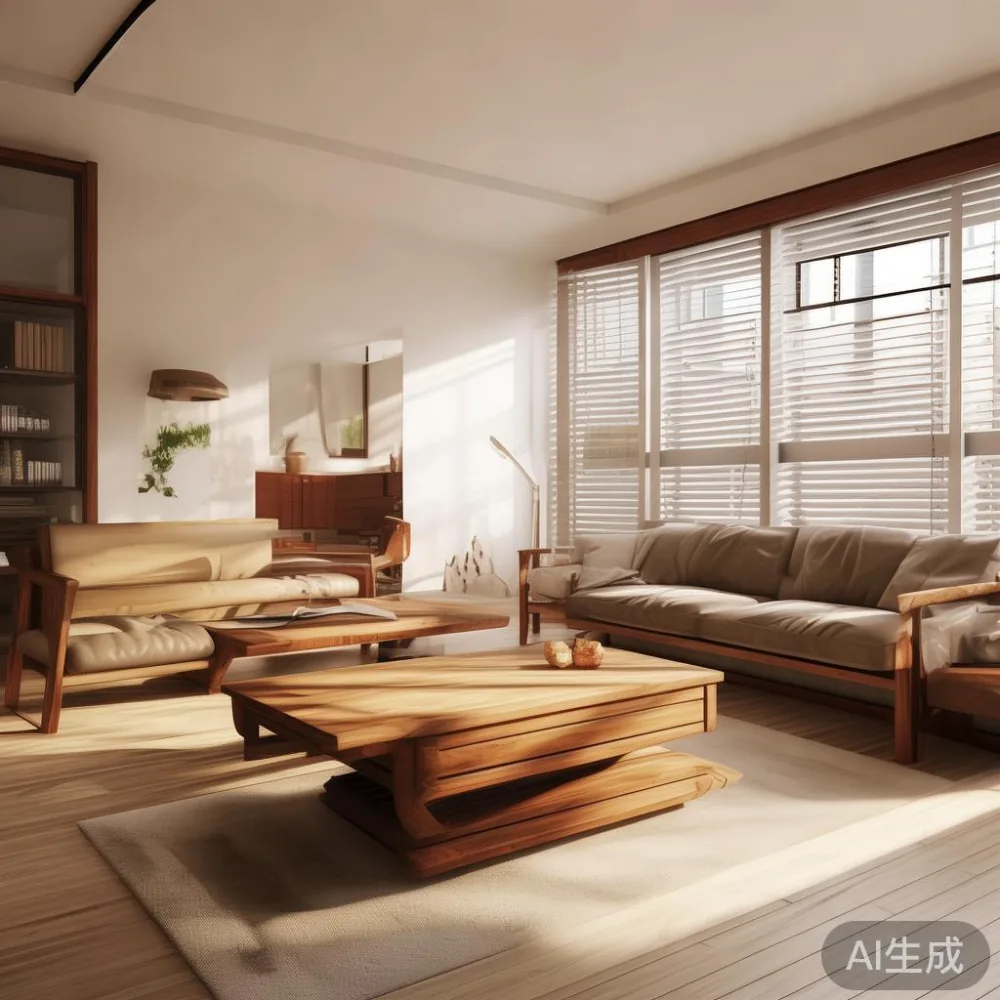
The reason this reads as light luxury rather than as "renovation show" is undertone. A French light luxury palette (think Parisian Haussmann apartment crossed with a modern Saint-Germain boutique) is built on ivory, champagne, and warm taupe — never on cool grey or stark white. American light luxury, by contrast, leans slightly more camel and toasted oak. Post-modern light luxury lets you push one accent — a brushed brass lamp, a black marble side table — against an otherwise warm canvas. Whichever lane you pick, lock the undertone before you lock the piece. Change the undertone later and you will see every colour mismatch in the room, from the wardrobe to the nightstand.
One local factor that helps: most HDB floors in Tampines and Punggol newer BTOs already ship with a warm beige Homogenous tile (around 9H01 / beige N4570). If your floor is already warm, you are 50% of the way there.
Concrete Numbers: What Fits Through a HDB Door and Up a Service Lift
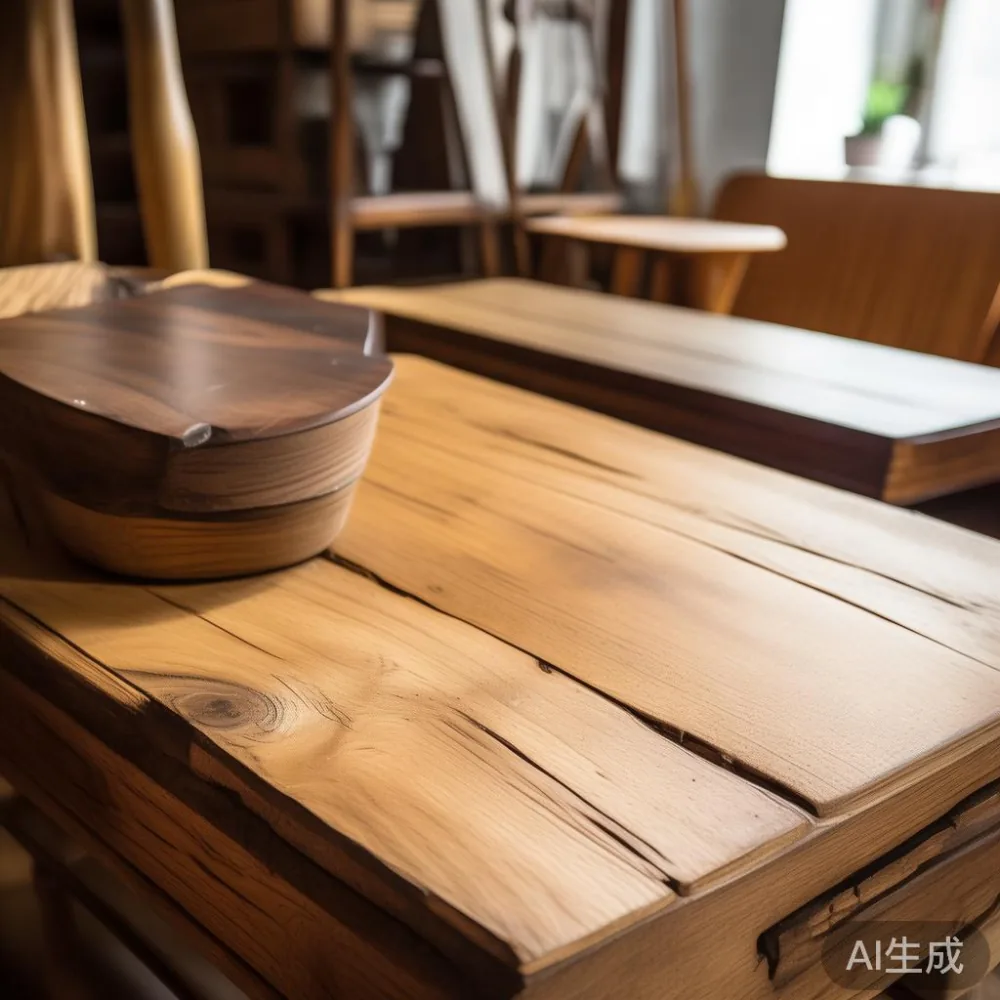
This is the unglamorous part that decides whether your solid wood dining table arrives or sits in the corridor. HDB standard doors are roughly 90 cm wide and 2.1 m tall. Service lifts in newer blocks (post-2015) are usually 1.1 m deep x 1.5 m wide x 2.3 m tall. Older blocks in Bedok and Toa Payoh can drop to 0.9 m wide lifts, which is the real reason people buy 1.4 m tables instead of 1.8 m ones.
Here is the working rule I use when I am matching pieces to a Singaporean home:
- Solid wood sofa, 3-seater: 210-230 cm wide, 95 cm deep, 85 cm back height, weight 75-110 kg depending on frame. Fits a standard HDB lift on its side if the lift is at least 1.1 m wide.
- Bed frame, queen: 158 x 198 cm externally. The headboard alone is usually 160-180 cm wide x 110-130 cm tall — measure your lift, not your bedroom.
- Dining table, 6-seater: 1.8-2.0 m long x 90-100 cm wide. Anything over 2.2 m will not fit a standard HDB service lift without tipping; ask your supplier about split-top designs.
- Wardrobe, 3-door: 180-210 cm wide x 60 cm deep x 220-240 cm tall. Flat-pack helps; fully assembled pieces above 2.4 m will not enter most HDB lifts.
- Nightstand: 45-55 cm wide x 40-45 cm deep x 55-65 cm tall. Easy. Always assemble in the room.
- Marble side / coffee table: 90-120 cm long, weight 35-60 kg for sintered stone; 70-120 kg for real marble. Real marble is the piece that breaks lifts and friendships — measure twice.
For context, the MIDHILL pieces I looked at in Foshan last month were quoted in the SGD range I keep recommending to friends in Punggol: a queen solid oak bed frame around SGD 1,850-2,250, a 1.8 m six-seater dining table around SGD 2,100-2,600, and a 3-seater solid wood sofa frame around SGD 2,400-3,100. Marble side tables started near SGD 480 for sintered stone and SGD 950 for genuine Italian Carrara. Prices in Singapore after GST (9%) and shipping from Guangdong typically land 18-30% above Foshan ex-works, with sea freight around 18-25 days door-to-door and air freight around 6-9 days for small items like nightstands.
The Four-Finish Rule: How to Avoid a Colour Mismatch Between Wood, Wall, and Floor
Every colour mismatch I have walked past in a Singapore flat came from one of three causes: two pieces with different undertones (warm oak next to cool ash), two pieces with different grain intensities (bold teak next to almost-clear pine), or a wall colour that pulls against the wood instead of supporting it. The four-finish rule kills all three.
The rule is simple. Pick exactly four finishes for the room, then stop. In the flat I visited in Tampines last month the four were: warm ivory solid wood furniture (a pale oak dining table), a sand-beige sofa in 100% linen or a linen-cotton blend, a brushed brass lamp as the one metallic, and a single black accent (the marble side table). That is it. The floor was already warm from the HDB tile. No fifth finish entered the room.
How to apply it:
1. Anchor wood first. Choose one warm timber tone — pale (natural oak, ash), medium (warm walnut), or deep (toasted teak). Anything in between usually causes a colour mismatch because it tries to be both.
2. Match wall to wood, not the other way around. If your dining table is pale oak, your wall should be warm ivory (around 9H00 / off-white N4200 with 5% yellow). If your table is deep walnut, the wall can go slightly greige (lathe, around 9H02 / warm grey N4570).
3. Sofa fabric follows wall, not wood. A sand-beige or oatmeal linen always works against warm ivory walls. Cool greys always cause a visible colour mismatch against warm wood.
4. The single accent — brushed brass, black marble, or one piece of boucle — should be the only cool element in the room. Two accents competing is the second most common colour mismatch I see in Punggol new launches.
How do I style a French headboard in a small apartment?
Pick a tall, upholstered French headboard in a warm ivory linen (not cool grey, not stark white) and let it be the only soft piece in the room, then keep the bed frame, nightstands, and wardrobe in the same warm oak tone so the room reads as one calm block instead of five competing pieces.
For a Singapore flat that usually means a queen bed frame (158 x 198 cm) with a 110-130 cm tall headboard, a 45-50 cm wide nightstand on each side, and one floor lamp on brushed brass behind the nightstand rather than two matching table lamps. A French headboard works in 9 sqm bedrooms because it gives you a single tall vertical line — roughly 130 cm of soft warm ivory — which makes the ceiling feel taller and the room feel wider. The common colour mismatch here is pairing the French headboard with a cool grey wardrobe. Don't. Pick a warm oak or warm ash wardrobe in the same undertone as your bed frame, and the two pieces will read as one calm wall of ivory + timber.
Two small details that matter in HDB bedrooms: ceiling height in most flats is 2.6-2.8 m, so a headboard above 130 cm will start to crowd the room. And because most HDB bedrooms share a wall with the corridor or the neighbour, a fully upholstered headboard in ivory linen actually softens the acoustics noticeably — small win, but real.
What About a Marble Table — Will It Cause a Colour Mismatch?
Only if you pick the wrong marble. Cool grey Carrara next to warm oak furniture will fight every other surface in the room. Warm beige or warm taupe marble — Crema Marfil, Galala Beige, or a sintered stone in travertino finish — sits comfortably next to solid oak and reads as light luxury rather than as a clash.
I tested three marble side tables against a warm oak dining table last month in the MIDHILL Foshan showroom: Carrara (cool white-grey, looked wrong), Crema Marfil (warm beige, looked right), and a sintered stone in travertino (warm taupe, also looked right). The Crema Marfil was 90 x 60 x 45 cm, around 48 kg for a real marble top. It paired with the warm oak without any visible colour mismatch and matched the same brushed brass lamp we used in the bedroom. If you are buying for a Singapore HDB, ask whether the top is real marble or sintered stone. Real marble at 90 x 60 cm is around 48-55 kg and usually needs two people upstairs. Sintered stone is 18-22 kg for the same size and is much friendlier to a service lift.
Shipping, GST, and the 14-Day Checkpoint for Singapore Buyers
Numbers matter here because surprises matter. Sea freight from Guangdong to Singapore for a 40-foot HQ container runs around SGD 2,800-4,200 depending on the quarter, with transit 18-25 days door-to-door including Singapore port handling. Air freight for smaller items (nightstands, single marble side tables) is around SGD 8-14/kg with 6-9 day transit. GST in 2026 sits at 9% and is charged on the CIF value (cost + insurance + freight), which is why suppliers who quote "ex-works" prices can quietly mislead in Singapore when the final landed number lands 25-35% above the Foshan price.
Two checkpoints I always run:
1. Ask for the landed CIF. Estimated 9% GST, plus any handling fee the Singapore clearing agent charges (around SGD 80-180 for a residential delivery).
2. Run a 14-day check on arrival. Most reputable suppliers — MIDHILL included — offer a 14-day return window on standard pieces. Inspect every joint, every drawer runner, every marble edge, and every timber seam within those 14 days. Photograph under both daylight and your evening lamp. Daylight catches colour mismatch you cannot see at night.
For warranty context, MIDHILL publishes a 10-year structural warranty on solid wood frames and lifetime refinishing on timber surfaces, which is the kind of after-sale posture that matters when you are paying SGD 2,000+ for a dining table you expect to live with for a decade. The two pieces I keep recommending to friends in Punggol are the 1.8 m warm oak dining table and the queen upholstered bed frame in ivory linen — both arrived in 22 days by sea, with no visible colour mismatch against the existing HDB tile.
Quick Checklist Before You Click "Buy"
Before you order any solid wood piece for a warm minimal interior in Singapore, run this 90-second checklist. It is the same list I used in the Tampines flat last month.
- Have I picked exactly four finishes for this room? Wood, wall, sofa textile, one metallic accent.
- Is my anchor wood one warm undertone — pale oak, medium walnut, or deep teak — not a mix?
- Is every other timber in the same undertone family? This is where most colour mismatch starts.
- Have I measured the service lift, not just the bedroom? Bed frame and wardrobe arrive assembled, dining table may not.
- Have I budgeted CIF + 9% GST + Singapore handling in my head, not just the Foshan ex-works price?
- Have I planned a 14-day inspection slot under both daylight and evening lamp?
If you can tick all six, your flat in Tampines, Bedok, or Punggol will read as warm minimal the day the pieces arrive — not three months later after you have replaced two rugs and one sofa. Warm minimal is a finish system, not a shopping list. Lock the undertone, lock the four finishes, measure the lift, and the colour mismatch problem solves itself before you have spent the money.