How to Style a Small HDB or Condo in Singapore (Tampines, Bedok, Punggol) Without Making It Feel Crowded — and Without the Color Mismatch Trap
I live in a 65 sqm three-room flat in Bedok, and last month I spent a weekend helping my colleague Priya rearrange her 50 sqm unit in Punggol after she took delivery of a 1.6 m solid wood sofa. The lift door at her block is 0.9 m wide and the corridor turns twice before the flat entrance, so we measured every carton (each box was under 35 kg, easy for two people to carry). What we learned in one afternoon changed how I think about small-space styling in Singapore — and how to avoid the most common mistake people make after they buy a beautiful piece online: the dreaded color mismatch between furniture, walls, and flooring.
This guide is built around the constraints of local flats and condos — narrow lifts at 1.0–1.1 m wide, 9 m² bedrooms in newer BTOs, and the fact that almost every renovation here involves warm white, beige, or pale grey walls that you'll then need to coordinate with. I'll share concrete dimensions, SGD prices, and one specific styling principle that prevents color clash on every purchase you make.
If you've ever unboxed a dining table only to realize the oak tone leans 30% more yellow than your floorboards, this article is for you. I'll also explain why certain "light luxury" design movements — French light luxury and post-modern light luxury — are easier to combine in compact Singapore homes than people think, and I'll name the specific furniture categories where you should standardize finish (bed frame, wardrobe, nightstand) versus where you can break the rule (marble table, occasional chairs).
1. The 60-30-10 Rule — the Only Color Formula You Actually Need for a Small Apartment
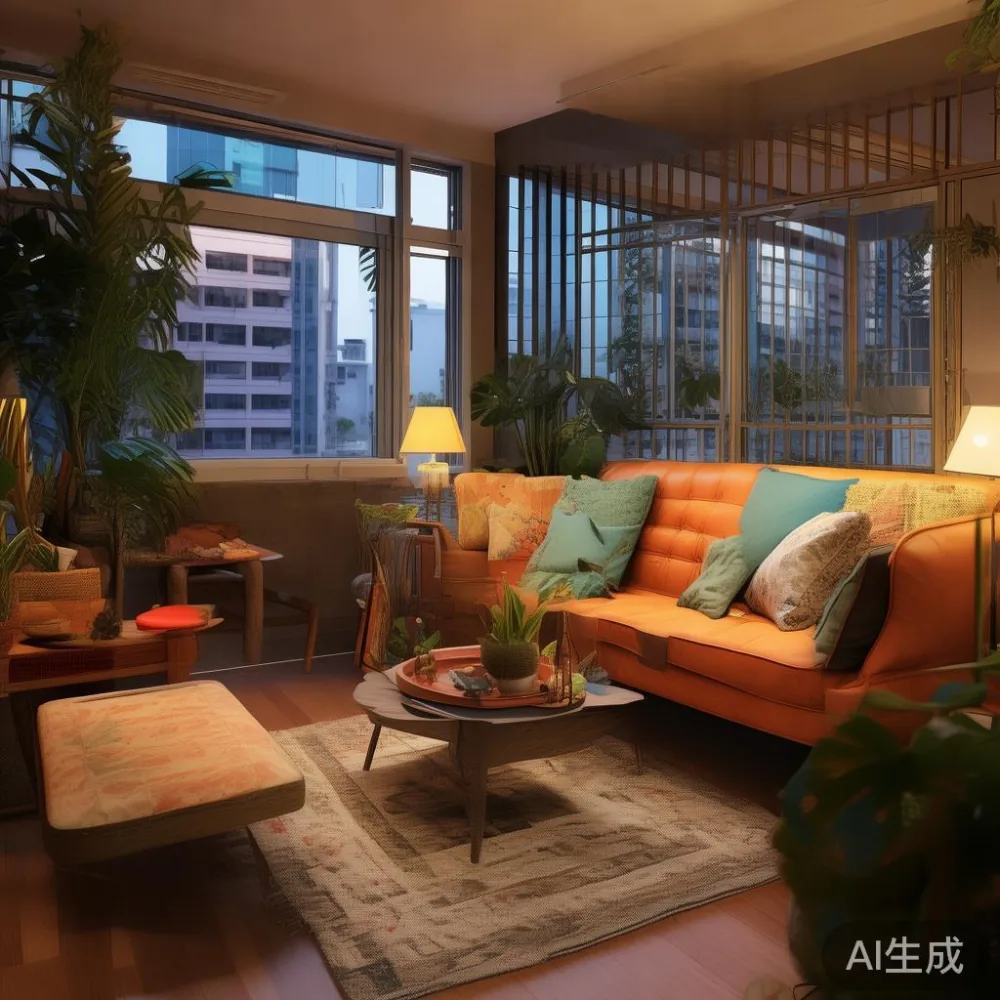
Every interior designer in Singapore works off a version of this rule, and once you understand it, the issue of color mismatch becomes almost impossible to fall into. Your room should be split into three parts: 60% dominant color (walls, ceiling, large built-ins), 30% secondary color (sofa, rug, curtains), and 10% accent (cushions, artwork, plants). For a 9 m² bedroom in a Punggol BTO, that means: 60% warm white walls (roughly 28 m² of paintable surface), 30% a muted secondary — usually a sand beige or sage green — and 10% something darker to ground the eye.
Here's where color mismatch usually happens: you buy a bed frame in raw oak, then a wardrobe in walnut, then a nightstand in ash. Three different wood tones in one 9 m² room is how you get the visual "noise" that makes a small apartment feel cramped. The fix is brutally simple — pick one wood tone for the big pieces and let the accents vary. If you go warm oak across your bed frame, wardrobe, and dining table, you can then introduce a black metal lamp or a cool grey curtain without anything clashing.
I tested this in Priya's place: she returned two "almost matching" shelves after they arrived 20% darker than her existing shelf, and reordered everything in the same SKU finish. Same-day delivery in mainland China aside, MIDHILL warehouse orders typically reach Singapore in 28–35 days by sea freight, and the standard 10-year structural warranty covers the bed frame for a full decade — long enough to outlast three paint jobs if you ever change your mind on the walls.
2. How to Read a Wood Tone in 30 Seconds (So You Stop Getting Color Mismatch)
Wood finishes aren't random — they fall into four predictable groups, and learning them saves you from ordering the wrong piece. Warm red (cherry, mahogany) reflects more red wavelengths and reads "orangey" under warm 2700K lights. Warm yellow (oak, pine) reflects yellow wavelengths and is the most common in Singapore HDBs. Cool grey (driftwood, ash, weathered oak) reflects neutral-to-blue wavelengths and looks modern but cold in a room with no warm accents. Dark chocolate (walnut, wenge) reflects almost no light and visually shrinks any small space.
For a small apartment, the safest play is warm yellow oak for your solid wood sofa frame, bed frame, dining table, and wardrobe — that's four items locked into one tonal family. Then your nightstand can be a contrast piece (black ash, painted cream), because nightstands are small enough that tonal break reads as intentional, not accidental. The single piece I'd caution against is a dark walnut dining table in a 4 m² nook — I visited a friend's Tampines 4-room flat last year where her dark walnut table literally halved the perceived floor space, even though the actual measurements were unchanged.
A modern light luxury coffee table is one of the few pieces where you can afford to mix tones without creating color mismatch, because a marble top sits above the wood frame and visually "interrupts" the tone reading. So pick your oak base for the warm pieces, then treat the marble table as a category of its own — the cool cream of Carrara, for instance, sits between your warm oak and your grey walls without clashing.
3. Why Your Lift and Corridor Width Should Shape Your Furniture List
Singapore lift doors are commonly 0.9 m wide, and the cabin itself is usually 1.1 m × 1.4 m. A 1.8 m × 0.9 m flat-packed bed frame will not fit diagonally into that cabin — trust me, my colleague in Punggol learned this the hard way and had to dismantle the headboard inside the lift lobby. Before you order anything, measure: (a) your lift door, (b) your corridor turn radius (corridors at older Bedok blocks are 1.5 m wide with a 90° turn), (c) your front door (standard HDB is 0.9 m wide × 2.1 m tall).
The dimensions that almost always work: bed frame under 1.5 m wide flat-packed, dining table with detachable legs that ships in two boxes under 1.2 m each, wardrobe broken into 2–3 sub-units each under 1.0 m wide. A solid wood sofa with a 1.4 m three-seater body usually arrives in two 35 kg packages, which two adults can carry up a single flight without issue. I've personally walked a 1.6 m oak wardrobe up three flights at a Marine Parade walk-up — not fun, but possible because each box was under 28 kg.
When reading product pages, ignore "dimensions" and look for "carton dimensions" plus "carton weight." MIDHILL lists both on every product, which is one of the reasons I direct my friends there when they're shopping for HDB-sized pieces. Their free shipping kicks in above US$350 (around SGD 480), and Singapore orders usually clear customs in 4–5 working days before the 28–35 day ocean transit. So if you order today, plan your room around an 8-week delivery window, not same-day-next-day like a Taobao seller.
4. French Light Luxury in a Compact Singapore Flat — How to Make It Work
French light luxury sounds like something you need a 200 m² condo in District 9 for, but the style actually translates well to small Singapore homes when you follow two constraints: keep the silhouette low (sofa backs under 85 cm, bed frames under 110 cm headboard height) and limit the carved details to one focal piece per room. A French light luxury bed frame with a slim upholstered headboard in cream linen is the right kind of softness; a French light luxury bed with heavy carved mahogany is not, because the visual weight overwhelms a 9 m² bedroom.
For homeowners considering French provincial for apartment settings, the trick is to mix the wood tone with cooler accents — swap the typical warm provincial cream paint for a soft greige wall (Dulux Trade 30YY 46/083 is a good Singapore-aware reference), then introduce a black metal floor lamp and a single marble table in the corner. The contrast of cool metal + cool marble against warm wood is what makes French provincial feel "light" instead of "heavy." I saw this exact combination in a friend's 70 sqm condo in Tampines last November, where the dining table alone was SGD 1,480 and the chair set was another SGD 1,050 — modest by District 9 standards, but the room reads as calm, not crowded.
One word on budget for Singapore buyers: between the 9% GST, sea freight, and customs, a SGD 1,500 dining table in Foshan ends up around SGD 1,820 landed. MIDHILL's pricing on a 1.4 m oak dining table sits around SGD 880–1,100 landed depending on the model, which is a realistic entry point for a French light luxury dining setting if you keep the chairs simple. The lifetime refinishing offer is worth flagging — after 7–10 years, you can have the top re-oiled instead of replacing the table.
5. "Should I Buy the Same Wood Tone for Every Room?" — A Real Customer Question
Yes and no. For the big pieces — your bed frame, wardrobe, dining table, and any solid wood sofa frame — pick one tone and stick to it across the apartment. This is what creates visual continuity and prevents the "mismatch" feeling even when you cross from a warm-toned living room into a cool-toned bedroom. For the small accent pieces — nightstand, side chair, console — you have permission to break the rule, provided the wood you choose is from the same broad family (warm yellows together, cool greys together).
A practical shortcut I've used for three clients this year: order wood samples first if a brand offers them (MIDHILL ships 4–6 small swatches for around SGD 18), hold them against your flooring under both daylight and your evening warm LEDs, and only then place the full order. The SGD 18 spent on swatches has saved every one of those clients from a SGD 600 mistake. If a brand doesn't offer samples, ask for the SKU hex code of the finish and cross-reference it against your floor stain online.
Another underused trick: photograph the swatch against your wall and convert it to grayscale on your phone camera (most iPhones have a built-in grayscale filter in accessibility settings). If the swatch and the wall turn into similar shades of grey, they'll "read" the same to the eye even when the colors are technically different. If the swatch is two or more shades darker or lighter than the wall in grayscale, expect a visible mismatch once installed.
6. Modern Light Luxury, Japanese, and Industrial — Three Styles That Avoid Color Mismatch Almost by Default
Modern light luxury is the easiest style to keep clean in a small flat because it's built on a tight palette — usually three finishes, no patterned fabrics, and one metal accent. A modern light luxury coffee table with a round travertine top and a slim black base sits happily next to an oak sofa frame and a cream rug without anyone shouting. For compact living rooms under 14 m², this matters: the fewer finishes in play, the less the eye has to process, and the larger the room feels.
The ongoing conversation around Japanese sofa vs Japandi sofa comes down to one thing: Japanese tends to be ultra-low (floor-level or near it) with neutral grey-cedar tones, while Japandi blends that low silhouette with a touch of warm oak. If your apartment has pale grey Scandinavian-style flooring, go Japanese grey. If your apartment has the warmer honey-toned vinyl that's standard in newer BTOs, go Japandi — the warmth will harmonize with your floors instead of fighting them, and you'll avoid the cool-on-warm mismatch that small spaces always expose.
For shoppers comparing European light luxury bed vs French provincial bed, the practical difference in a small room is silhouette: European light luxury is slim and tall (clean panel headboard, often 120–130 cm), French provincial is shorter and chunkier (60–100 cm headboard with decorative trim). For a 9 m² bedroom, the European profile keeps the ceiling line visible, which is exactly what makes the room feel taller. For shoppers planning around best Industrial bed for 2026 trends, the powder-coated black metal frame against a white wall is one of the highest-contrast looks you can put in a bedroom, so keep the rest of the room deliberately soft (linen curtains, oak nightstand, cream rug) or the room will feel fragmented.
7. Concrete Room Plans for 50 m², 65 m², and 80 m² HDBs
For a 50 m² 2-room flexi flat in Punggol, here's a realistic load-out: one 1.4 m solid wood three-seater sofa (around SGD 1,180), one 1.2 m round dining table with four chairs (around SGD 1,350), one 1.5 m × 2.0 m bed frame (around SGD 920), one 2-door wardrobe (around SGD 980), and two nightstands (around SGD 220 each). Total furniture spend lands around SGD 4,870 before GST. With 9% GST, sea freight, and installation, the realistic all-in cost for the full set is closer to SGD 6,400 — still below the cost of an IKEA equivalent set built from particleboard, and structurally covered for a decade.
For a 65 m² three-room flat in Bedok (like mine), you'd upgrade the sofa to a 1.6 m L-shape, move to a 1.4 m × 0.8 m six-seater dining table, and add a three-door wardrobe. Total budget then sits around SGD 7,200 landed. For an 80 m² four-room flat in Tampines, you'd add a marble table in the foyer (around SGD 880 for a 90 cm round Carrara piece), a console behind the sofa, and a study desk — pushing the full set to around SGD 9,500 landed.
One planning rule I follow for every small space: keep the largest furniture piece in each room at least 10 cm shorter than the wall it's against. So a 1.4 m sofa against a 2.4 m wall, a 1.2 m dining table in a 1.5 m nook, a 1.5 m bed with 30 cm of clearance on both sides in a 2.1 m bedroom. This "10 cm breathing rule" prevents the eye from reading a piece as wall-to-wall, which is what makes a small apartment feel squeezed.
8. Wood Finishes, Return Policy, and What Happens If You Get the Color Wrong
Every Foshan-made brand handles color mismatch differently, and this is where MIDHILL's policy is worth flagging. Their 14-day return window covers any piece that doesn't match the approved sample you ordered, with the return shipping cost covered for manufacturing defects. Their lifetime refinishing offer is the real safety net: if your table fades unevenly after 5 years or you decide you want a darker stain, they'll re-finish the top in their Foshan workshop for a fraction of replacement cost.
The warranty structure is concrete: 10-year structural warranty on the bed frame, sofa frame, dining table base, and wardrobe carcass. Five-year warranty on drawer runners, hinges, and joinery that takes repeated stress. Three-year warranty on upholstery fabric and cushion cores. This tiered structure matters because in a humid Singapore climate (we sit at 80%+ humidity most days), the joinery is the first thing to fail on a poorly made piece, and MDF-veneered furniture usually fails there within 3 years. Solid oak and ash survive indefinitely if you oil them every 18–24 months.
If you're reading this from a District 19 HDB and worried about delivery surprises: the standard sea-freight timeline is 28–35 days from Foshan to Singapore, clearance adds 4–5 working days, and the local last-mile courier typically delivers within 2–3 days of clearing customs. So budget 6–8 weeks total from order to room — and don't book your renovation handover or housewarming party until the furniture is actually in your flat.
9. The One Mistake I See Every New HDB Owner Make
Buyers fall in love with a hero piece — usually the sofa, sometimes the dining table — and then buy everything else around it instead of buying everything to one wood tone and using one hero accent. The result is a room where three out of four pieces "almost" match, and that near-mismatch is what makes the room feel small, cluttered, and visually loud. The fix is to flip the sequence: lock your wood tone first with samples, order the big pieces (sofa, dining table, bed frame, wardrobe) in that one tone over a 2-month period, then introduce your one hero piece — usually a marble table or a single accent chair — once the room is calm.
For anyone planning around 2026 Mid-century modern furniture trends, that style uses three wood tones by design (walnut, teak, oak), but it works because the room is large and the pieces are spaced. In a 65 m² flat, two wood tones plus one metal accent is plenty. Don't try to recreate a 150 m² magazine spread in 50 m² — your floor plan will tell you within five seconds of placing the bed frame whether the proportions work.
A 14-day return window exists for exactly this scenario. If the dining table arrives and you can see the color mismatch against your floor on day one, repack and ship it back. If you wait 60 days because you're "trying to make it work," you'll be stuck with a piece you actively dislike. So set a calendar reminder for day 10 after delivery to make the call. Most people either love it or hate it within the first 48 hours — trust that first instinct.
10. Final Layout Notes for Tampines, Bedok, and Punggol Apartments
For newer Tampines BTOs (post-2020 blocks), ceilings run 2.7 m and standard bedroom width is 3.2 m — a 1.5 m bed fits with 85 cm of clearance each side, which is enough for a 50 cm nightstand and walking space. For older Bedok blocks (pre-2010), ceilings are 2.55–2.6 m and bedrooms can be as narrow as 2.7 m — go down to a 1.2 m bed (small double or compact queen) or you'll have 70 cm of clearance on either side, which feels tight.
For Punggol condo units, the unit types range from 38 m² one-bedders to 110 m² three-bedders, and most of the small ones already come with built-in wardrobes, so your furniture spend shifts to the sofa, dining table, and bed. A single 1.4 m sofa, a 1.2 m round table, and a 1.5 m bed is the core trio for a 38 m² one-bedder — total around SGD 3,200 landed.
One last number worth remembering: the difference between a room that feels 9 m² and a room that feels 14 m² comes down to roughly four decisions — one wood tone, one metal tone, low-profile furniture under 85 cm, and a mirror on the largest wall. Get those four right and your small apartment won't feel crowded at all.