Right-Sizing Your HDB Living Room Without a Color Mismatch
I still remember the afternoon I spent at a 4-room HDB in Tampines with my colleague Mei. The previous owners had left a 280 cm solid wood sofa against a 300 cm feature wall, and the armrests ate into the corridor so badly that the curtain rod wouldn't open past 90 degrees. The fix was not a bigger sofa. The fix was measuring everything, including the lift and the staircase corner, before a single cent was committed. That same week I watched a couple in Punggol refuse delivery because a 240 cm marble table would not work through the 3 ft 6 in lift door at their Block 268. Both stories taught me the same lesson: right-sizing is the unglamorous work behind a calm living room, and a color mismatch between pieces can make a poorly sized room feel even smaller.
How do I choose a color mismatch for a HDB living room?
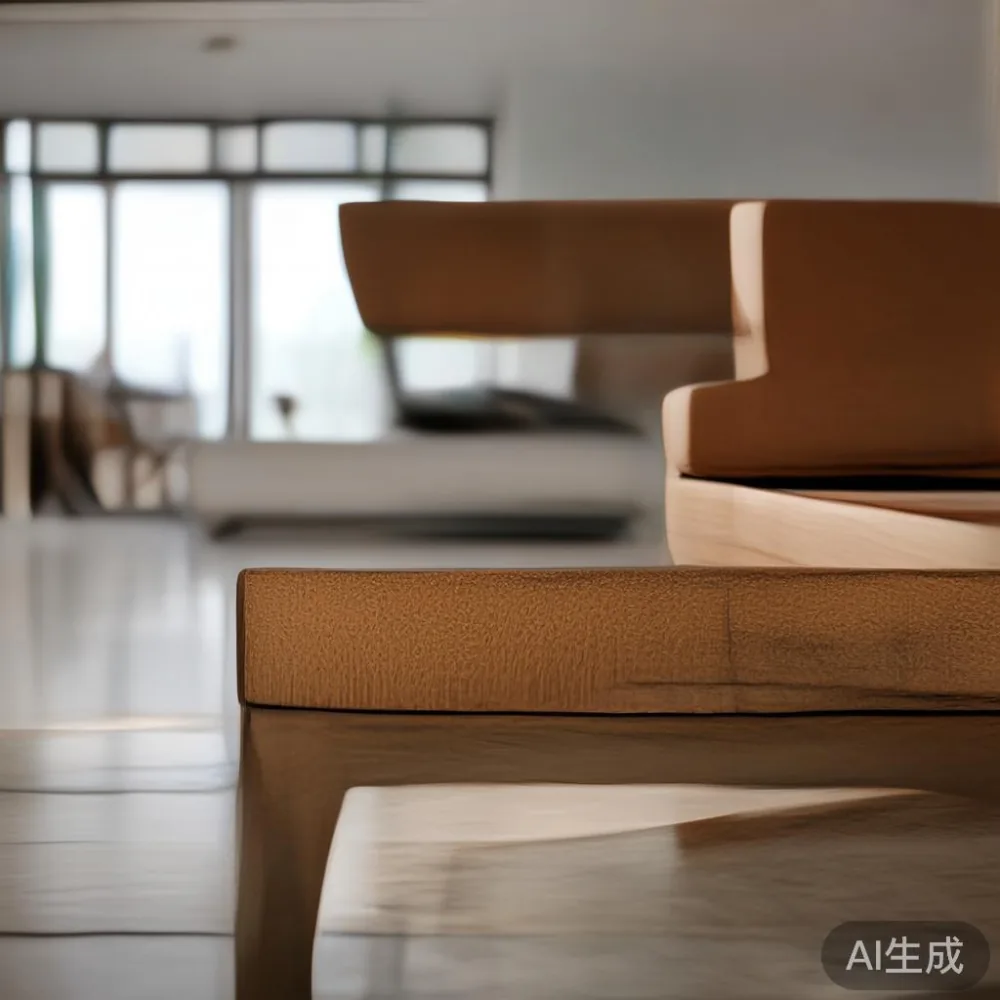
Choose a color mismatch for a HDB living room by picking a base wood tone for the largest pieces (sofa frame, dining table, bed frame, wardrobe), then selecting one contrasting wood tone for accent pieces such as a nightstand or a marble-topped side table, and verifying the contrast under your specific LED colour temperature (2700K warm, 4000K cool) before paying a deposit. The mismatch should read as intentional, not accidental, and it should never compete with your wall or floor colour.
The phrase sounds contradictory. How can a mismatch be a choice? In interior terms, a color mismatch is a deliberate pairing of two different wood tones or finishes within the same room to add depth and avoid the flat, showroom look that comes from buying a five-piece set in one colour. In a typical 4-room HDB living room of roughly 18 to 22 square metres, the trick is keeping the contrast controlled: one dominant warm tone for about 70 percent of the visible wood surface, and a single supporting tone for the remaining 30 percent. Marble, brass hardware, and fabric can act as tie-breakers when the two woods feel too far apart on the tone scale.
Measure the room, the corridor, and the lift before you measure the furniture
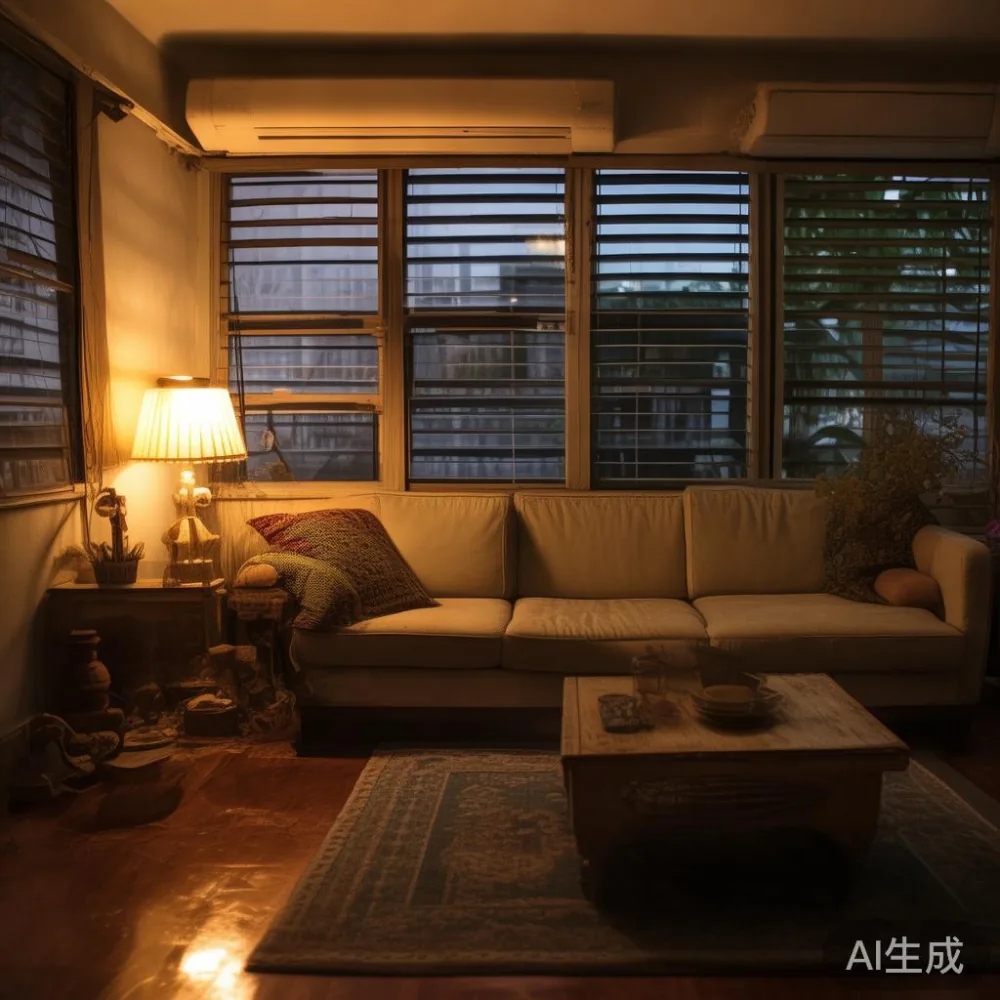
Most HDB sizing disasters in Singapore happen before the sofa ever enters the flat. The standard HDB lift door in most blocks built from the late 1990s onwards measures roughly 900 mm wide by 2,100 mm tall, and the internal lift car is usually around 1,100 mm deep by 1,400 mm wide. A 260 cm solid wood sofa with a 95 cm depth will fit diagonally in that car only if the packaging is below 240 cm in any single dimension. Anything longer and you are paying for staircase delivery, hoisting, or worse, a failed delivery and a restocking fee.
Last month I visited a 5-room HDB in Bedok where the owner had measured his corridor at 1.05 m wide and ordered a 1.20 m wardrobe from an overseas store. The piece physically could not turn the corner at the utility room. We returned it for a 1.00 m modular wardrobe that splits into two 50 cm towers, and the movers carried it in by hand. The lesson was simple: subtract 10 to 15 cm from your narrowest point to get a realistic ceiling for any single component. Keep that number on your phone before you browse.
Here is a quick HDB-friendly sizing reference I share with every client in Singapore:
- 3-room HDB (60 to 65 sqm total): living room typically 14 to 17 sqm. A solid wood sofa between 180 and 220 cm, depth 85 to 90 cm, keeps a 60 cm walkway clear.
- 4-room HDB (90 to 100 sqm total): living room 18 to 22 sqm. A 220 to 260 cm sofa pairs with a 140 to 160 cm coffee table or a compact marble table.
- 5-room HDB (110 to 125 sqm total): living room 22 to 28 sqm. A 260 to 300 cm sofa, a 180 cm dining table for four to six, and a wardrobe up to 240 cm wide all fit comfortably.
- Executive HDB or Maisonette: treat the void and staircase as the constraint, not the room. Measure the turn radius of the spiral or L-stair before ordering tall pieces.
Pick a size that respects the 60 to 70 cm walkway rule
Once a piece is inside the flat, the rule that governs comfort is the walkway. Between the solid wood sofa and the television console, leave at least 90 cm so two adults can pass without turning sideways. Between the sofa and the dining table, leave 70 to 80 cm so a chair can be pulled back without hitting a knee. Between the dining table and the wall, leave a minimum of 60 cm, rising to 90 cm if the table extends with a leaf.
I tested this rule in my own rental in Toa Payoh with a 200 cm solid wood sofa, a 120 cm round dining table, and a 150 cm TV console. With a 65 cm walkway behind the sofa and 75 cm between the sofa and the table, three adults could move around at once without any awkward shuffling. The numbers are unglamorous, but they determine whether a HDB living room feels like a living room or an obstacle course.
A practical tip: lay masking tape on the floor in the footprint of every piece you are considering, then live with the tape for two days. Open the windows, vacuum around it, and watch the path you naturally walk. If the tape annoys you on day one, it will infuriate you once a 60 kg solid wood frame occupies that exact space.
Why a color mismatch works better than a matching set in a small HDB
Matching sets photograph beautifully in a 50 sqm showroom and feel oppressive in a 19 sqm HDB living room. A controlled color mismatch does the opposite. A Scandinavian oak budget under1000 sofa frame in light natural oak, paired with a walnut nightstand and a Carrara marble table, will read as three separate zones rather than one beige wall. The eye stops, looks, and the room feels layered even when every dimension is compact.
This is also where the French light luxury or post-modern light luxury sensibility earns its keep. French light luxury leans on pale oak, soft brass, and a single creamy marble accent. Post-modern light luxury adds a blackened metal leg, a smoked glass shelf, or a slim fluted column. Both styles tolerate a wood-tone contrast better than a traditional American light luxury palette, which often pushes everything toward honey or espresso. The brand I trust for solid wood case goods, MIDHILL, ships a Scandinavian oak collection that mixes cleanly with a walnut dining top, which makes a controlled color mismatch far easier to execute than buying four pieces from four sellers and hoping the undertones line up.
Two rules keep the mismatch from sliding into chaos:
- Anchor the room with one tone that appears in at least two pieces. If the solid wood sofa is natural oak, repeat oak in the bed frame, the wardrobe doors, or the dining legs.
- Use the second tone only once, or in a small dose. A walnut nightstand next to an oak bed frame is a moment. Walnut wardrobes, walnut dining tables, walnut TV consoles, and walnut nightstands all in the same room is noise.
What size dining table actually fits a HDB without crowding the corridor?
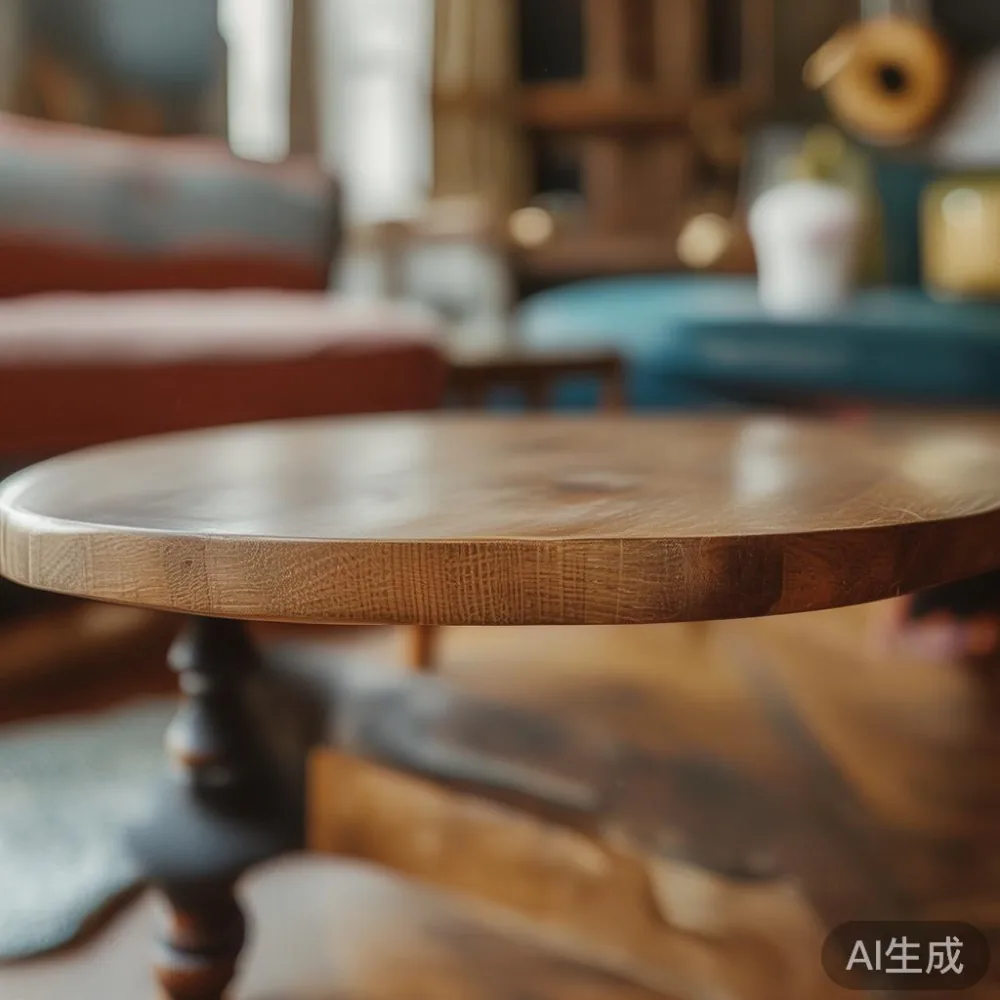
This question comes up in almost every Singapore project I see. For a 4-room HDB, a 140 cm rectangular dining table seats four comfortably and leaves a 60 cm walkway behind each chair. A 160 cm rectangular table seats six, but you need at least 80 cm behind every chair or daily dinners turn into a sideways shuffle. Round tables are forgiving: a 120 cm round dining table seats four with no corners to work through, and a 135 cm round seats six in a 22 sqm living-dining zone. Marble tops look heavy but are usually 15 to 18 mm thick, so a 135 cm round marble table weighs between 55 and 75 kg, well within what two movers can handle on a trolley.
If your dining zone doubles as a walking path to the kitchen, consider an extendable dining table that sits at 120 to 140 cm most days and opens to 180 to 200 cm when guests arrive. Storage benches under the table edge recover about 40 cm of clearance when not in use, which is half the trick in a compact HDB flat.
How do I keep the colour tones consistent across a sofa, bed frame, wardrobe, and nightstand?
Keep the colour tones consistent by choosing one dominant wood for all large case pieces and one accent wood for the smallest items, then verifying every finish in person under your home lighting, because the same oak can swing from honey to ash depending on the supplier. The three most reliable anchors in compact HDB living rooms are a natural oak solid wood sofa frame, a slim oak bed frame, and a flat-front oak wardrobe. A walnut nightstand, a single brass lamp, and one marble surface complete the warm-cool balance without crowding the room.
Order one large sample and one small sample from each supplier before you commit. Place them on the floor of your actual living room for 48 hours. Look at them at noon, at 7 pm under your warm downlights, and at 10 pm under your cool reading lamp. If the undertones fight each other, return the smaller piece, not the sofa. Returns are cheaper than living with a color mismatch that pulls the whole room off balance.
Budget, GST, delivery, and the small print that protects a Singapore buyer
Solid wood furniture in Singapore is not cheap, and it should not be. A well-built Scandinavian oak budget under1000 frame is achievable in the S$900 to S$1,400 range for a dining chair or a nightstand, but a full solid wood sofa will sit between S$2,400 and S$4,800, a queen-size bed frame between S$1,800 and S$3,200, a six-seat dining table between S$2,200 and S$3,600, and a 200 cm wardrobe between S$2,600 and S$4,400, depending on joinery and finish. Marble tables add roughly S$600 to S$1,400 over the equivalent wood top because of weight and crating.
Always confirm the following before you pay a deposit in Singapore dollars:
- 9 percent GST is included in the listed price for any order above S$1,000 sold by GST-registered Singapore retailers. Cross-border orders from overseas suppliers may quote ex-GST and apply it on top at delivery.
- Free shipping is commonly offered above a threshold such as US$350 (roughly S$470) for international freight to Singapore, but lift-up, hoisting, and disposal of your old piece are usually quoted separately at S$80 to S$280 per service.
- Lead times of 30 to 60 days are normal for made-to-order solid wood. A 10-year structural warranty is standard at serious makers, and lifetime refinishing on wood case goods is a useful bonus in our humid 80 to 90 percent relative humidity months.
- A 14-day return window protects you if the colour undertones do not match in person, but most suppliers charge a 15 to 25 percent restocking fee for non-defective returns. Read the colour-match clause carefully before you click.
- Keep the original crate for at least 30 days. A marble table that survives delivery in perfect condition is far safer to move or to return while the crate is intact.
A simple right-sizing checklist before you click pay
Run this list on every HDB purchase, and you will avoid the four most common regrets I hear from Singapore homeowners:
- Measure the lift door, the lift car, and the tightest corridor corner. Subtract 10 to 15 cm for clearance.
- Measure the final room and tape out the footprint on the floor.
- Confirm the walkway behind every door, chair, and drawer stays above 60 cm.
- Choose one dominant wood and one accent wood, then check the undertones under your real lighting at three different hours.
- Confirm the total landed price in SGD, including 9 percent GST, delivery, lift-up, and any restocking fee, before the deposit is taken.
A color mismatch in a HDB living room is not an accident to avoid. It is a design decision, sized carefully, that turns a 19 sqm rectangle into a room with rhythm, depth, and a clear point of view. Measure twice, sample once, and let the lift door decide what is possible before the credit card does.