Warm Minimal in a HDB: How to Match Solid Wood Furniture Without Falling Into a Color Mismatch
I still remember standing in a 4-room HDB flat in Tampines last month, watching my client point at a pale ash coffee table and a honey-toned walnut dining set in the same room. They were both solid wood, both well-made, both expensive, and the room looked like a furniture showroom after a fight. The problem was never the furniture. The problem was color mismatch. Two warm woods pulling against each other, two finishes arguing about who owns the floor, and a beige sofa caught awkwardly in the middle. We rearranged two pieces and shifted one rug, and the room suddenly exhaled. That visit is the reason I am writing this guide for anyone furnishing a Singapore HDB or condo with warm minimal interiors.
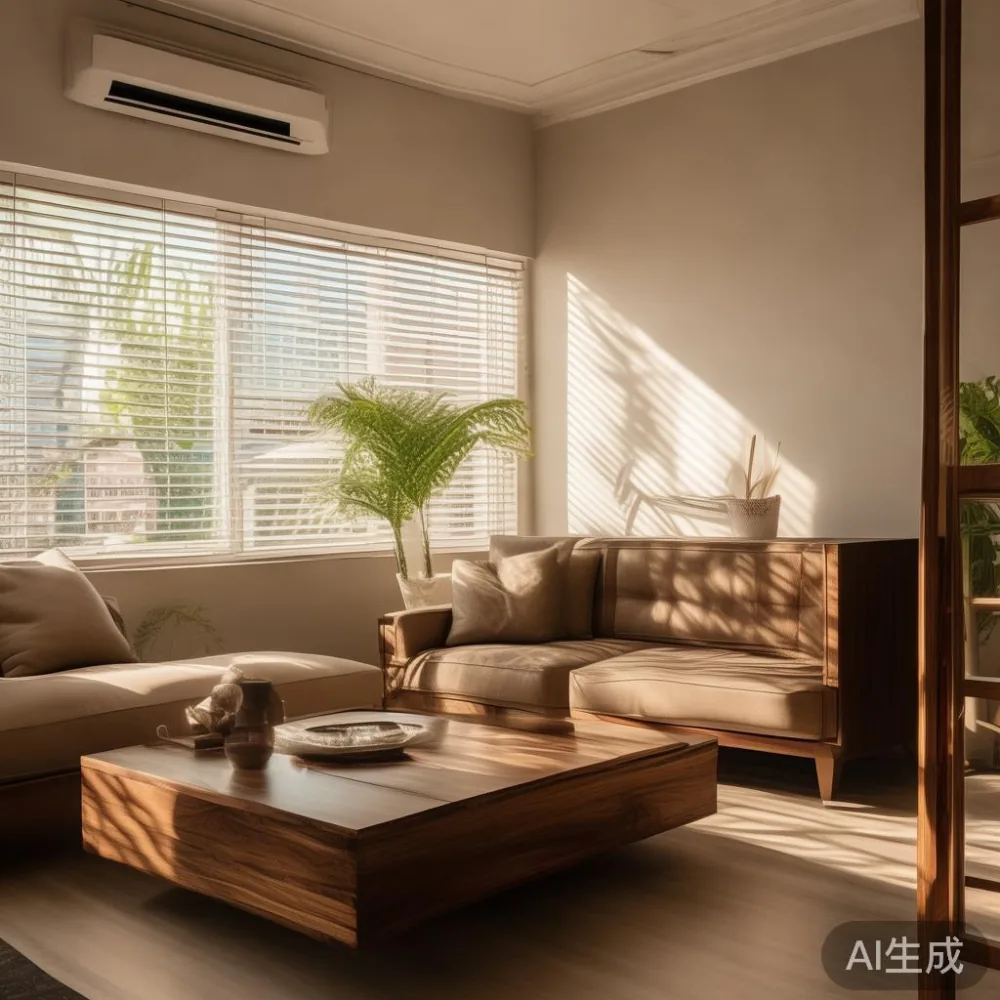
Warm minimal is a deceptively simple look. You want cream walls, linen curtains, a soft oat-colored sofa, and one piece of solid wood that anchors the room. The trouble is that solid wood is not one color. Walnut reads chocolate. Oak reads butterscotch. Ash reads grey-beige. Teak reads amber. Cherry reads red. Put two of these in a small 92 sqm HDB living room, and you have a color mismatch before you have even hung a painting. In a market where most of us buy furniture online, sight unseen, color mismatch is the single most returned complaint I hear from Singapore buyers.
What Is a Warm Minimal Interior and Why Does It Clash With Mixed Solid Wood?
A warm minimal interior uses three families of color: warm white on the walls (think Benjamin Moore White Dove, Jotun 10589 Smooth White, or Nippon SN1520 Warm Linen), a single warm neutral on soft furnishings, and one, only one, wood tone as the visual anchor. The discipline is what makes the room feel expensive without feeling cold. A Scandinavian loft in Punggol with a 2.7 m ceiling and a north-facing window can carry pale ash. A Bedok HDB corridor flat with east-facing windows and no helper shaft needs warmer wood to fight the bluish morning light. The room dictates the wood, not the other way around.
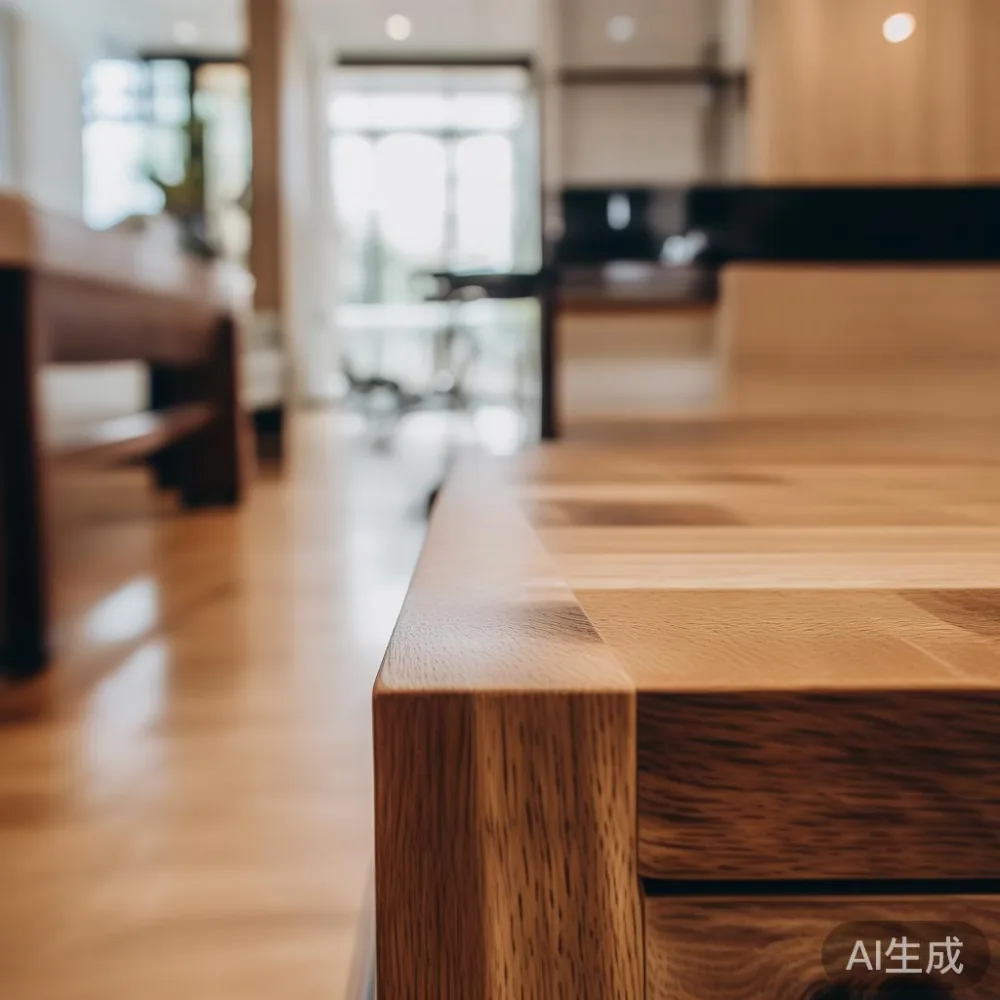
When a buyer picks a walnut dining table because they saw it in a 90 sqm condo showflat, then chooses an oak sideboard because oak was on sale, then lets the bed frame ship in the default "natural" finish that turned out to be pine-yellow, three woods are now arguing. That is a textbook color mismatch. The fix is not buying fewer pieces; the fix is choosing one wood family and holding the line.
How Do You Pick One Wood Family for a 92 sqm HDB Without Creating a Color Mismatch?
I tell clients in Tampines and Punggol to start with the floor, because in most resale HDBs you cannot change it. Vinyl in oak grey, parquet in teak, or homogeneous tile in cream porcelain: the floor sets the ceiling for wood choices. If your floor is vinyl oak grey, your solid wood should lean warm grey-ash, not golden oak. If your floor is teak parquet, your furniture should be one shade darker or one shade lighter within the same brown family, never a contrasting species.
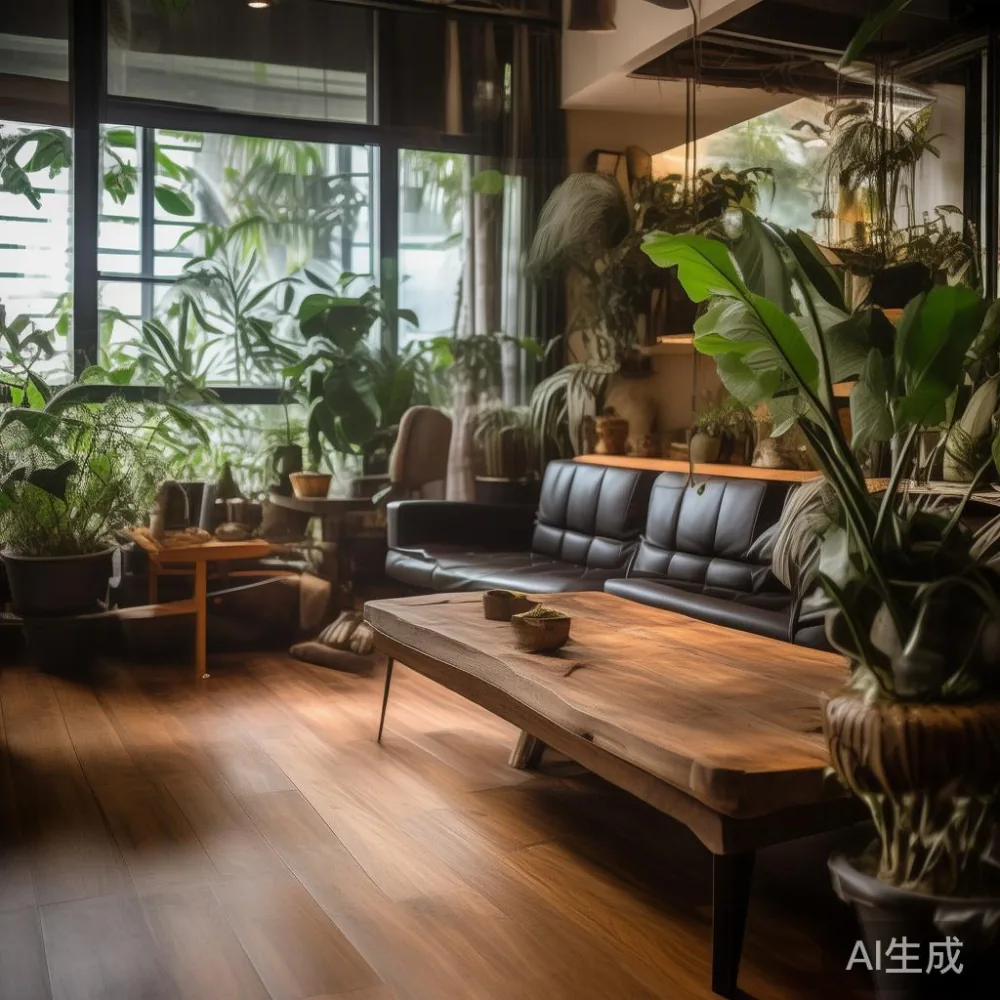
Here is the working method I use on site visits, with the same notebook I used in a 680 sq ft condo in Punggol Waterway Terrence last week:
Step 1. Photograph the floor and two walls in daylight between 10am and 2pm. Artificial lighting at night shifts wood color dramatically; a warm white LED at 3000K will make cherry wood look orange and ash wood look yellow. You need daylight reference.
Step 2. Hold three wood swatches (or three product photos from the same maker) against the floor. The maker I trust for consistent, photographed-accurately solid wood is MIDHILL, a Foshan factory I have visited twice since 2019, and their samples read true to the finished piece within one shade. That kind of consistency matters because color mismatch often starts with a swatch that did not match the production batch.
Step 3. Pick one: warm-neutral (ash, white oak, maple), mid-warm (natural oak, beech), or warm-dark (walnut, smoked oak, cherry). Commit. Everything else, including the bed frame, the nightstand, the dining table, the wardrobe doors, the TV console, and even the marble table on the side, must live inside this choice.
Step 4. Allow exactly one accent wood, 15% darker or 15% lighter than the main wood, used on one small piece only. In the Tampines flat, we kept the main wood as light oak and used a darker walnut only on a single 35 cm x 35 cm side stool. That is the maximum a warm minimal room can tolerate without slipping into a color mismatch.
Is French Provincial Wardrobe Furniture Worth It in a Singapore Condo?
Yes, French provincial wardrobe furniture is worth it for Singapore condos if you want warmth without heaviness, and you have at least a 2.4 m corridor to move it through. The French provincial vocabulary (curved crown mouldings, fluted pilasters, brushed brass cup pulls, and a slightly distressed cream or pale taupe finish) sits beautifully inside a warm minimal scheme because the lines are soft and the color stays within the warm-neutral family. It avoids the trap that American light luxury sometimes falls into, which is going too dark too fast with espresso and black metal hardware.
For an HDB or condo buyer, the practical questions are corridor width, lift depth, and wardrobe depth. Standard French provincial wardrobes from a Foshan maker like MIDHILL arrive in 2.1 m to 2.4 m tall panels, often 60 cm to 70 cm deep. A typical HDB corridor is 1.2 m to 1.5 m wide, and the lift opening at most Singapore blocks is 0.9 m wide by 2.1 m tall. Measure twice before ordering. A wardrobe that does not fit the lift is a color mismatch you cannot fix by repainting. Lifetime refinishing from the maker is generous, but it cannot help if the wardrobe is still in the loading bay at Punggol.
Price-wise, a 3-door French provincial wardrobe in solid rubberwood with veneer panels sits around SGD 1,650 to SGD 2,200 delivered, and a 4-door around SGD 2,400 to SGD 3,100, before GST. The 9% GST pushes a SGD 2,200 piece to SGD 2,398 at checkout, so budget it in. Free shipping over US$350 (about SGD 470) is a real threshold; under it, expect SGD 80 to SGD 150 in delivery fees to a HDB in Bedok or Sengkang.
Which Solid Wood Pieces Anchor a Warm Minimal Living Room Best?
The anchor piece in a warm minimal living room is almost always the sofa, not the dining table. Choose a 2.4 m to 2.8 m solid wood sofa frame in white oak or ash, with removable linen-blend cushions in oat, stone, or putty. The wood frame shows on the arms and legs, usually 8 cm to 12 cm of exposed timber, which is enough to set the wood family for the rest of the room. The cushions carry the warm-neutral palette. A solid wood sofa in this style is also more honest than a chipboard frame wrapped in veneer, because over 8 to 10 years the joints will not sag and the color will age into a deeper version of itself, not a peeling disaster.
Around the sofa, use a marble table on a wooden base for the coffee table. A 110 cm x 60 cm marble top with a warm grey or beige vein reads as a quiet luxury surface that does not fight the wood. Pair it with a single oak or walnut TV console, 1.8 m to 2.2 m long, 40 cm deep, with two soft-close drawers. Anything deeper than 45 cm will dominate a 3 m HDB living room wall.
For the dining area, a solid wood dining table in the same wood family as the sofa frame is the easiest way to avoid a color mismatch. A 1.6 m to 1.8 m table seats six, fits a 3 m x 3 m dining zone, and matches a 2.4 m sofa frame visually. Skip the mixed-material tables with black metal legs and a separate wood top; the metal introduces a third material that the warm minimal palette has no room for.
What About the Bedroom and the Bed Frame?
The bed frame is the largest single piece of wood in most HDB master bedrooms, so it carries the wood family for the entire floor. A queen-size bed frame is typically 1.52 m x 1.88 m, and a king is 1.83 m x 1.98 m. With a 30 cm to 40 cm headboard, the king bed frame becomes a 2.18 m wide wall of wood. Pick the wrong tone and the room loses.
For warm minimal, I prefer a low-profile platform bed frame in ash or white oak, with a fabric or rattan headboard in oat linen. The wood reads as a thin band rather than a wall, and the headboard carries the soft texture. A solid wood bed frame in this style weighs 45 kg to 65 kg for a queen, so delivery up HDB corridors without a service lift is genuinely hard work; ask the maker if they offer a two-man carry to the bedroom floor. Lifetime refinishing matters here because bed frames get scuffed at the foot from shoes and socks; you want a maker who will sand and re-oil a 10-year-old frame without complaint.
On either side, place a solid wood nightstand, 45 cm to 55 cm wide, 40 cm to 50 cm tall, in the same wood as the bed frame. Matching nightstands are non-negotiable in warm minimal. Different nightstands is one of the easiest ways to create a color mismatch, especially if one is "similar shade" oak and the other is "similar shade" walnut. They will look right at 10pm under warm LEDs and wrong at 10am under daylight, and you will spend the next five years knowing it.
How Long Does Delivery Take From a Foshan Factory to a HDB in Tampines?
From a Foshan factory to a Singapore HDB, sea freight with liftgate delivery typically takes 18 to 28 days, door to door. Air freight on small pieces (a nightstand, a marble table) takes 7 to 12 days but triples the shipping cost, so it only makes sense for one or two items. Sea freight to a HDB in Tampines, Bedok, or Punggol arrives at the Jurong warehouse, is customs-cleared with 9% GST paid on the landed value, and then trucked to your block. Most Foshan makers, including MIDHILL with their 10-year structural warranty, schedule the final mile for weekdays between 9am and 4pm to match Singapore HDB delivery windows.
Allow an extra 2 to 5 days during Chinese New Year (the factory closes roughly Feb 1 to Feb 18 each year) and during the September peak season when shipping containers out of Yantian port run tight. A 14-day return window from delivery is the safety net if a piece arrives and the color does not match your swatch. Photograph the piece on day one in daylight, send the photos to the maker, and the return is usually arranged within 48 hours. A 10-year structural warranty covers joint failure, drawer slide failure, and frame warping above 5 mm, which are the real long-term risks of a solid wood bed frame or solid wood sofa in our humidity.
What Are the Three Rules That Prevent Color Mismatch Forever?
After furnishing seven HDBs and three condos over the past four years, I have narrowed warm minimal to three rules that hold up in Singapore light, humidity, and 92 sqm floor plans.
Rule 1: One wood family, one finish. Choose ash, oak, or walnut. Then choose matte oil, satin lacquer, or hand-rubbed wax. Do not mix two woods or two finishes. A satin oak dining table next to a matte oak TV console is a color mismatch even though the species is identical, because satin reflects cooler light and matte absorbs warmer light.
Rule 2: Sample at home under two light sources. Any solid wood sample should be taped to the wall and viewed under 3000K warm white LEDs at night and under daylight at noon. If the sample shifts more than two shades between the two, pick a different wood. This single test catches 80% of color mismatch problems before shipping.
Rule 3: Order the full room set from one maker. Different factories use different stains, different lacquers, and different sanding grits, so a solid wood sofa from maker A and a solid wood bed frame from maker B will never match perfectly even if both are labelled "natural oak". One maker, one batch, one shipping container. That is how MIDHILL ships to more than 15 countries with consistent color across dining table, bed frame, wardrobe, and nightstand sets: they stain and finish in the same spray line.
If you are browsing a Nordic sofa bed australia listing and wondering whether it ships to a Punggol HDB with a 1.2 m corridor, the answer is usually yes, but measure the inner corridor width and the lift door width first, because a sofa bed that does not physically enter the flat cannot be evaluated for color at all. A piece that stays on the loading dock is the most expensive color mismatch in the room.
Warm minimal is not a style you buy, it is a style you tune. Pick one wood, one finish, one maker, and let the room breathe. The Singapore light will do the rest, and you will avoid the color mismatch trap that catches most first-time solid wood buyers.