How Humidity in Southeast Asia Affects Solid Wood Furniture
I keep a small humidity log taped to the inside of my wardrobe door in Tampines. Last month I visited a Punggol HDB resale flat where the owner had pulled a brand-new solid wood dining table out of its crate just 48 hours earlier, and the legs had already started to bow a little on one corner. The air-conditioner had not been turned on yet because the flat was still being painted. That is Southeast Asian humidity doing what it always does, only faster than most buyers expect.
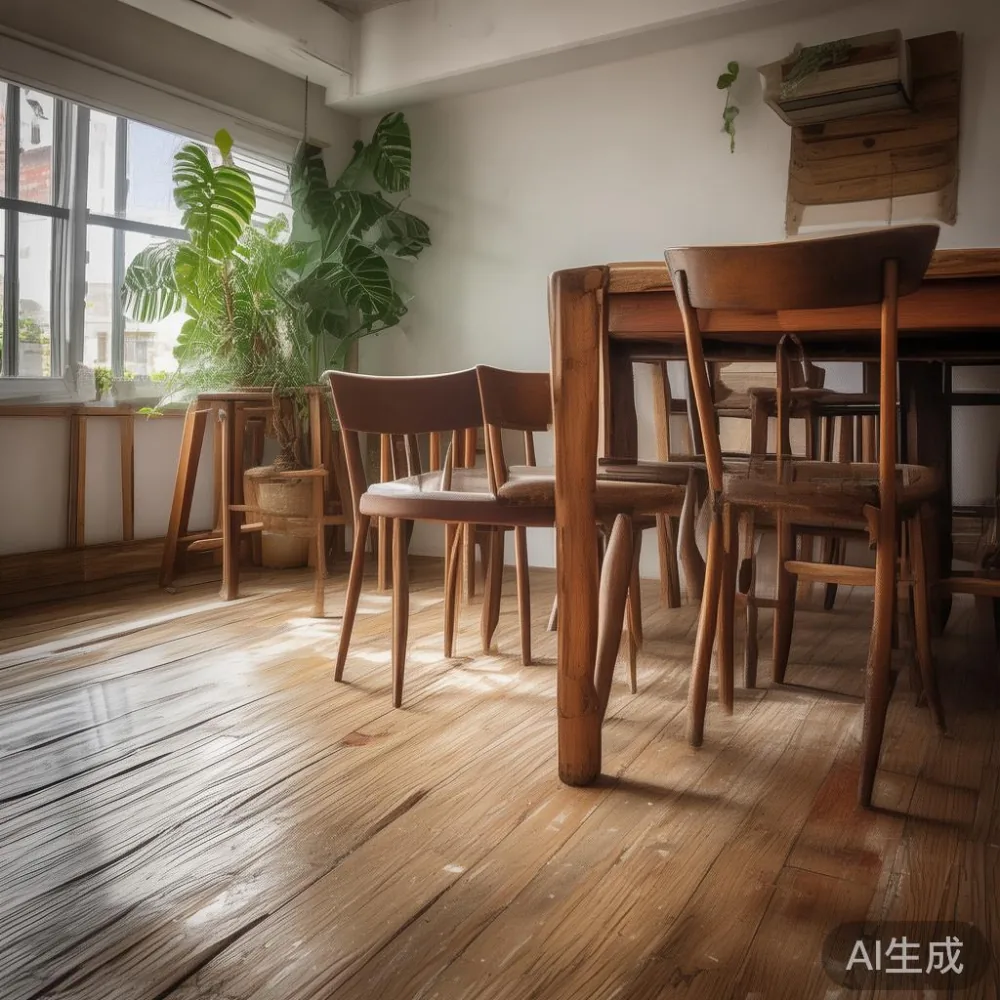
This guide explains, in practical terms, how humidity interacts with solid wood sofa frames, bed frames, dining tables, wardrobes, and nightstands, why color mismatch shows up between a showroom sample and the piece that arrives in your Bedok condo, and what you can do to prevent it. Everything below is written for the Singapore context: HDB door widths around 80–90 cm, lift interiors of roughly 140 cm deep, narrow corridor turns at the lift lobby, year-round relative humidity of 70–85%, and the ongoing cost of GST on imported furniture.
Why Singapore's Climate Is Harder on Solid Wood Than Most Buyers Realise
Singapore sits near the equator, and indoor relative humidity (RH) in an un-air-conditioned room often sits between 75% and 85% through the day. When the air-conditioner cycles off at night, RH inside a HDB flat can climb back above 80% by 2 a.m. Solid wood is hygroscopic, meaning it absorbs and releases moisture to stay in balance with the surrounding air. Over weeks and months, that exchange causes boards to swell, shrink, cup, and sometimes crack along the grain.
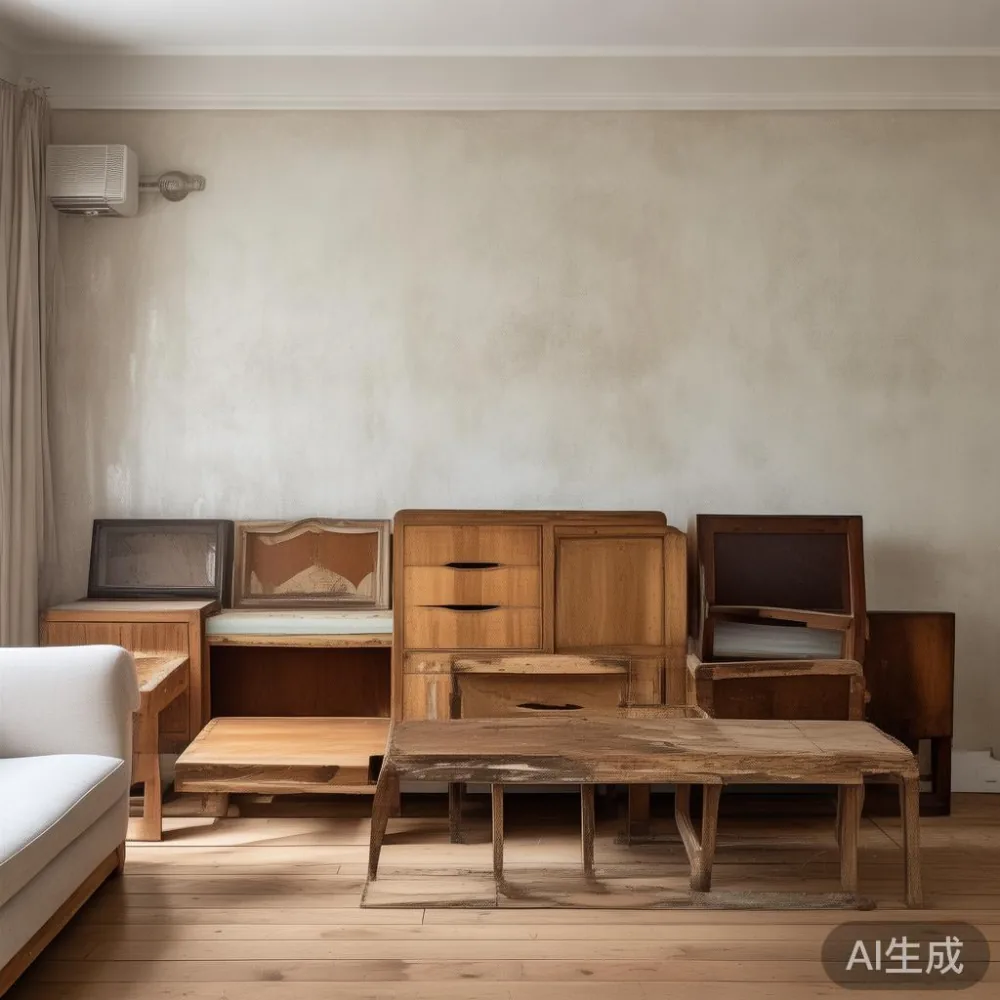
The species of wood matters. European oak, American walnut, and Burmese teak all move at different rates. Oak can change dimension by roughly 1.5% to 2% across the grain when humidity shifts from 40% RH to 80% RH. On a 220 cm dining table top, that is enough to add several millimetres of width across a single humid week. A 1.8 m wardrobe door with a centre stile can bind against the frame after just one monsoon season if it was built at 10% moisture content and shipped into a 78% RH bedroom.
For buyers, the visible symptom is usually not cracking. It is color mismatch between panels, or between a tabletop and its apron, or between two cabinets standing next to each other on the same wall. The wood is technically fine; the appearance is off. More on that below.
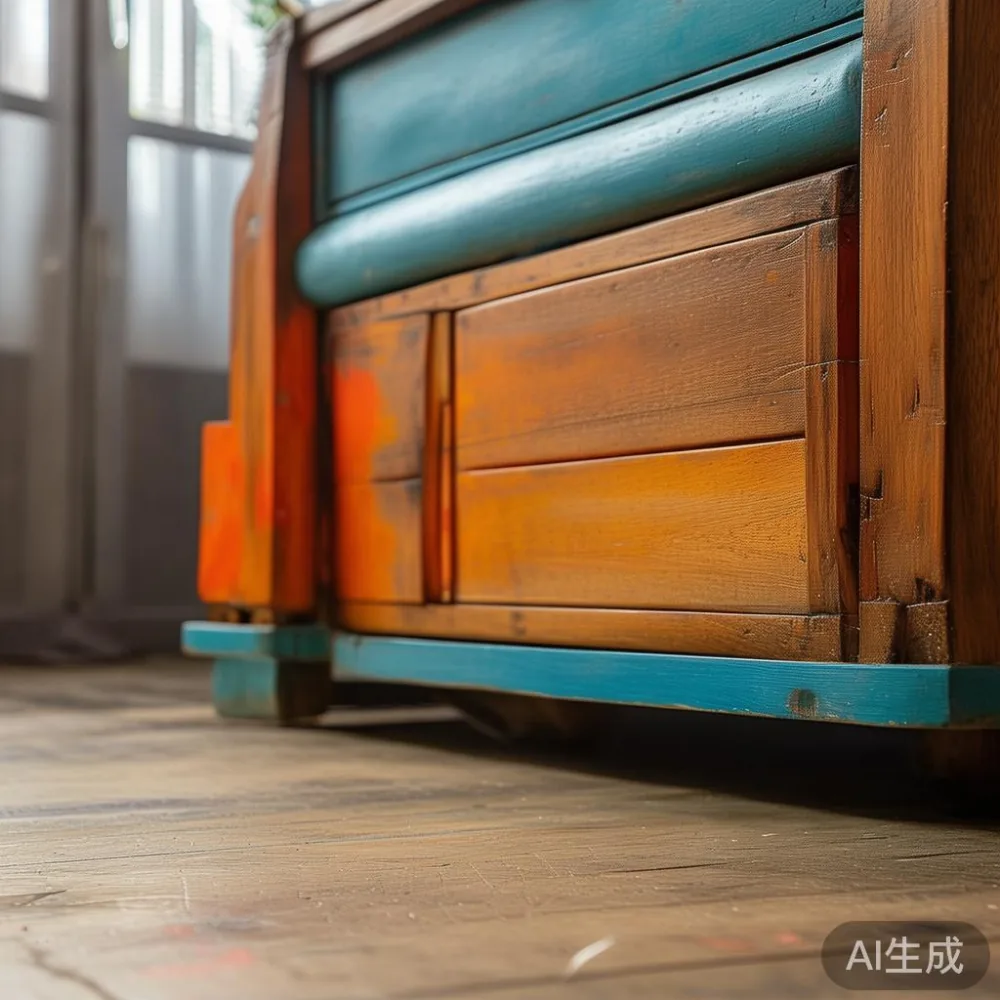
How Moisture Movement Creates Color Mismatch on the Same Piece of Furniture
Color mismatch on solid wood furniture is rarely a factory mistake. It is a physical response to humidity, light, and time. Three mechanisms drive it on pieces like a solid wood sofa frame, a bed frame, or a marble-top dining table with a wooden base.
1. Uneven moisture absorption across panels. A wardrobe has six sides. The back panel sits against a wall and stays cooler and drier. The side panels face the room and breathe with the air. After 90 days, the back panel may be at 9% moisture content while the side panels are at 12%. The colour of oak and walnut darkens slightly as moisture content rises, so the back looks lighter and the sides look darker. The eye reads that as color mismatch, even though every panel was cut from the same log.
2. UV exposure on exposed faces. The door of a wardrobe or the top of a nightstand catches more daylight than the interior. UV breaks down lignin in the wood, and the exposed surface lightens while the sheltered surface stays closer to the original tone. This kind of color mismatch develops over 6–18 months and is irreversible without refinishing.
3. Grain orientation on book-matched veneer. Even on a solid wood bed frame, slats and rails are cut with the grain running in different directions. Light reflects differently off end grain versus long grain, so two adjacent boards can read as two different shades to the eye. A post-modern light luxury design that uses long, wide planks (say, 25 cm wide) shows this more clearly than a tighter, narrower-board traditional design.
What is the difference between French neoclassical accent chair and modern furniture?
A French neoclassical accent chair uses kiln-dried European beech or ash, carved or turned details, and a hand-rubbed lacquer that cures over 7–10 days, and its colour and joinery are tuned for interiors kept at 45–55% RH, while modern furniture uses thicker solid wood panels (typically 22–30 mm), metal-reinforced corner brackets, and matte water-based finishes built to handle the 70–85% RH common in Singapore HDB flats and condos. The chair category is where color mismatch shows up fastest, because chairs expose more end grain (at the feet and arm terminals) and have thinner cross-sections that respond to humidity within days rather than months.
Practical Numbers: Sizing, Delivery, and What Actually Fits in Your Home
Singapore HDBs and most condos have practical limits worth respecting before you order.
- Lift interior: typical passenger lifts in HDB blocks measure about 110 cm wide x 140 cm deep x 220 cm tall, with a door opening of 80–90 cm. A king-size solid wood bed frame in a flat-pack crate usually runs 215–225 cm long, so it must enter on its side and tilted.
- Corridor turns: the worst turn is usually at the lift lobby, often a 90-degree corner with a 180 cm swing radius. A 2.2 m wardrobe crate rarely makes it around in one piece; ask whether the supplier splits the wardrobe into two 110 cm modules.
- Door widths: the main HDB door is typically 90 cm wide; the master bedroom door is 80–85 cm. A 1.6 m dining table top must be carried in vertically and laid flat inside.
- Delivery lead time for custom solid wood pieces from Foshan: 35–55 days by sea to Singapore, plus 7–14 days for customs clearance and last-mile delivery. Allow 6–8 weeks for a made-to-order dining table.
- Customs and GST: Singapore imposes 9% GST on the CIF value (cost, insurance, freight). On a SGD 3,800 dining table shipped from Foshan, that is roughly SGD 340 of GST payable on import or on delivery.
- Acclimatisation before use: leave the piece in its crate for 48–72 hours inside the room where it will live. If you can, open the crate and stand the panels upright with spacers for 5–7 days before assembly.
MIDHILL has shipped solid wood bedroom and dining sets from Foshan to Singapore since 2008, and their logistics team is familiar with the corridor and lift constraints above. For buyers in Tampines, Bedok, and Punggol, the company can pre-arrange a split-module wardrobe (two 110 cm towers) and confirm the crate dimensions against your lift before dispatch.
How to Prevent Color Mismatch: A 7-Point Routine for the First 90 Days
Use this routine on every solid wood sofa frame, bed frame, dining table, wardrobe, nightstand, and marble table with a wooden base that enters your home.
- Day 0–3: keep the piece in its crate inside the room. Do not open near a window or under direct sunlight.
- Day 3–7: open the crate, remove foam and plastic wrap, stand panels upright with 2 cm spacers between each board. Run the air-conditioner at 24–25 degrees Celsius with the fan on low overnight.
- Day 7–10: assemble on a flat surface, at least 10 cm away from any wall. Use felt pads under every leg.
- Day 10–30: rotate any items sitting on top (lamps, vases) once a week so UV exposure stays even. Avoid rubber or PVC mats directly on the wood, as they trap moisture and leave ghost rings.
- Day 30–60: check door alignment on wardrobes and bedside cabinets. Tighten hinge screws by a quarter turn if a door begins to rub; humidity often loosens softwood screws first.
- Day 60–90: apply a thin coat of paste wax or hardwax oil to high-touch surfaces (tabletop, armrests, drawer fronts). This slows moisture exchange on the most exposed faces and reduces future color mismatch.
- Every 6 months: wipe with a barely damp microfibre cloth, then dry. Never use silicon-based polishes; they build up and block refinishing later.
If a piece arrives with visible color mismatch between two panels out of the crate, take photos under daylight within 48 hours and contact the supplier. A reputable maker will either replace the panel or offer refinishing credits. MIDHILL provides lifetime refinishing for customers in Singapore on most of its solid wood dining, bedroom, and occasional ranges, which covers surface-level color mismatch that develops over years.
Buying Decisions That Reduce Your Risk in the Singapore Climate
Three choices made at the point of purchase will save you the most aggravation.
Choose kiln-dried, sealed-stock wood. Ask the supplier for the moisture content at packing. Anything between 8% and 11% is workable for Singapore; above 12% you are buying a problem. Reputable Foshan factories such as MIDHILL dry their stock for 30–60 days in dehumidification kilns before machining.
Pick wider, thicker panels with fewer joints. A dining table top made from two 110 cm planks joined in the middle will move more than a single 60 cm plank top. For the same reason, a Nordic leather dining chairs set paired with a thick 30 mm oak top is more stable in our climate than a thinner 18 mm top with breadboard ends.
Choose finishes designed for tropical RH. Water-based matte lacquers and hardwax oils breathe with the wood. Thick gloss polyurethanes seal the surface but trap moisture underneath and can delaminate after the second monsoon season. Ask which finish system the supplier uses; a French light luxury finish on a bedroom set typically uses a 7-coat hand-rubbed shellac or a matte conversion varnish, both of which hold up well at 75% RH when applied over properly dried stock.
What to Do When Color Mismatch Has Already Appeared
If you are reading this six or twelve months into ownership, the fix depends on the cause.
- Moisture-driven mismatch: move the piece into an air-conditioned room at 23–24 degrees for 14 days with a dehumidifier set to 50% RH. Most panels will rebalance and the tone will even out within a week.
- UV-driven mismatch: swap the position of the piece with a decorative item so the previously shaded face now catches light. The tone will catch up over 6–9 months, though it will never perfectly match.
- Persistent mismatch on a tabletop: light sanding with 320-grit paper followed by a fresh coat of hardwax oil will blend most oak and walnut pieces. This is a one-hour job and well within a DIY weekend.
- Severe mismatch with cracking: that suggests the wood was packed above 12% moisture content. Contact the supplier for a warranty claim; most structural warranties run 10 years against joint failure and cracking, which covers this case.
MIDHILL's 10-year structural warranty covers cracking and joint failure on its solid wood sofa frames, bed frames, dining tables, wardrobes, and nightstands, while lifetime refinishing addresses the surface-level color mismatch that builds up over a decade or two of Singapore humidity. Free shipping applies on orders above US$350 (roughly SGD 480), and pieces can be returned within 14 days if they arrive with manufacturing defects or visible damage.
Realistic Expectations for the First Year
Even with careful acclimatisation, expect small movements. A 2 m wardrobe may gain or lose 2–3 mm of width across the seasons. A solid wood dining table top may develop a faint cup of less than 1 mm across the width during the November–January monsoon. These are signs that you bought real, solid wood and not a laminate. They are not defects.
The pieces most likely to give trouble in the first year are long, thin, horizontal surfaces without a frame: floating shelves, headboard panels on bed frames, and the leaves of extending dining tables. Watch these closely for the first six months and rotate them if the cup becomes visible.
If you treat solid wood as a living material that needs a few quiet weeks to settle into your home, the rest is mostly waiting. The wood will darken slightly with age, the grain will tighten, and after a year or two the piece will look more even and more yours than the day it arrived. That is the trade you make for buying something built to outlast the next three HDB leases.