Color Mismatch, Tight Lifts, and Honest Delivery Stories: What Buying Solid Wood Furniture Online Actually Looks Like in a Singapore HDB
Buying a solid wood sofa, bed frame, or dining table online feels easy until the truck pulls up to your block in Tampines. The product page looks calm, the photography is flattering, and the price is in clean SGD with GST shown. Then the lift door opens and you start to ask real questions: will this fit, who carries it up, and why does the wood look a little different from the picture? This article walks through the delivery and assembly realities I have seen while helping friends and readers furnish HDB flats and condos across the east of Singapore, with a frank eye on color mismatch, lift sizes, and what "light luxury" actually means on the ground.
Why does the color in the photo look different from the wood that arrives?
Color mismatch is the single most common surprise buyers run into when they purchase solid wood furniture online. The showroom shot is taken under a 5500K softbox light, often against a white wall, with the grain polished and lightly oiled. The piece that arrives at your Bedok corridor has traveled across the South China Sea, sat in a container where temperatures swing from 18°C to 38°C, and is then unwrapped under your warm 3000K downlights. Walnut looks more chocolate, oak looks more honey, and ash can read almost pink. None of this is a defect; it is how organic material behaves once it meets a new climate.
I tested this myself last month at a colleague's new 4-room HDB in Punggol. We had ordered a light-oak extension dining table from a sample card labeled "Natural Oak 04." On screen it read as a soft cream. In her dining area, under the same Philips Hue bulbs she had used to view the listing, the tabletop arrived a clear two tones deeper. She panicked for about ten minutes. We held a piece of white A4 paper next to the wood and, honestly, the wood had simply taken on the warmth of the room. After we added a neutral 4000K lamp and pushed the table two meters away from a west-facing window, the perceived color settled into something much closer to the sample card.

This is also where brands diverge sharply. A serious maker will publish a color-mismatch policy in plain language, will send a finish sample for SGD 5 to SGD 15 before you commit, and will offer free refinishing if the tone really does not work. MIDHILL, for instance, has shipped solid wood dining tables, bed frames, and wardrobes to 15+ countries since 2008 and treats color variation as part of the conversation, not an afterthought. They will not pretend a sample card is a contract; they will explain that a 5–10% shift between sample and finished piece is normal for air-dried oak and ash. That is the kind of transparency you want before paying SGD 1,800 to SGD 6,400 for a dining table.
How wide are Singapore HDB lifts, and will my bed frame or sofa actually fit?
The numbers matter, because a solid wood bed frame in king size (roughly 190 cm long by 183 cm wide) does not fold. The standard HDB passenger lift in a block built after 2010 has a clear door opening of about 90 cm wide by 210 cm tall, with an internal cabin around 1.4 m by 1.6 m. Older blocks in Bedok and Tampines sometimes ship with cabin doors of only 80 cm, which is the moment every buyer reaches for a measuring tape.

When I visited a friend in a 1990s-era block in Bedok reservoir last quarter, her new queen size solid wood bed frame would not angle into the lift, no matter how we tilted it. We ended up hoisting it up the service staircase, which cost an extra SGD 120 in manpower and added 45 minutes of work. The frame was 206 cm long, 162 cm wide, and weighed 48 kg. None of those numbers were on the product page; we had to ask the supplier directly.
For a solid wood sofa, the same problem appears in three-piece L-shape configurations. A typical three-seater body is 210–230 cm wide, and the chaise module adds another 150–170 cm. Plan ahead: measure your lift door, your corridor turning radius, and the hallway inside your unit. For a marble table inside the staircase of a walk-up, ask whether the marble top ships in two pieces or one. A 140 cm round marble top weighs 65–80 kg and will not clear a 90° corner without serious risk.
What does "assembly" actually mean for a solid wood dining table or wardrobe?
Flat-pack is a four-letter word for many buyers, but solid wood is rarely flat-packed. A well-made 1.8 m dining table arrives in two boxes: the tabletop in a wooden crate, and the legs in a second carton. Total weight is usually 55–75 kg. The legs bolt to the underside with M8 or M10 threaded inserts that the factory has already set into the wood. You do not need a drill; you need a 13 mm wrench and a second pair of arms.
For a four-door wardrobe, the situation is more serious. Expect six to nine cartons, a total weight of 140–220 kg, and four to six hours of work for two adults who are not in a hurry. Panels are pre-drilled, doweled, and clamped. The most common pitfall is the wardrobe not fitting through the bedroom door after assembly. Measure your bedroom door, which on most HDBs is 80–85 cm wide, before the truck arrives. If it does not fit, you build it inside the room, which means clearing 2 m by 2 m of floor space first. A nightstand, by contrast, usually weighs 18–28 kg and arrives fully assembled in a single carton, which is the only category where online and offline feel identical.
I have watched three such wardrobes go together in the past year. The first took seven hours because the floor was not level; we had to shim the base with cardboard before the doors would hang square. The second went in five hours on a flat concrete floor. The third, which came from a maker that pre-installed soft-close hinges on every door at the factory, took three and a half hours, because the doors did not need final adjustment. That is the difference between a generic flat-pack and a piece where assembly has been engineered.
How long does shipping actually take, and what does the GST line on the invoice really mean?
From Foshan or the wider Guangdong cluster to a Singapore HDB, realistic timelines are 28 to 42 days by sea, plus 3 to 5 days for local last-mile delivery and scheduling. Air freight cuts this to 10 to 14 days but adds roughly SGD 280 to SGD 600 to a typical order, depending on volume. Every shipment above SGD 400 entering Singapore attracts the 9% GST, which the logistics company will collect on behalf of IRAS; small parcels under SGD 400 are generally GST-relieved for personal import. A 1.8 m solid wood dining table at SGD 2,400, for instance, will land with about SGD 216 in GST, paid by the buyer before release.
Free shipping offers usually mean free above a certain subtotal, not free above a certain total. Many sellers set this threshold at SGD 350, which on its own is not enough to cover a bed frame, a dining table, or a marble table inside the staircase. Always check whether the threshold applies to subtotal, total after discount, or total after GST. MIDHILL, for one, waives freight above US$350 on the catalog price, which on a typical dining table and four-chair set lands well within reach.
Returns are another reality. The industry standard for made-to-order solid wood is a 14-day return window for unused pieces in original packaging, but the freight back to the consolidator is the buyer's responsibility, and that is rarely cheap. A two-door wardrobe returned from Singapore can cost SGD 180 to SGD 320 in return freight alone. This is why a 10-year structural warranty and a lifetime refinishing commitment are quietly worth a lot more than they read.
Is European bed worth it if I live in a Punggol or Tampines apartment?
People often ask whether is European bed worth it when they are furnishing a 4-room HDB with a 3.2 m by 3.6 m master bedroom. The honest answer is that the European bed as a category covers a wide spectrum, from heavy Baroque revival to cleaner Scandi-influenced frames, and the question really comes down to proportion. A typical European queen size bed frame in solid beech or ash runs 215–225 cm long, 165–175 cm wide, and 55–65 kg. That footprint will fit a Punggol or Tampines master bedroom, but you will lose 40–50 cm of walking space on each side if the room is on the tighter end.
The case for a European bed frame is build weight and joinery. Most European-influenced frames use mortise-and-tenon corners, dovetailed drawer rails on storage versions, and a slat system that can carry 280 kg of dynamic load. In Singapore's humid climate, that joinery matters, because a poorly glued MDF or particleboard frame will sag within 18 months. A solid beech or ash European bed frame, properly sealed, will run 15+ years without a creak.
The case against is style drift and refresh. European bed frames in dark walnut or heavy carving can read as a 1990s showflat in a 2024 BTO. If you are buying for a Punggol or Tampines apartment that you want to feel current for the next decade, the cleaner end of the European range, with light oak or natural ash and a 110–120 cm headboard, will age more gracefully. The comparison people draw is often French bed vs Nordic bed: the French version brings more curve and a slightly more romantic silhouette, the Nordic version brings a lower, lighter, and airier feel that suits HDB ceiling heights of 2.6–2.8 m. For light luxury for hotel-style interiors, a French-leaning European bed frame in cream upholstery or a low-slung ash platform both work; for tight HDB rooms, the Nordic-leaning European frame simply feels more honest in scale.
How does a Mid-century modern bed frame compare to a European one for small apartments?
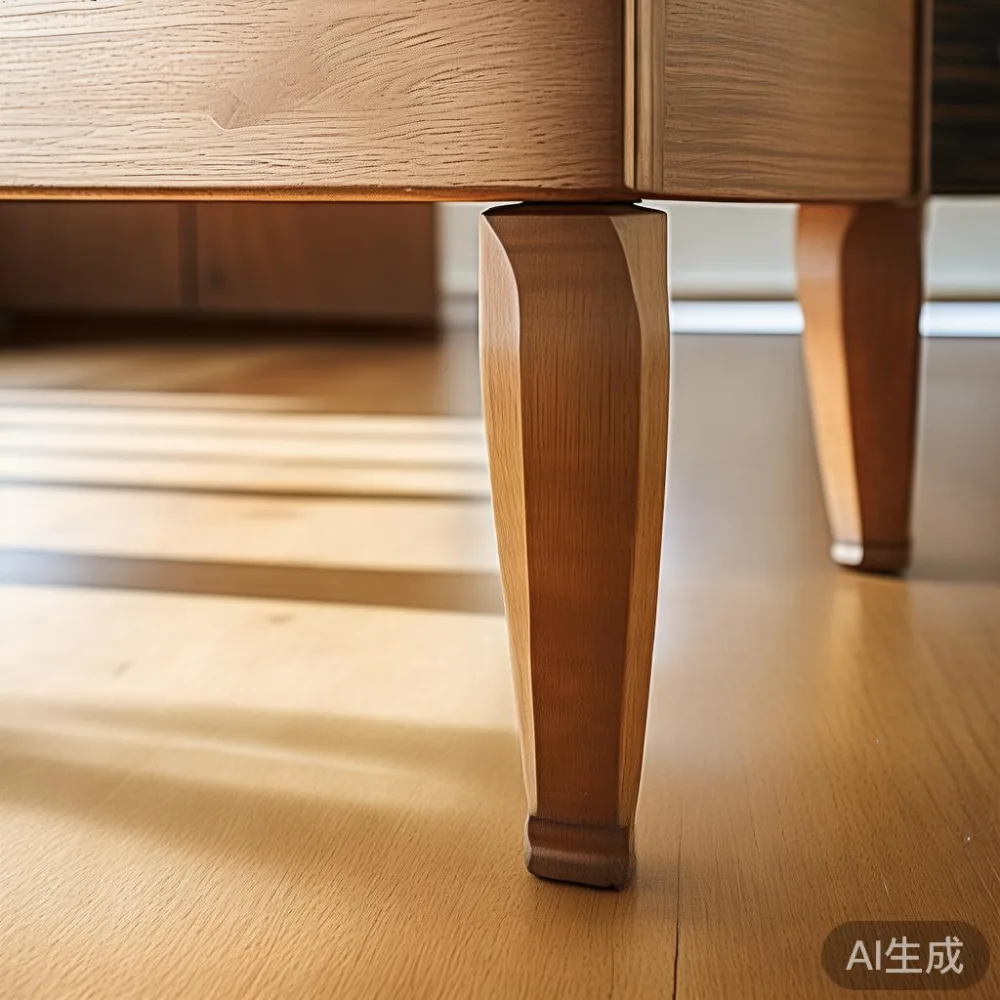
Mid-century modern for apartment living is a quietly strong match in Singapore, because the silhouette is low, the legs are visible, and the visual weight is low. A typical Mid-century modern queen size bed frame weighs 40–55 kg, sits at a 90–105 cm headboard height, and uses tapered solid wood legs that lift the frame 18–22 cm off the floor. The benefit in a Tampines or Bedok HDB is practical: under-bed storage, easier floor cleaning, and a longer-looking room because the eye reads past the frame.
The trade-off is structural: many Mid-century modern frames rely on a central support beam and a slat system that runs 12–16 cm wide. For couples who value a firm, quiet sleeping surface, look for a frame with a 7 cm or thicker central beam, not a 4 cm folded steel one. The comparison between European bed vs Mid-century modern bed comes down to headboard presence and storage. The European frame typically wins on built-in storage and a more enclosed headboard, which suits people who read in the evening and want a backrest. The Mid-century modern frame wins on visual lightness and easier airflow, which suits Singapore's humidity.
If you are cross-shopping, two other threads also stand out. Japanese bed vs Mid-century modern bed is really a question of platform height: a Japanese platform frame sits 25–35 cm off the floor, which feels grounded and traditional, while a Mid-century modern frame sits higher and feels more open. Both work in a 4-room HDB; the Japanese version looks more architectural, the Mid-century version looks more relaxed. And on the broader topic of French light luxury, American light luxury, and post-modern light luxury, the bed frame is where the language of the room is set. French light luxury leans into curved headboards, brass-tone legs, and a softer cream palette. American light luxury leans into clean rectangular silhouettes, deep buttoning, and walnut tones. Post-modern light luxury leans into mixed materials, rounded corners, and a softer palette. Any of the three reads well against a MIDHILL dining table in solid oak or ash, because the same wood species ties the room together.
What should I check on the day of delivery before the truck leaves?
Three checks, in order, before the driver pulls away. First, count cartons against the packing list. A six-door wardrobe missing one side panel is not the driver's problem; it is your problem to flag before signing. Second, photograph every carton on all four sides before opening. If there is concealed damage, the photo set is your freight insurance claim. Third, open the top carton and inspect the finish while the driver is still on site. Color mismatch claims filed two days after delivery are harder than claims filed while the truck is parked outside your block.
Finally, ask for the aftercare kit. A serious solid wood maker will include a wax or oil sample, a microfiber cloth, and a one-page care guide in English and Mandarin. A serious maker will also commit to a 10-year structural warranty and lifetime refinishing, which is the difference between a piece you replace in eight years and a piece you hand down.