Veneer vs Solid Wood Over 5 Years: What a Singapore Buyer Actually Pays
I keep a small notebook for furniture questions friends send me after they move into their Tampines or Punggol BTO. Last month, a colleague from Bedok asked me to break down the real five-year cost of a veneer dining table versus a solid wood dining table from a Foshan maker, and the numbers surprised both of us. Because once you add in Singapore-specific things like lift access for a 220 cm dining table, corridor turns at the door, 9% GST at the door, and the cost of refinishing after two humid summers, the "cheap" veneer option stops looking cheap.
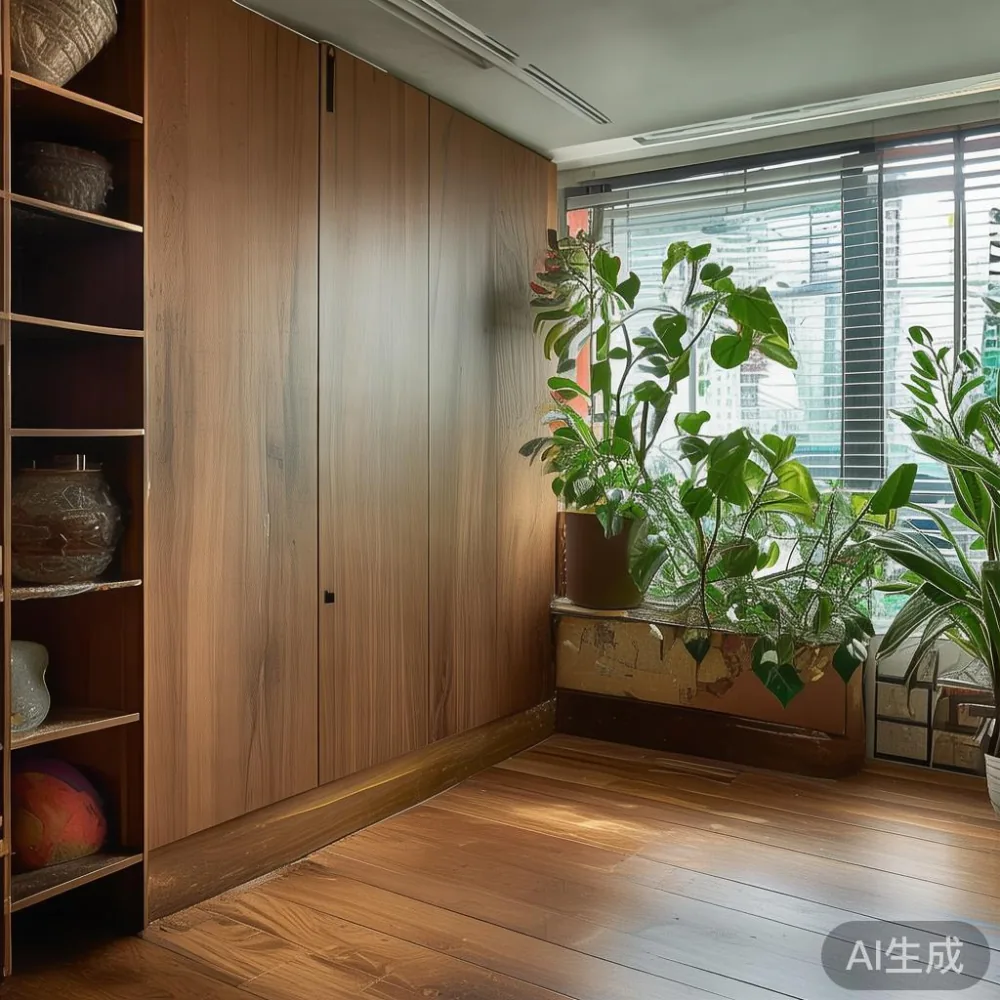
What does a typical veneer dining set cost in Singapore in Year 1?
The entry-level 6-seater veneer dining table you see at local furniture chains in Singapore usually sells for SGD 899 to SGD 1,499. Add four matching veneer chairs and a buffet, and a young couple furnishing a 4-room HDB in Punggol will land near SGD 1,800 to SGD 2,600 in Year 1. The table arrives flat-packed, weighs around 32 kg including the MDF core, and fits through a standard 90 cm corridor turn only if the box is tilted. A solid wood dining table at the same 180 cm size from a maker like MIDHILL, built from 3 cm-thick oak or ash, weighs closer to 78 kg. It costs SGD 2,400 to SGD 3,800 before GST, and the crated package usually measures 195 x 90 x 25 cm. Delivery to a 12th-floor unit in Tampines requires the goods lift to handle roughly 110 kg with the pallet, which most modern HDB lifts (1,000 kg capacity) handle easily, but older condos in Bedok sometimes only have a 630 kg lift that needs to be scheduled.
Year 1 also includes the hidden tax line. A SGD 3,200 solid wood dining table becomes SGD 3,488 after 9% GST. The same piece from an overseas direct-buy channel can hit SGD 3,600 once you add inspection, freight to a Singapore consolidator, and the SGD 80 lift-booking fee some MCSTs charge for large-item deliveries. A veneer set at SGD 2,100 becomes SGD 2,289 after GST. The gap is roughly SGD 1,200. That is the number everyone remembers.
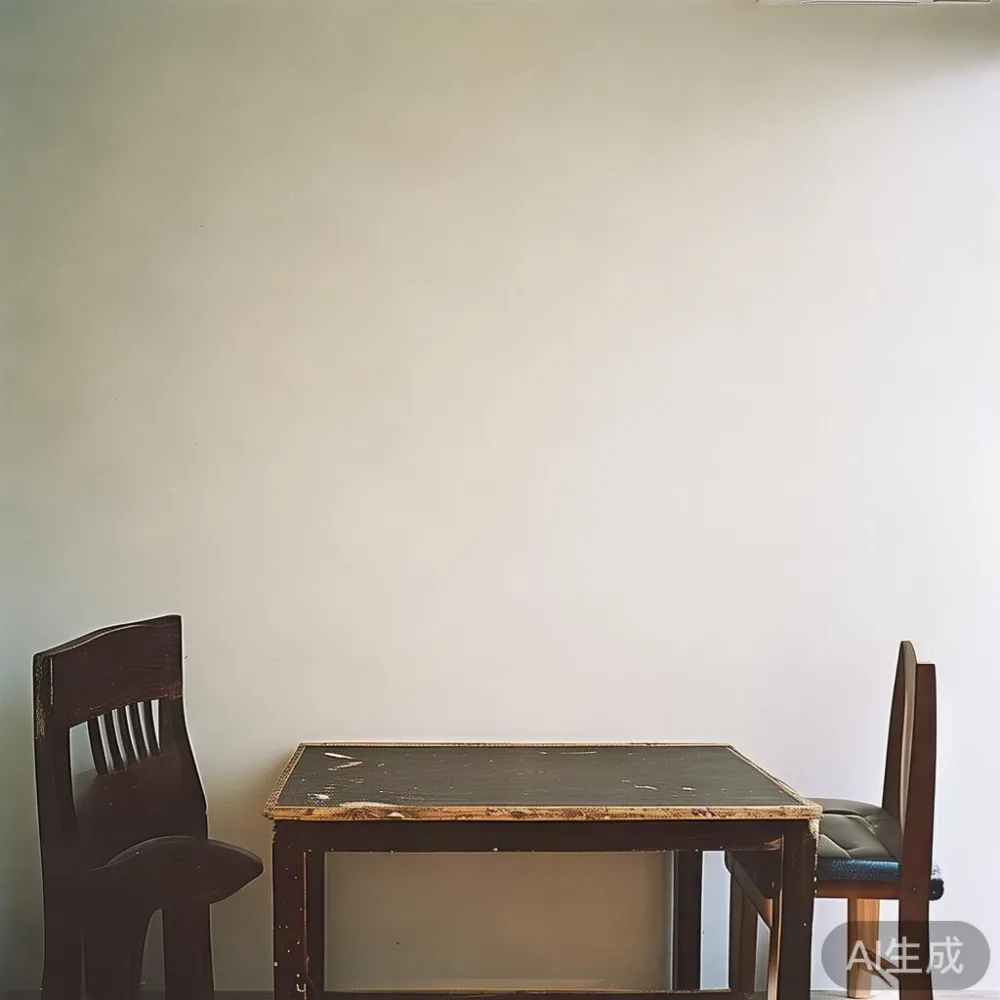
How does color mismatch show up after 18 months?
Here is where the colour mismatch problem starts. Veneer tops are printed photographic paper glued onto an MDF or particleboard core, usually 0.6 mm to 1.2 mm thick. In Singapore's 27-31°C, 80% humidity climate, the paper layer fades unevenly where sunlight from the east-facing window in your Punggol flat lands at 3 pm every day. The real wood edge band stays the original tone, so you get a pale blotch in the centre and a darker ring around the edge. After 18 months, my colleague's parents, by that point hosting weekend dinners in their Bedok maisonette, had to drape a 90 x 180 cm table runner over the surface just to make the blotch less obvious. That runner cost SGD 48.
Solid wood develops its own version of colour mismatch, but it is a different story. Oak darkens to a honey tone under UV, ash goes slightly amber, walnut goes lighter at the heartwood. The change is uniform across the surface because the grain is continuous through the 3 cm-thick slab, not a printed sheet. Owners of a MIDHILL solid wood dining table who ask about this usually get told to rotate the table 90 degrees every quarter so the sun path evens out, then oil it once a year. No runner required. In the world of post-modern light luxury interiors, the slight patina of solid oak is treated as a feature, which is the opposite of how a faded veneer top is treated.
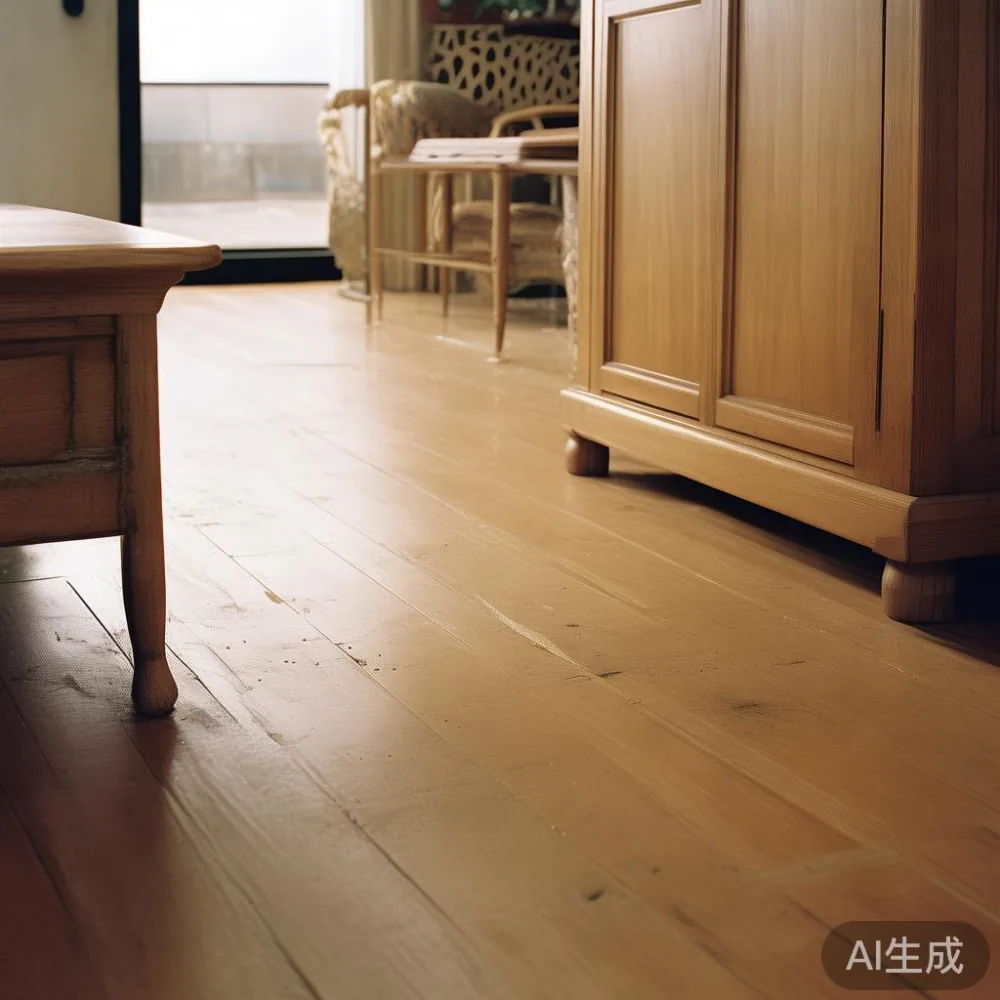
What does repair and refinishing actually cost across 5 years?
Let me put numbers on what each surface needs across five years of normal HDB life. A veneer dining table cannot be sanded. The paper layer is 0.6 mm to 1.2 mm thick and below it is MDF that swells if it ever gets wet. A cup of cold drink with condensation underneath the coaster is enough to raise a blister. Once a blister forms, a Singapore carpenter charges SGD 120 to SGD 200 to patch a 20 cm area, and the colour rarely matches because the patch is a new piece of veneer printed at a later date. Most owners end up replacing the table in Year 3 or Year 4. I have watched three friends do exactly this since 2021.
A solid wood dining table, by contrast, can be sanded. A 180 cm oak top needs about 180-grit, then 240-grit, then Danish oil or hard wax oil. A Singapore workshop charges SGD 280 to SGD 420 for a full on-site refinish, or the original Foshan maker handles it for free under a lifetime refinishing promise. MIDHILL ships the table to and from its Foshan workshop at no labour cost for the first refinish, and the owner only pays the freight, roughly SGD 180 each way from Singapore. After two refinishes across five years (Year 2 and Year 4), the total spend on keeping the dining table looking new is around SGD 720 over five years, or about SGD 144 per year.
Now add the same logic to the other pieces in a typical HDB package: a 180 cm wardrobe, a 150 cm bed frame, two nightstands, and a 90 cm marble table for the dining console. A 150 cm solid wood bed frame made from beech or ash runs SGD 1,600 to SGD 2,400, and a Japandi-leaning solid wood bed frame is what most buyers in Punggol North are choosing in 2025 because the low platform suits 2.7 m HDB ceilings. If you want a European light luxury feel, a MIDHILL European light luxury bed with a tufted headboard is the piece I keep recommending to friends who are stuck choosing between French curves and American straight lines. The mattress-to-frame gap is 5 cm, which means a 25 cm mattress lands at 30 cm, a comfortable reading height.
Is a French sofa actually worth it for a Singapore HDB living room?
This is the question I get asked weekly. A French sofa in the light luxury sense is not the heavy, fully-tufted, velvet-eats-the-room sofa from the 1990s. It is a low-arm, double-stitched, 92 cm-deep silhouette in a boucle or linen-blend cover, often paired with a solid wood base. For a 4-room HDB living room of 18 sqm, a 230 cm three-seater fits two adults, one child, and the cat, with 70 cm of walking clearance behind the coffee table. The lift access for a 230 cm sofa requires the lift door (usually 90 cm) and the lift cabin (110 cm to 160 cm deep), which means the sofa is delivered in two pieces and joined inside the flat. Ask before you buy.
Is a French sofa worth it compared to a fabric sofa on a chipboard frame at half the price? Over five years, the fabric sofa on a chipboard frame sags at the seat after 30 months because the chipboard core absorbs the 80% humidity and the springs lose tension. Replacement at Year 4 is common. A solid wood sofa frame from a Foshan maker, kilned to 8% moisture content, holds its shape across the full five years. The cover, in contrast, does need cleaning, and SGD 180 every 18 months for a professional steam clean is normal. Add the cover cleaning and the SGD 1,200 initial price gap to a French sofa in linen-blend, and a 5-year total cost of ownership comes out about SGD 1,800 for the chipboard-framed sofa (purchase + replacement) versus SGD 1,700 for the solid wood-framed French sofa (purchase + two cleans). The French option quietly wins.
How do you style a French wardrobe so it doesn't fight the rest of the room?
Wardrobes are the piece where colour mismatch shows up worst, because a 200 cm wardrobe takes up 90 cm of a 3 m HDB bedroom and the eye lands on it constantly. A sliding-door wardrobe with a printed oak veneer panel is the most common Singapore buy, and after 24 months the sliding tracks wear, the paper veneer chips at the handle, and the colour has faded unevenly under the ceiling spotlight. The 200 cm French wardrobe style, by contrast, uses a solid oak door front with a routed panel and brass cup pulls, paired with a soft sage or putty paint on the carcass. Knowing how to style French wardrobe in room layouts in a Singapore HDB means treating the wardrobe as a focal wall and matching it to the bed frame in tone, not in exact grain. A 200 cm wardrobe at 60 cm depth fits a 3 m wall with 80 cm on each side for a nightstand and a reading chair. For buyers weighing light luxury bed vs Mid-century modern bed for the same room, the wardrobe usually decides: French wardrobe doors read better to a low, upholstered light luxury bed, and walnut Mid-century tapered legs read better to a flat-panel sliding door.
Two extra costs to budget for in the wardrobe line: a 60 cm solid wood nightstand runs SGD 220 to SGD 380 each (you need two), and a full-height mirror panel on the central door is a SGD 280 upgrade. After GST, the typical five-piece solid wood bedroom package in a 12 sqm HDB master bedroom (1 x wardrobe SGD 2,800, 1 x bed frame SGD 2,200, 2 x nightstands SGD 600, 1 x dresser SGD 1,400) lands at SGD 7,640 before GST, SGD 8,328 after 9% GST, with delivery to a Singapore address taking 35 to 50 days by sea freight from Foshan. That last number matters: anyone promising 7-day delivery from a Singapore warehouse is most likely selling a flat-pack veneer product, not a solid wood piece built to order.
How do you choose a Japandi bed without buying the wrong one?
The honest way to think about how to choose Japandi bed frames for a Singapore HDB is to start with the ceiling. A 2.7 m HDB ceiling leaves 70 cm of breathing room above a 35 cm platform bed plus a 30 cm mattress, and that is the correct Japandi proportion. Go higher than 40 cm and the bed starts to feel like a Western box frame and the Japandi proportion is lost. The slat gap should be under 5 cm to support a pocket-spring mattress without a separate foundation. Solid ash at 3 cm thickness is the sweet spot: light enough to move for HDB cleaning days, strong enough to take 180 kg of two adults plus a child who climbs in at 6 am.
The nightstand pair should be the same wood and same height as the bed platform, not taller. A 60 cm-wide nightstand in solid ash with one drawer and an open shelf runs SGD 220 to SGD 380 each. Skip the handles. Japandi is finger-pull or push-to-open, which is what protects the drawer face from the colour mismatch problem that handle hardware can cause after five years of finger oils. Pair the bed and nightstands with a single pendant light 110 cm above the floor and a 90 cm marble table at the foot if the room is over 12 sqm. A marble table is the one piece where the colour mismatch risk is lowest, because marble is a stone and does not fade, and a 90 cm Carrara-style marble table on a solid ash base runs SGD 1,100 to SGD 1,600.
What does the full 5-year ledger look like for a typical HDB package?
Let me total everything for a typical 5-room HDB in Tampines or Punggol, furnished across dining, bedroom, and living zones, comparing a full-veneer package against a full-solid-wood package from a Foshan maker like MIDHILL. The veneer package covers a 180 cm dining table with 6 chairs (SGD 2,289 after GST), a 200 cm sliding wardrobe (SGD 1,899), a 150 cm chipboard bed frame (SGD 899), two chipboard nightstands (SGD 380), a fabric-framed sofa (SGD 1,499), a marble table at the entry (SGD 1,100), and a TV console (SGD 1,099). Total Year 1: SGD 9,165.
Across Years 2 to 5, the veneer package needs: one replacement dining table in Year 4 (SGD 1,299), two wardrobe panel patches in Year 3 (SGD 320), one chipboard bed replacement in Year 4 (SGD 899), one sofa replacement in Year 4 (SGD 1,499), and miscellaneous touch-up around SGD 200. Five-year total for the veneer path: SGD 13,382.
The solid wood package covers a 180 cm solid oak dining table with 6 chairs (SGD 4,370 after GST and delivery), a 200 cm French wardrobe in solid oak (SGD 2,800 + SGD 327 GST), a 150 cm Japandi bed frame in solid ash (SGD 1,899 + SGD 171 GST), two solid ash nightstands (SGD 660 + SGD 60 GST), a French sofa in linen-blend with a solid wood frame (SGD 3,400 + SGD 306 GST), a 90 cm marble table (SGD 1,299 + SGD 117 GST), and a solid ash TV console (SGD 1,499 + SGD 135 GST). Total Year 1: SGD 17,043.
Years 2 to 5 for the solid wood package: two dining table refinishes at SGD 360 each, one wardrobe door realignment at SGD 180, one sofa steam clean at SGD 180, two nightstand oil treatments at SGD 90 each, and a marble table polish at SGD 120. Five-year total: SGD 18,593.
The headline difference is SGD 5,211 over five years, or about SGD 1,042 per year, or SGD 87 per month. For a young couple in a Punggol BTO earning a combined SGD 8,500 a month, SGD 87 per month is two weekday lunch sets at a Tampines kopitiam. The decision comes down to whether you want to keep replacing flat-pack furniture in Year 4 or to keep refinishing pieces that age gracefully.
Is solid wood actually worth the upfront gap for Singapore buyers?
For most HDB buyers I speak to in Tampines, Bedok, and Punggol, the answer is yes for the pieces that get daily use and no for the pieces that are purely decorative. Spend on a solid wood dining table, a solid wood bed frame, a solid wood sofa frame, and a solid wood wardrobe. Save on a marble table (stone, no colour mismatch risk), a TV console (low wear surface), and accent chairs (replaceable). The five-year ledger above is the clearest way to see this: pieces with daily body contact and daily sunlight exposure cost less to own in solid wood, while pieces with light contact cost less upfront in veneer or stone. For buyers looking at the wider category of modern light luxury furniture for Singapore HDBs in 2025, the same split applies: solid wood for the structural pieces, lighter materials for the supporting pieces.
If you want to see the full range and the exact freight timelines for Singapore delivery, the MIDHILL catalogue at www.midhill.co lists every piece with the crate dimensions and lift-access notes. Worth a browse before you commit to either path.