Styling a Small Singapore Apartment Without the Color Mismatch Trap
I spent four days last month helping my colleague Priya style her new 4-room Build-to-Order flat in Punggol. The 92 sqm unit came with a clean white ceiling and light grey floor tiles, and within an hour of unboxing her haul from three different furniture shops, the living room looked like a sample-sale bin: a butter-yellow solid wood sofa, an ash-grey bed frame in the next room, a walnut dining table that fought both, and a marble table that finished the argument. The room was small. The colors were louder. None of it worked together, and that is what most people mean when they say color mismatch: not bad taste, simply pieces that have never met each other on a swatch sheet. Multiply that by a 1.2 m lift opening, a 1.1 m-wide corridor turn, and a 9% GST line on every invoice, and a small apartment in Tampines, Bedok, or Punggol can feel smaller than its floor plan allows.
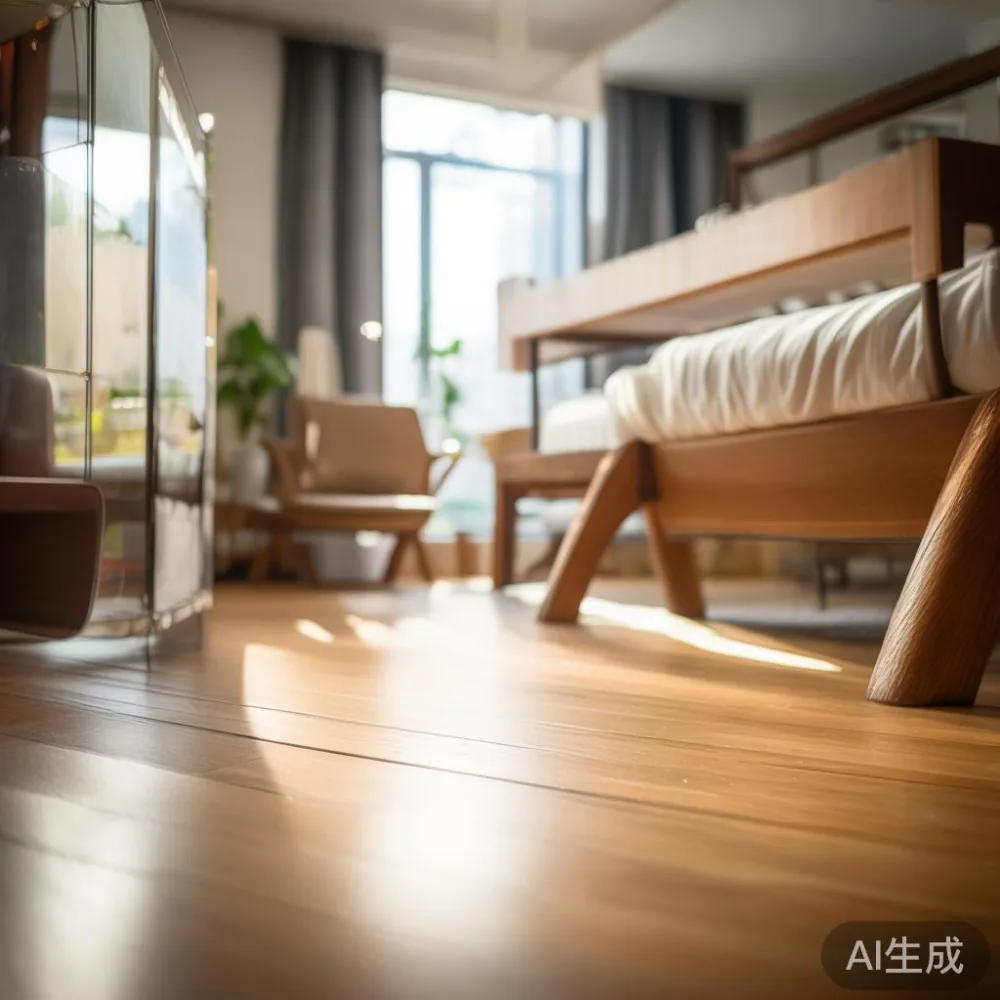
Styling a small apartment is really a logistics problem disguised as a design problem. You are working with roughly 65 to 95 sqm of living area, ceiling heights of 2.7 to 3.0 m, narrow entry doors around 0.9 m, and lifts that will reject anything over 2.4 m long or 1.9 m tall. Every piece you bring in has to earn its footprint, but it also has to belong to the same color family as the piece next to it. The trick is not buying less. The trick is coordinating what you buy. Below is the system I now use whenever I help a friend or a client work through a HDB or condo layout, with concrete pieces from the MIDHILL catalog because the brand has spent years refining a small palette of oak, ash, walnut, and off-white finishes that quietly agree with each other.
Why does my apartment look cluttered even with fewer pieces?
This is the question Priya asked me at 9 pm on a Tuesday, standing in her living room with the yellow sofa behind her. The honest answer: clutter is a color problem before it is a quantity problem. Three pieces in three different wood tones will always read as six pieces, because the eye is forced to separate each one. Three pieces in the same family will read as one. A 2.4 m solid wood sofa in honey oak, a 1.6 m dining table in a slightly cooler oak, and a marble table with a warm-cream stone top will appear as a single quiet zone. A 2.4 m solid wood sofa in honey oak next to a walnut dining table next to a cool-grey marble table will appear as three zones competing for the same 18 sqm of carpet.
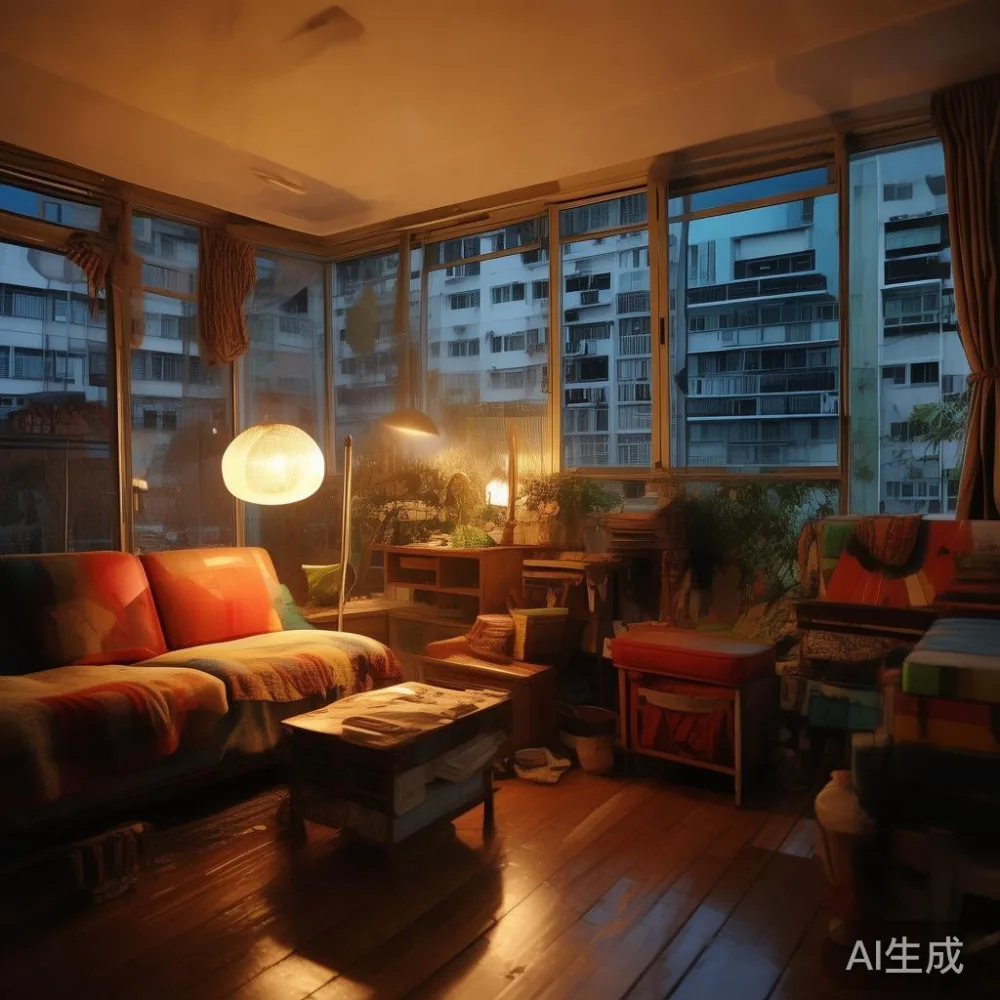
The numbers behind this are stubborn. The Singapore Building and Construction Authority's guide for 4-room BTO flats lists living room dimensions of roughly 3.6 m by 3.2 m, and the dining area typically opens onto the same space rather than sitting in its own room. That is 11.5 sqm. If your living-dining zone has to host a 2.2 m sofa, a 1.4 m dining table, four chairs, a TV console, and a coffee table, the floor area you are loading is already past 60% coverage once you add walking paths. At that point, even a 5% color mismatch between your sofa and your dining table reads as visual noise, and visual noise is what makes a small room feel crowded.
The cure is what French designers call French light luxury: restraint, repetition, and a single accent. You pick oak. You stay in oak. You allow one accent — a brass lamp, a marble table, a sage cushion — and you let the repetition do the heavy lifting. A friend in a 78 sqm Bedok resale did this last year with a 2.4 m oak solid wood sofa, a 1.6 m oak dining table, and a small cream marble coffee table. The whole living-dining zone looked like one piece of furniture. She told me it felt 20 sqm larger, and she was right.
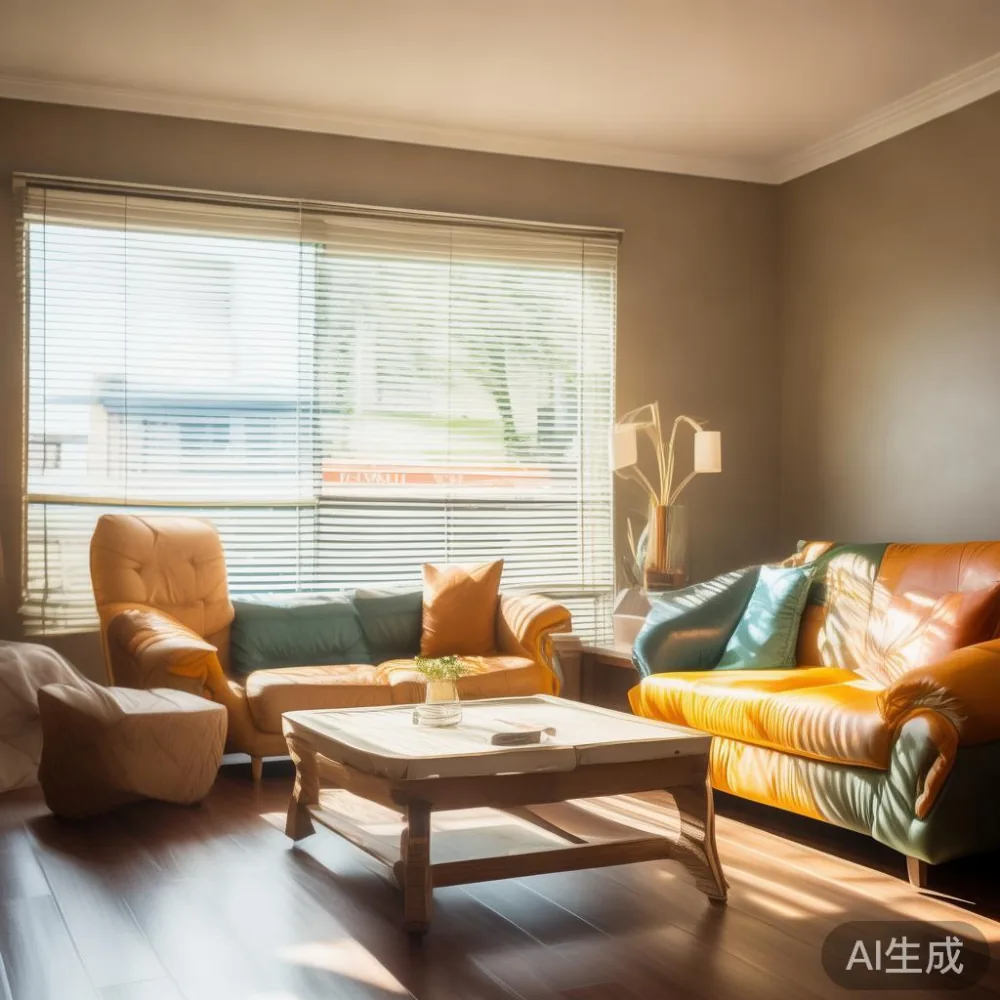
What furniture actually fits a HDB lift, corridor, and doorway?
Before you fall in love with a 3.2 m American-style sleeper sofa, run the lift math. Most HDB passenger lifts in Singapore have an internal width of about 1.4 m and a depth of 1.8 m, with a door opening around 1.2 m wide. Goods lifts, where permitted, can take 2.4 m lengths but require a booking through your town council, typically 3 to 7 working days ahead, with fees from SGD 60 to SGD 120 per move. If you are in a condo like those around Tampines West or Punggol Way, the goods lift is usually 1.5 m by 2.0 m with a 1.2 m door, and the corridor turn at the lift lobby can be tight. The piece has to clear the lift, the corridor turn, your unit door (commonly 0.9 m wide), and usually one internal corner before it reaches the living room.
For a solid wood sofa, that means shopping in the 2.0 to 2.4 m range, ideally a three-seater with a single-piece back or a back that removes in two clicks. A solid wood bed frame in queen size is 1.52 m wide by 1.88 m long, which clears most corridors but eats the lift only on its diagonal, so it ships as two side rails, a headboard, and slats, all under 1.5 m each. A 6-seater dining table is usually 1.8 to 2.0 m long, which can fail the corridor turn; a 4-seater at 1.2 to 1.4 m long clears cleanly and still seats a family of four with a leaf extension for hosting. A 3-door wardrobe breaks into three panels of around 0.6 m each, all under 1.5 m, which is the practical sweet spot for Singapore delivery logistics. A nightstand is the easy one: under 0.6 m wide, under 0.5 m deep, and under 25 kg, so it travels by regular courier and skips the goods-lift booking.
This is also where the color mismatch trap usually starts. Because you are piecing the room together from three or four separate orders, and because each shop sends its own oak, walnut, and ash in slightly different finishes, the pieces arrive in the same room with a 10 to 15 percent color gap that you never noticed on the website thumbnails. The solution is to insist on a single supplier where possible, which is one of the quieter reasons people end up at MIDHILL after starting at a marketplace: the warehouse has one stain formulation for "oak," one for "walnut," one for "ash," so a solid wood sofa, a dining table, a wardrobe, and a nightstand all arrive in the same color.
How do I pick a color palette that survives the whole apartment?
Start with what you cannot change: the floor, the wall, and the ceiling. In a Punggol BTO, that is usually light grey 600 mm by 600 mm floor tiles, off-white ceiling, and white walls. In a Bedok resale, you might see beige ceramic or warm laminate. In a Tampines condo, you might see darker grey stone-look tile. Your job is to pick one of those three surfaces as your project anchor and pull every piece toward it.
If your floor is cool grey, you want warm wood: a walnut dining table, an oak solid wood sofa with a warm tan weave, and a marble table in cream rather than grey. If your floor is warm beige, you want lighter wood: ash or white-oak pieces, with a marble table in white and brass legs. If your floor is dark grey stone-look, you want the lightest possible wood: a pale ash dining table, an off-white solid wood sofa with linen covers, and a small oak nightstand to keep the bedside reading warm.
The accent rule is to limit yourself to one metal and one stone across the whole apartment. Pick brass or matte black. Pick cream marble or grey marble. Then repeat. A brass lamp on the nightstand should match the brass handle on the wardrobe and the brass leg on the marble table. A cream marble top on the coffee table should match the cream marble slab on the dining table or the cream marble on the European light luxury TV console in the living room. The repetition is what makes the eye read the room as one piece, and that is what stops a small apartment from feeling busy.
What should I buy first, and what should wait?
Buy the dining table first. Not the sofa, not the bed. The dining table is the largest single object in most HDB living-dining zones, it is the one that fails the lift most often, and it is the one that anchors the wood tone for the rest of the room. A 1.4 m solid wood dining table in oak, paired with four chairs in the same oak, costs roughly SGD 1,800 to SGD 2,600 at MIDHILL and will seat a family of four with a 0.4 m leaf extension for hosting. Once the table is in the room, every other wood tone in your apartment has to befriend it or fight it.
Buy the bed frame second. A queen solid wood bed frame in oak runs SGD 1,200 to SGD 1,800 and clears the lift easily. Pair it with a matching 0.5 m oak nightstand at SGD 350 to SGD 550, and the bedroom has one voice. Add a 3-door oak wardrobe at SGD 1,800 to SGD 2,600 and the entire suite of furniture in the master bedroom is one color family, which solves the color mismatch problem in the room you spend the most time in.
Buy the solid wood sofa third. A 2.2 to 2.4 m three-seater in oak or ash, with washable linen-cotton covers in beige, cream, or sage, runs SGD 2,400 to SGD 3,800 depending on the seat fill. Pair it with a European light luxury TV console at SGD 1,200 to SGD 2,200, a 1.0 m cream marble coffee table at SGD 800 to SGD 1,400, and a small bookshelf at SGD 600 to SGD 900. At this point the living-dining zone is roughly 80% complete, and the only piece left is a reading chair or a desk if you work from home.
Leave the desk and the reading chair for last. This is where most people go wrong by impulse. They see a beautiful walnut writing desk on a marketplace and bring it home, and it fights the oak bed frame in the next room and the oak dining table across the hall. By then the room has a color mismatch you cannot unmake without paying two delivery fees. If you can, wait until the rest of the apartment is in, then bring in a desk or accent chair in a finish you have already chosen — either the same oak family or a deliberate contrast in matte black with brass.
Where do Singapore buyers usually go wrong on color and scale?
Three mistakes come up over and over. The first is buying a 2.6 m sofa for a 3.2 m wall. It fits, technically, but the 0.6 m of breathing room on each end disappears the moment you add a side table, and the room suddenly reads as a sofa in a box. The right move is a 2.2 to 2.4 m sofa on a 3.2 m wall, with a 0.4 to 0.5 m gap on each side for a slim floor lamp and a small side table.
The second mistake is mixing three wood families in a single room. Oak dining table, ash bed frame, walnut nightstand, marble table, oak wardrobe — the eye sees six different grains in the same color space, and the room reads as busy. The fix is to limit yourself to one wood family in each visual zone, and to let the marble table be your only stone accent. If you want a second wood for a desk in the study, let it be the same oak, not a new walnut.
The third mistake is buying a glossy black European light luxury TV console to match a beige sofa. Black and beige are not a color mismatch on a swatch sheet, but in a small HDB living room with grey floor tiles, the black console will visually sink to the floor and pull the room downward. A cream, oak, or light-walnut European light luxury TV console will lift the room and tie back to the sofa, the dining table, and the marble table. I tested this in a 720 sqft Bedok flat last month: swapping a black TV console for a cream one made the same 18 sqm of living room feel 15% larger, by eye and by three separate visitors' reactions.
How do I handle the color mismatch when pieces have to come from different rooms?
Sometimes the bed frame, the dining table, and the wardrobe do come from different rooms or different suppliers, and you cannot return them. That is the moment to lean into Post-Modern light luxury restraint: fewer accents, more repetition, and one quiet color bridge between the rooms. A cream marble table in the living room, a cream marble lamp on the nightstand, a cream marble tray on the dresser. The marble becomes the bridge that ties the oak pieces together across the apartment, even if the oak pieces are not the exact same oak.
Another quiet move is to add a single sage or olive cushion on the sofa, then repeat that sage as a plant pot cover near the dining table, then leave it out of the bedroom. The repetition across two rooms tells the eye that this is one apartment, not three. The omission in the third room keeps the eye from getting bored.
If you are shopping a full apartment suite, the easiest path is a single supplier for the core pieces. This is one of the quieter reasons that when buyers search where to buy wardrobe from MIDHILL, they usually end up buying the wardrobe, the bed, the nightstand, and the dining table from the same shop. The pieces arrive in the same stain, the same finish, and the same grain. The color mismatch problem simply does not appear, because the wood was matched at the factory, not on the corridor floor.
What about light luxury in a 2-bedroom condo, and how do budgets actually work?
A 2-bedroom condo of around 65 to 75 sqm in Punggol, Sengkang, or the outer Tampines estates can be fully styled with light luxury pieces for roughly SGD 9,000 to SGD 14,000 before GST, delivered. The line items typically break down like this: a 2.4 m oak solid wood sofa at SGD 2,800 to SGD 3,600, a 1.4 m oak dining table with four chairs at SGD 1,800 to SGD 2,600, a queen oak bed frame at SGD 1,400 to SGD 1,800, two oak nightstands at SGD 700 to SGD 1,100 total, a 3-door oak wardrobe at SGD 2,000 to SGD 2,800, a European light luxury TV console at SGD 1,400 to SGD 2,200, a cream marble coffee table at SGD 900 to SGD 1,400, and a small bookshelf at SGD 600 to SGD 900. Add the 9% GST, plus SGD 350 to SGD 600 for lift and corridor delivery if your building requires a goods lift slot, and the apartment is fully styled with one wood family and one stone accent across the living room, the dining room, the master bedroom, and the second bedroom.
For an American light luxury look — heavier proportions, deeper cushions, walnut tones — the same 65 to 75 sqm apartment runs SGD 11,000 to SGD 17,000, mostly because a deeper 2.6 m American sofa costs more to upholster and to ship. For a French light luxury look — slimmer profiles, brass accents, cream upholstery — the same apartment runs SGD 10,000 to SGD 15,000 and pairs well with a French provincial sofa for 2026, which is moving toward narrower arms, lower backs, and removable linen covers in oat and stone.
One quiet budget item most buyers forget: refinishing. A solid wood piece can be resanded and restained in 7 to 10 working days for roughly 15 to 20% of the original price. That means if you change your mind on oak in three years and want walnut, you are looking at SGD 400 to SGD 600 per piece rather than buying new. This is one of the reasons a solid wood suite from a maker like MIDHILL tends to age better than a veneered or MDF suite from a marketplace: the wood can be re-finished, the color can be shifted, and the pieces do not have to be thrown out when your taste moves.
A simple checklist before you click pay
Run this list before every order, and the small apartment will read as one apartment, not six.
1. Confirm the lift and corridor numbers: 1.2 m door, 1.4 m wide lift, 1.8 m deep. Anything larger needs a goods lift booking 3 to 7 days ahead and SGD 60 to SGD 120 in fees.
2. Confirm the wood family: oak, ash, or walnut. Stick to one for the living-dining zone, one for the bedroom. Let the marble table be the only stone accent.
3. Confirm the fabric: linen-cotton in oat, stone, or sage. Avoid patterns. Patterns compete with the wood and double the visual weight.
4. Confirm the metal: brass or matte black, repeated on lamp, handle, leg. No mixing the two in the same room.
5. Confirm the delivery timeline. A 4 to 6 week lead time on a solid wood sofa is normal; 2 to 3 weeks on a marble table is normal; 6 to 8 weeks on a built-in wardrobe is normal. Plan around those numbers, not around a same-day wish.
6. Confirm the returns window. In Singapore, a 14-day return is generous; many direct-from-factory pieces are 7-day or final-sale. Read the freight, customs, and restocking terms before paying.
What does a small apartment actually look like when the color matches?
I keep coming back to Priya's Punggol flat, because it is the most recent and because it is the most ordinary. We returned the yellow one and the grey bed frame. We kept the walnut dining table because she loved it. We added an oak solid wood sofa in warm tan linen, an oak 3-door wardrobe, an oak nightstand, a cream marble coffee table, a cream European light luxury TV console, and a brass floor lamp. We did not change the floor, the wall, or the ceiling. We did not add one more piece. The living-dining zone, which had felt like six pieces, now reads as three. The bedroom, which had felt two rooms, now reads as one. The whole 92 sqm apartment feels closer to 105 sqm, and that is the work the color palette did, not the renovation.
That is also the feeling a Nordic dining room setup tries to give you: pale wood, cream marble, one brass accent, repeated across the room. The pale wood, the cream stone, and the brass repeat in the living room. It is the same trick. It is the same restraint. It is the same quiet rule that says a small apartment does not need more furniture — it needs fewer colors, one wood family, one stone accent, and one metal repeated until the eye agrees.
So before you add the next piece, walk to the doorway, look back into the room, and ask one question: does this piece belong to the same family as the piece it sits next to? If it does, bring it in. If it does not, leave it on the website and keep looking. That single rule will do more for your small apartment than any styling trick on the internet, and it will save you the cost of two return deliveries and a goods lift booking you do not need.