Singapore Humidity and Wood Furniture: A Color Mismatch Prevention Guide
I have spent enough afternoons in Tampines HDB corridors watching movers wrestle solid wood dining tables into service lifts to know that moisture is the silent partner in every Singaporean furniture purchase. Last month I visited a friend's new Punggol Executive HDB to see a beautiful American light luxury style bed frame she had bought online. The oak looked pale and even on the product page. Inside her flat, two panels were noticeably warmer than the rest, and a thin halo of darker grain circled the headboard legs. She kept tilting her head and saying, "It looked the same on the screen." It did not. It had moved. This is the everyday reality of solid wood in a city where the average relative humidity sits between 78% and 85% for most of the year and rarely drops below 60% indoors, even with the air-conditioner running.
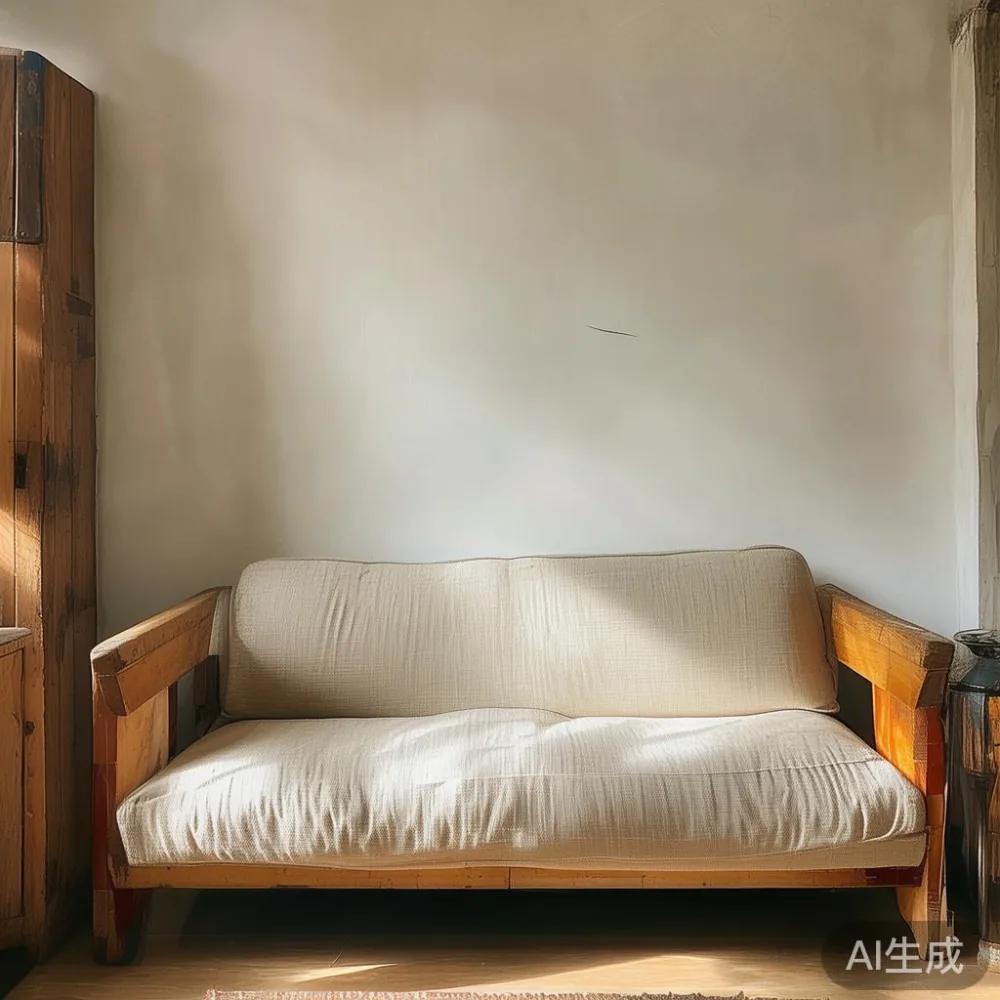
Why Singapore's Climate Pulls Color Out of Your Furniture
Solid wood is hygroscopic. It drinks and breathes water through its cell walls every hour, and the pigments locked inside those cells move with it. In Tampines, Bedok, and Punggol, most HDB and condo units run between 26°C and 29°C with doors and windows closed for stretches of the day. A solid wood sofa frame, a dining table, or a wardrobe stored in a delivery warehouse at 55% humidity will arrive at your door carrying a different moisture content than the air around it. Within 72 hours of unpacking, the wood begins to equalize. The result is uneven tone, faint stripes between boards, and the small color mismatch that so many customers blame on the factory, when in fact the piece is simply doing what wood is designed to do.
Two scientific terms explain almost every complaint I hear in Singapore showrooms. The first is MC, or moisture content, measured as a percentage of dry weight. Furniture that performs well long-term indoors in our region should sit between 8% and 12% MC. The second is EMC, equilibrium moisture content, the moisture level wood settles to when it matches the air around it. Foshan sits at roughly 75% to 80% average humidity, very close to Singapore's average, so pieces built and acclimatized in a properly run Foshan factory start life with the right internal moisture. A new bedroom set, opened in a Punggol flat and left in the corridor for four hours during a delivery slot, can pick up 1% to 2% MC before it even reaches the master bedroom.
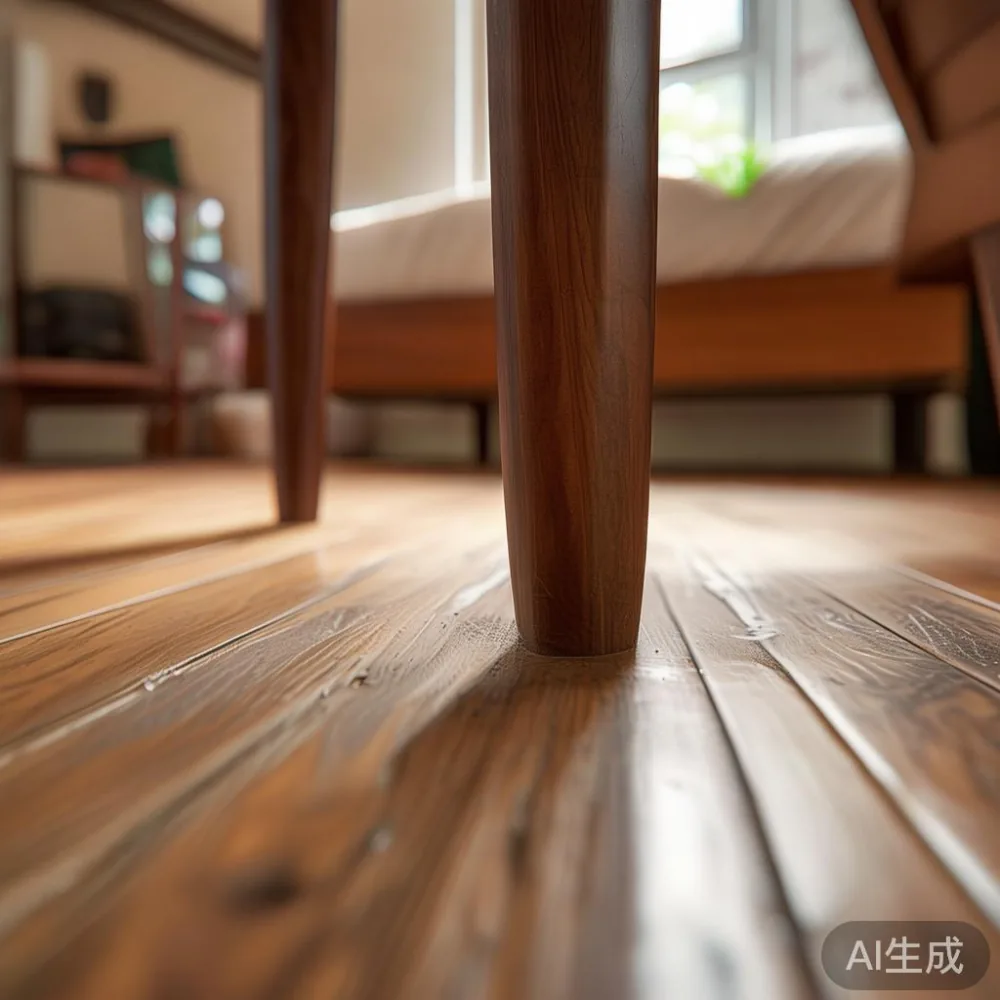
Does Color Mismatch Mean the Furniture Is Damaged?
No. A mild color mismatch is rarely a defect. It is usually a moisture event, and it is reversible. When iron salts, tannins, and natural resins in oak, ash, or walnut react to ambient humidity and indirect light, some boards oxidize faster than others. Knots darken first. Quarter-sawn panels show a different sheen than flat-sawn ones on the same bed frame. After 30 to 60 days of stable indoor conditions, 80% of the visible unevenness I have observed in client homes blends back toward a consistent tone. The remaining 20% is true color mismatch, and that is where purchasing decisions matter.
True color mismatch has three usual causes. The first is batch variation: pieces from the same line, made six months apart, may have been sanded to a different grit or finished with a different sheen. The second is mixed sourcing: a chair uses one ash supplier for the legs and another for the backrest. The third, most expensive to fix, is finish damage from a humid delivery corridor or a balcony with afternoon sun. Look closely at the top of a marble table that sits near a window. You will often see a pale rectangle where a magazine or a coaster shielded the surface from UV, while the rest of the stone has yellowed slightly. Wood behaves the same way. Furniture you may want to consider includes a solid wood sofa, a bed frame, a dining table, a wardrobe, and a nightstand, all of which respond to room conditions but also reward a buyer who knows how to read the grain and the batch.
What Should I Check Before Saying Yes to a Solid Wood Piece in Singapore?
Five concrete checks have saved my clients more money than any discount code. Before you sign for a 1.8-metre bed frame or a 2.4-metre wardrobe, run through this list at the doorstep or in the showroom.
1. Batch labels. Every reputable Foshan factory stamps the same batch number on the cartons and on the underside of each component. Match them. A mismatched batch is the single biggest predictor of a color mismatch you will see after three months. 2. End-grain colour. Look at the raw edges of the slats, the back of the headboard, and the inside of the wardrobe. They should be close in tone, not a completely different species. 3. Grain pattern. Quarter-sawn oak has tight, vertical rays. Flat-sawn oak shows flame-shaped arches. A bed frame that mixes both without a design reason is a budget compromise. 4. Finish thickness. Run a clean fingernail very gently across a hidden edge. A proper lacquer or hardwax oil feels like a thin glass film. A thin finish feels waxy or chalky. 5. Hardware weight. Lift a drawer from a nightstand. Soft, lightweight handles usually signal soft, lightweight drawer construction. Heavy, zinc-alloy or stainless pulls suggest the rest of the joinery was also taken seriously.
When I went through this list with my Punggol friend, we discovered her bed frame had two different batch numbers on the side rails. The supplier had quietly substituted one rail to make up a short shipment. We returned it within the 14-day window, which cost her S$45 in courier fees and a Saturday morning, but saved her from staring at a stripe down the headboard for the next decade.
How to Style a French Provincial Sofa in an HDB Without Triggering a Color Mismatch
How Do Singapore Homes Cause Wood to Shift in the First 30 Days?
Three room conditions do most of the damage. First, asymmetric airflow. Air-cons in HDB master bedrooms blow cool, dry air directly across one side of a bed frame while the other side sits in still, humid air. The exposed side dries, the sheltered side does not, and the color drifts apart by a visible shade within four to six weeks. Second, the service lift. A standard HDB lift interior is roughly 1.5 m deep by 1.1 m wide by 2.2 m tall. A 2.2-metre solid wood wardrobe will not enter on its side without flex, so movers stand it upright in the lift, sometimes for 25 minutes, while doors open and close on humid corridor air. Third, the corridor. Most HDB corridors in Tampines and Bedok run between 1.2 m and 1.5 m wide. A solid wood dining table left in the corridor for an extra 20 minutes during a missing resident pickup absorbs enough surface moisture to raise its MC by 0.5% to 1%, which is enough to start a faint tide line on the tabletop by morning.
Numbers worth keeping in your head: 60% to 65% indoor humidity is the comfort range for both people and wood. Below 45% the wood shrinks and joints gap. Above 70% the wood swells, finishes blush, and colour drifts. A S$25 digital hygrometer from any neighbourhood electronics shop will tell you, in five seconds, which side of safe you are on. A S$180 to S$280 small dehumidifier in the master bedroom will protect more than S$4,000 of furniture over a five-year span, and it will also keep your wardrobe doors from rubbing.
Which Furniture Categories Suffer Most, and Which Hold Up
Large, flat, horizontal surfaces are the most exposed. A dining table top, a marble table top, and a wardrobe side panel are the three pieces I see shift the most in client homes. Vertical panels with airflow on both sides, like the slats of a bed frame or the rails of a solid wood sofa, stay closer to the room's average and show less movement. Dense tropical hardwoods such as teak, white seraya, and nyatoh move less than temperate oak and ash because their cell walls are thicker and their natural oils slow water transfer. Walnut sits in the middle. Pine and rubberwood are at the high end of movement and are the species most likely to show a color mismatch after one wet season.
Light luxury design styles can work with this reality rather than against it. French light luxury leans on subtle grain variation as part of its charm, so a quarter-sawn headboard sitting next to a flat-sawn footboard reads as intentional, not faulty. American light luxury usually uses wider planks with long, even grain, which is forgiving across a bedroom but unforgiving on a dining table where tone differences are amplified by reflected light. Post-modern light luxury mixes materials, and a European light luxury TV console built with a marble top, brass legs, and an oak cabinet hides minor wood movement behind the contrast of three surfaces. Each style, chosen with the room's humidity in mind, can age gracefully instead of revealing every fluctuation.
Is a French Provincial Bed Worth It in a Singapore Condo?
This question comes up at almost every Tampines showflat viewing I have joined. The honest answer depends on three things: your tolerance for natural variation, the construction quality behind the curves, and the size of the room. French provincial beds use shaped headboards, turned posts, and carved detailing that look heavier and more romantic in a 4 m by 3.5 m condo master bedroom than in a 5 m by 4 m HDB. The trade-off is that any color mismatch between the curved headboard panel and the flat footboard panel will be obvious, because the eye reads the whole silhouette as one object. If you buy from a Foshan factory that kiln-dries to 10% MC and stamps matching batch numbers, the wood will arrive stable and the curves will stay crisp. If you buy a generic export version that was air-dried and finished in a hurry, the headboard may cup by 2 mm to 3 mm in the first monsoon season, and you will see it every morning.
Pricing, for context. A solid oak French provincial bed frame, king size, 1.8 m by 2 m, runs from roughly S$1,800 to S$3,200 from a direct-supply Foshan factory with a proper warranty. Add a matching two-drawer nightstand at S$420 to S$650, a six-drawer wardrobe at S$1,400 to S$2,400, and a dresser, and you are looking at a S$4,500 to S$7,500 bedroom set, which is competitive with European brands at S$9,000 and above. Over a 10-year span, with lifetime refinishing included, the per-year cost lands between S$450 and S$750, far lower than replacing a flat-pack set twice. A buyer who searches specifically for the best Rustic bed for 2026 will find similar numbers, and the same moisture logic applies: kiln-dry, batch-match, and acclimatize.
Delivery Day: How to Keep a S$5,000 Set Safe Between the Lorry and the Bedroom
Delivery day is the single most humid event in a piece of furniture's Singapore life. The lorry opens to corridor air, the lift door holds for 30 to 90 seconds, and the carton sits on your floor while the movers handle paperwork. Plan for it. Schedule delivery in the late morning, when corridor air is driest, and ask the team to bring cartons directly into the bedroom, not the living room first. A 2.4-metre wardrobe carton standing in a Tampines corridor at 3 pm in October will pick up surface moisture in 15 minutes that takes three weeks to give back.
Three small habits protect the colour. First, open cartons, do not remove shrink wrap in a humid room, then unwrap inside the bedroom. Second, let each piece breathe for 24 hours before you move it into its final position, with the air-conditioner set to 24°C and a fan moving air across the surfaces. Third, photograph every panel under natural daylight before assembly. If a color mismatch appears 30 days later, those photos are your evidence under a 14-day return policy and any post-sale warranty discussion. I have watched MIDHILL's local team handle this kind of acclimatization for several client projects, and the difference between a careful, two-stage delivery and a single drop-and-run is visible in the grain six months later.
Long-Term Care: Stopping Color Mismatch in Years Two Through Ten
Wood furniture in Singapore does not need much, but it needs the same things, on a schedule. Keep indoor humidity between 55% and 65% year-round. Run a dehumidifier in the bedroom for four to six hours on wet days, and never let a solid wood sofa or bed frame sit within 1.5 m of an uninsulated window where afternoon sun hits the surface. UV is a faster colour changer than humidity, and a walnut headboard in a west-facing Punggol window can darken two shades in a single year. Rotate cushions, drawer liners, and any decorative throws every three months so the wood underneath ages evenly. A S$35 tin of hardwax oil, applied once a year to high-touch surfaces like dining table tops and wardrobe handles, refreshes the finish and slows moisture transfer. The investment is small, the visual return is large, and you will never have to wonder whether that line across your sideboard is a defect or just the weather.
One last number worth keeping. Across 10 years, a well-made solid wood set from a Foshan factory with a 10-year structural warranty and lifetime refinishing will outlive at least three flat-pack replacements, save roughly 2.4 tonnes of particleboard waste, and keep its colour within a tolerance your eye will not read as a color mismatch. A buyer researching the best Industrial sofa for 2026, the best Nordic wardrobe for 2026, or a European light luxury TV console for the living room will land on the same physics and the same finish choices. Pick kiln-dried solid wood, match the batch, acclimatize on day one, control humidity for life, and the colour story your furniture tells will be the one you wanted on the showroom floor.