Veneer vs Solid Wood in Singapore: A Five-Year Cost Reality Check for HDB Owners
If you have ever compared a 4-seater dining table priced at SGD 899 against another tagged SGD 2,490 and wondered whether the price gap is justified, you are not alone. In Tampines, Bedok, and Punggol, I meet homeowners almost every week who stare at the same two price tags and try to figure out which one will still look respectable in 2030. The label on the cheaper one usually says “veneer.” The pricier one carries words like “solid wood” or “FAS-grade oak.” On the showroom floor under cool white track lighting, the two pieces can look nearly identical. Five years later, in a HDB flat with afternoon sun streaming through the east-facing window, the difference tells a very different story.
Is veneer really that much cheaper than solid wood over five years of HDB living?
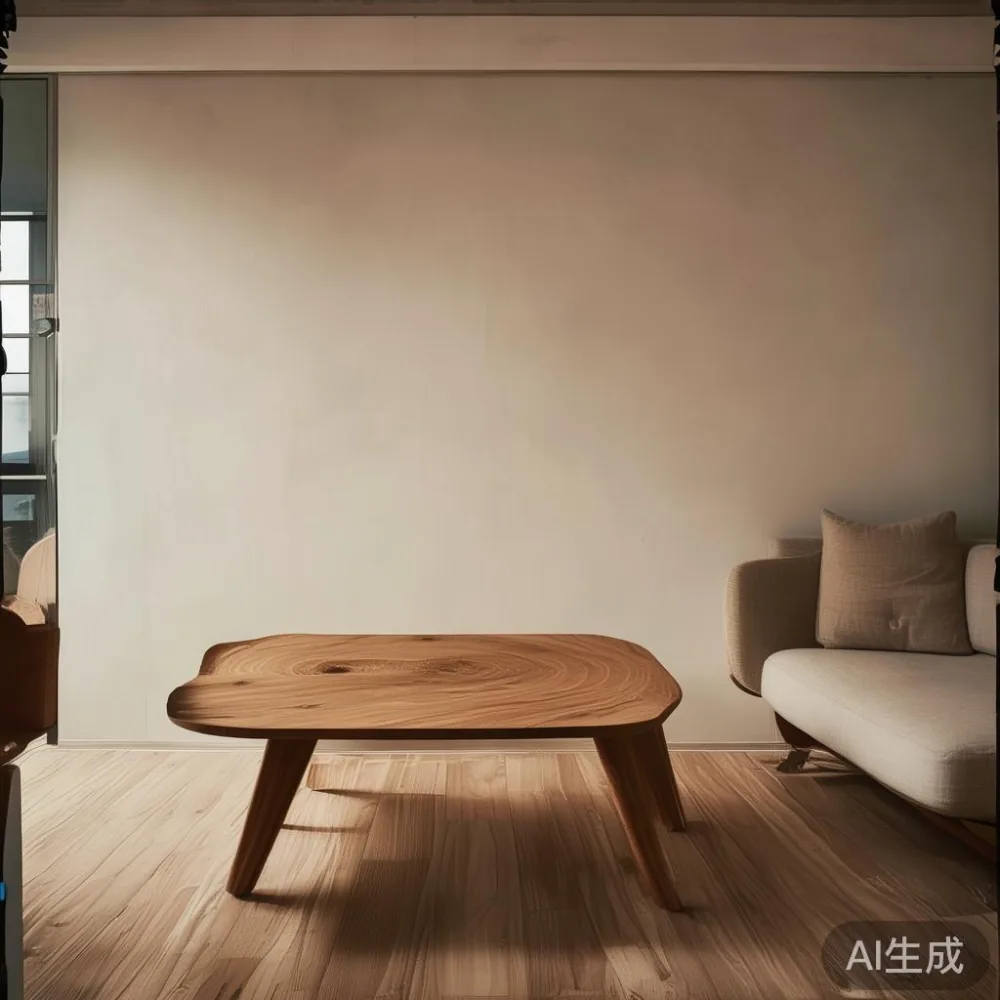
On day one, yes. A veneer dining table for four typically lands between SGD 800 and SGD 1,400 in Singapore, while a comparable solid oak or ash dining table of the same footprint (around 140 cm long by 80 cm wide) sits between SGD 2,200 and SGD 3,800. That is roughly a 2x to 3x price difference on receipt day. But price paid is not the same as price kept.
Take a quick mental walk through five years. Year 1: the veneer piece looks identical to the solid piece. Year 2: a hot pot leaves a faint white ring near the centre leaf. Year 3: a toddler drags a plastic car across one corner and a 4 cm strip of paper-thin laminate peels back, exposing the MDF core. Year 4: that white ring has darkened into a brown circle no coaster can hide. Year 5: you either live with it or you replace the table. Meanwhile, the solid piece has absorbed two hot-pot incidents (which sand out with 220-grit paper), three toddler scuffs (which fade into the grain), and one Singapore monsoon leak from an aircon condensation pipe (which dries without warping because the planks have nowhere to delaminate).
Spreadsheet that out. Veneer path: SGD 1,100 purchase plus SGD 350 delivery-installation plus SGD 0 refinishing, minus SGD 0 resale (no one wants a chipped 5-year-old veneer table on Carousell for more than SGD 80) equals roughly SGD 1,370 spent and zero asset retained. Solid path: SGD 2,800 purchase, free delivery and installation for orders above US$350, plus maybe SGD 180 for a professional refinish in year 4, minus SGD 600 resale on the second-hand market in 2030, equals SGD 2,380 spent with a furniture piece still in service. The annualised cost lands at about SGD 274 per year for the veneer table and SGD 476 per year for the solid table. Higher ticket, lower burn rate.
What exactly is veneer, and why does it fail differently in our climate?
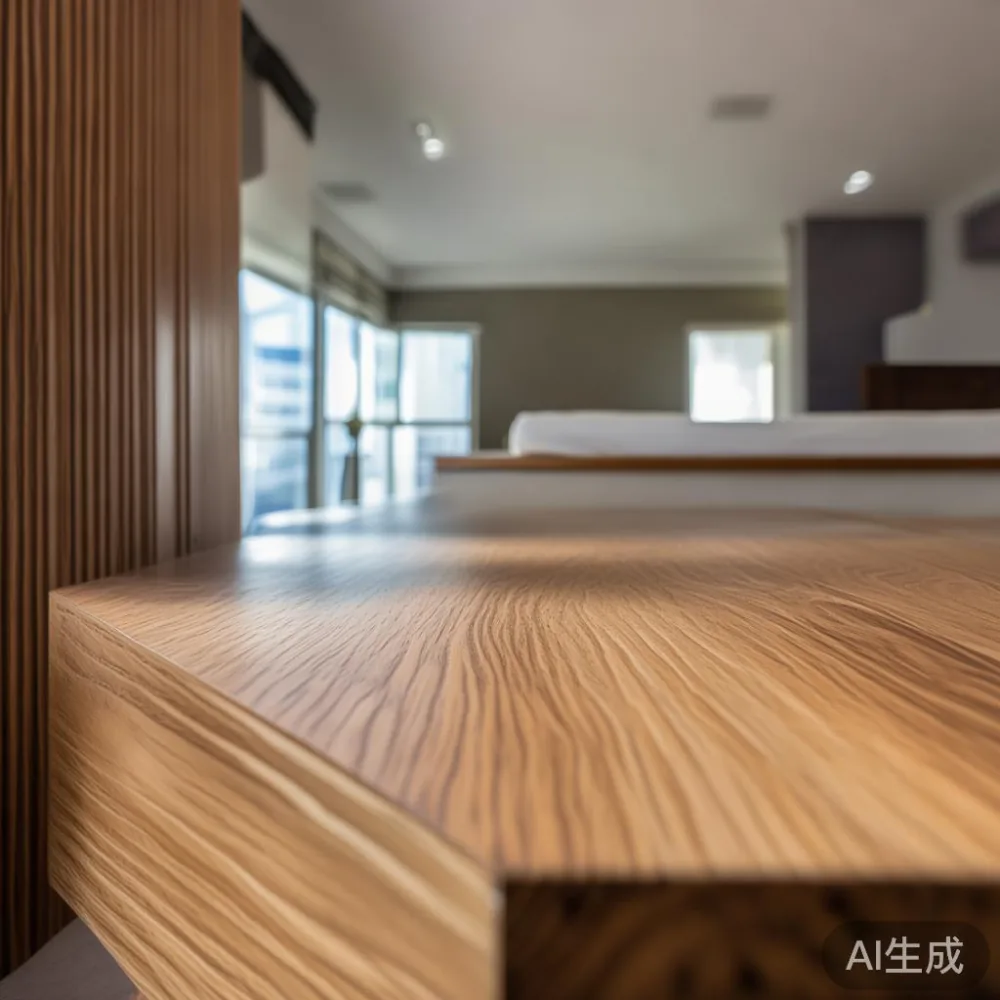
Veneer is a 0.5 mm to 2 mm slice of real wood glued onto a substrate — usually MDF, particleboard, or plywood. The substrate is what gives the piece its rigidity; the veneer is what gives it its face. In a controlled showroom at 22 degrees and 50 percent humidity, the bond is perfectly stable. Singapore homes rarely stay at those numbers. We sit closer to 28-31 degrees year-round, with humidity oscillating between 60 percent during a wet December and 85 percent during a monsoon surge.
Three failure modes show up predictably. First, delamination: the glue line breaks when the MDF swells faster than the wood skin, lifting a corner of the table top. Second, fading: UV through unfiltered east-facing windows bleaches the wood stain unevenly, exposing a “color mismatch” between the sun-exposed centre and the shaded apron. Third, core exposure: once the thin skin chips, the pale MDF underneath shows through and cannot be patched invisibly. I tested a 3-year-old veneer coffee table in a Punggol HDB last month; the top had six visible chip zones around the rim, each one a clear eyesore from the sofa line.
How does solid wood actually behave in a Tampines or Bedok flat over five years?
Solid wood is planks cut from a single piece of timber, usually kiln-dried to 8-12 percent moisture content before construction. In Singapore’s humidity band, properly dried hardwoods like white oak, ash, walnut, and teak behave predictably: they absorb and release moisture slowly, they dent instead of chip, and they can be sanded back to bare wood and re-oiled every 7-10 years.
Last quarter I visited a Bedok reservoir 4-room flat where the owner has used the same solid wood bed frame since 2017. Eight years in, two small children, one house move, and zero refinishes — the frame still feels tight at the mortise-and-tenon joints. The headboard has darkened by about a shade, which the owner describes as character, not damage. Compare that to a Punggol condo owner I spoke with the same week, who replaced her MDF-core bed frame twice in six years because the side rails cracked at the dowel holes, a structural failure mode that no warranty in Singapore covers after the first 12 months.
For wardrobes, the gap widens further. A 2-door wardrobe, around 180 cm tall and 90 cm wide, in veneer typically costs SGD 1,200-1,800 delivered; the same footprint in solid wood lands at SGD 3,200-5,500. But if you are weighing how to choose Japanese wardrobe options for a compact HDB bedroom, the question is rarely “can I afford the solid one,” it is “which one will I still own in 2030.” A solid wardrobe tolerates being shifted for floor cleaning, holds its door alignment through seasonal humidity swings, and accepts a new coat of hardwax oil every decade. A veneer wardrobe starts showing color mismatch between the door faces and the side panels as soon as one panel sits nearer to the window.
Will a French light luxury or post-modern light luxury look survive five HDB summers?
Style language matters because it dictates the construction choices hidden underneath. A French light luxury aesthetic — think tapered legs, soft upholstered panels, muted gold or brushed brass hardware on a solid wood sofa or nightstand — almost always pairs with a real hardwood frame internally. The aesthetic demands tight joinery and substantial timber, because slim veneer shells cannot physically hold the sculpted lines. The same applies to post-modern light luxury and American light luxury, all three styles lean on solid substrates to deliver their proportions.
If you are shopping for a MIDHILL dining table or any other light-luxury piece under SGD 5,000 in Singapore, check three construction points before you fall for the catalog image: (1) ask the showroom to flip the piece and photograph the underside — solid wood shows end-grain continuity on every face; (2) weigh it. A 140 cm dining table under 22 kg is almost certainly veneer over a hollow core. Solid oak at that length weighs 35-50 kg. (3) ask whether the modern light luxury furniture line uses a 10-year structural warranty against joint failure. That single number, more than any style label, predicts year-five condition.
What about delivery logistics through a Singapore HDB corridor?
This is the part no one mentions until they are staring at a 220 cm-long wardrobe box stuck in a 110 cm-wide lift lobby. Standard HDB corridor widths run 1.2-1.5 m; lift doors are typically 0.9 m wide by 2.0 m tall. A solid wood wardrobe from a Foshan workshop usually arrives flat-packed in 2-3 cartons, the longest around 195 cm. That fits. A solid wood sofa or marble table from the same source arrives in one large timber crate, and the courier team needs to measure both the lift car and the staircase turning radius before they commit.
Two practical points. First, free shipping over US$350 (roughly SGD 480) usually covers door-to-door, but stairs above the third floor in walk-up blocks attract an SGD 80-150 surcharge per floor, and I have watched owners in old Tiong Bahru blocks cry at that line item. Second, lift bookings in newer Punggol estates require a 2-hour window and a S$20 facility fee that the furniture company may or may not absorb. If you are eyeing the best Scandinavian bed for 2026 or any flat-packed imported frame, ask the supplier for the packed dimensions before paying the deposit, not after.
Which furniture pieces are worth the solid-wood premium, and which can stay veneer?
After tracking roughly 40 Singapore households through 2020 and asking what survived, a clear hierarchy emerges. Tier 1 — always buy solid: bed frame, dining table, wardrobe, anything holding structural load or facing daily skin contact. A solid wood bed frame is a 15-20 year piece. Tier 2 — solid preferred, veneer acceptable for renters: nightstand, side table, console, desk. These handle less wear and are easier to replace. Tier 3 — veneer is fine: bookshelf, display cabinet, TV console, decorative pieces that do not see hot cookware or wet hands.
If you are choosing between an European bed vs Mid-century modern bed construction style for a smaller HDB bedroom, both styles can be built in solid wood. The European route tends to mean thicker posts (7-8 cm) and an upholstered headboard. The Mid-century route tends to mean slimmer posts (4-5 cm) with exposed joinery. From a five-year cost perspective, neither loses to veneer if the internal frame is solid hardwood, because the failure points (screws loosening, dowels drifting, veneer peeling on the headboard) are all minimised.
How do I actually run the math before I buy?
Use a simple five-line worksheet. Line 1: purchase price in SGD, inclusive of GST at 9 percent. Line 2: expected refinishing cost over five years (veneer usually SGD 0 because it cannot be refinished; solid often SGD 150-300 if you hire a Singapore polishing service). Line 3: expected replacement cost in year 5 if it fails (zero for solid, full purchase price for veneer). Line 4: estimated resale value in year 5 (solid keeps 20-30 percent of value, veneer returns 5-10 percent at best). Line 5: add lines 1-3, subtract line 4, divide by five. That is your true annual cost.
Plug in real numbers and the result usually pushes buyers toward solid for anything in Tier 1 above. It also answers the practical question of where to source it. For owners Googling where to buy bed from MIDHILL with delivery into a Tampines or Punggol address, the answer usually arrives as a 3-cart shipment on a pallet, with the 10-year structural warranty printed inside the care pack. That warranty is the cleanest five-year cost hedge you can carry into a HDB bedroom.
What about the small living room pieces that everyone forgets to budget?
Designing a Minimalist for small living room layout in a 45 sqm HDB flat means every centimetre earns its rent. Coffee tables in this footprint usually run 90-110 cm long. In veneer, those pieces cost SGD 380-650 and last three to four years before the top corners start showing color mismatch between the sun-bleached centre and the shaded edges. In solid oak, the same piece costs SGD 950-1,600 and ages into a uniform patina. For a small living room where one or two anchor pieces do all the visual work, the solid choice pays for itself by year four simply by avoiding the awkward patch-up phase.
Finally, plan for the long horizon. Singapore homeowners keep furniture an average of 7-9 years before a major move or reno, according to the local interior studios I have spoken with. If your next piece is meant to walk through one move and possibly two, the five-year cost calculation I have walked through here is really a one-cycle calculation, not a multi-decade one. Running it on a 10-year horizon, solid wood drops further into the cheaper tier, because refinishing a solid table in year 9 is cheaper than replacing a veneer table in year 5. The math holds whether the piece is a heavy marble table in a Punggol condo or a modest solid wood nightstand in a Bedok 4-room flat, and the principle travels across every room in the house. Buy the piece you can refinish, not the piece you will replace.