Small HDB Styling Without the Crowded Look: A Colour-Mismatch Playbook for Singapore Flats
I spent the second week of last month walking showrooms in Tampines and a friend’s new Punggol walk-up, measuring corridor widths with a 5 m tape and timing how long two movers needed to clear a 3-seater through a HDB lift lobby. The reason was a question one reader sent me after her renovation: her 4-room flat in Bedok looked “busy” the moment three pieces of solid wood furniture arrived, and she suspected the colour-mismatch between her existing wardrobe, her new bed frame, and the dining table she had just bought was the real culprit. I agreed. A 65 sqm flat with ceilings at 2.45 m can hold a lot of furniture, but it cannot hold three different wood tones without paying for it in visual weight. This guide is what I told her.
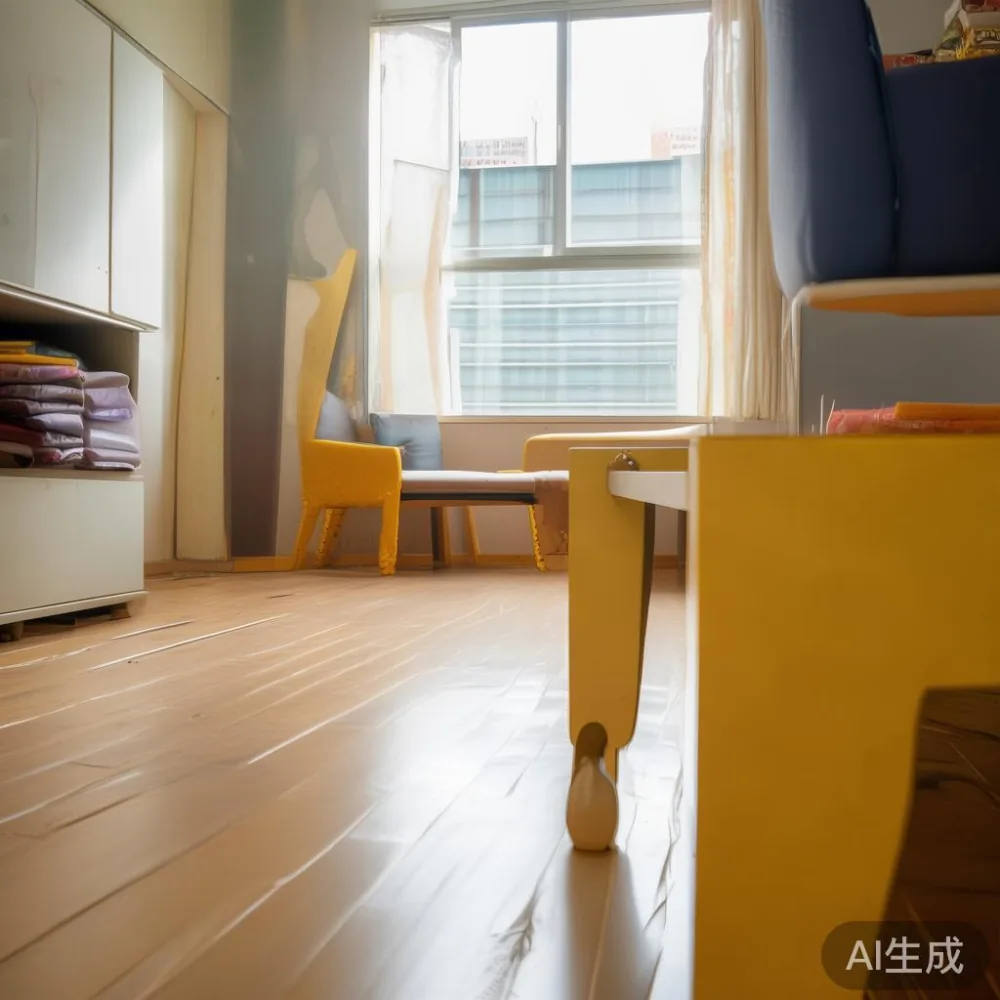
Why does a small HDB flat start to feel crowded the moment the furniture arrives?
Three concrete numbers explain most of the pain. The typical 4-room HDB living room is roughly 3.2 m wide by 3.6 m deep, which leaves about 11.5 sqm of floor to arrange a sofa, a coffee table, a TV console, and a walking lane of at least 80 cm. A standard 3-seater solid wood sofa already eats 2.1 m of that wall, a 120 cm dining table another 1.2 m, and a queen-size bed frame 1.6 m wide by 2.1 m long takes the master bedroom down to walking strips of 45 cm on either side. Add a wardrobe at 180 cm wide by 60 cm deep, two nightstands, a marble table in the entryway, and you have crossed the “visual density” threshold that makes a 65 sqm flat feel like a 45 sqm one. The second culprit is the colour-mismatch between pieces bought in different decades or from different makers: one warm oak wardrobe, one grey-washed bed frame, one honey dining table. The eye treats each wood tone as a separate object, so the room reads as five rooms instead of one. The third culprit is overhead: pendant lights dropped too low, or a chunky headboard that climbs above 110 cm, both compress the perceived ceiling height.
How do you pick a single wood family so the colour-mismatch works for you instead of against you?
The shortcut I use on site visits is the “two-tone rule”: pick one primary wood (about 70% of visible timber) and one secondary wood (about 20%), then let metal, marble, or rattan handle the remaining 10%. In a Bedok 4-room I visited in August 2024, the owners had bought an oak wardrobe from one brand, a walnut bed frame from a second brand, and a teak dining table from a third. Each piece on its own was well-made, but together the room had three browns competing for attention. We kept the wardrobe and the bed frame (because moving them out was not realistic), swapped the dining table for a 120 cm oak version in the same undertone, and added a small marble table on a black steel base for the entryway. The colour-mismatch dropped from three competing tones to one intentional pair, and the 14 sqm living-dining area immediately felt like it had gained a metre of breathing space. If you are shopping from scratch, the cleaner path is to buy a coordinated set from a single supplier. A Foshan factory that ships container-direct, such as MIDHILL, can match a solid wood sofa, bed frame, dining table, wardrobe, and nightstand in the same oak or ash veneer across one order, which removes the colour-mismatch problem at the source. Container-direct shipping from Guangdong to Singapore typically lands in 28 to 35 days by sea, with door-to-door delivery in Singapore adding another 5 to 7 working days.
What furniture footprints actually fit a HDB lift, corridor, and doorway?
Measure before you fall in love with a product photo. HDB passenger lifts in blocks built after 2010 are usually 1.1 m wide by 1.4 m deep with a 800 kg cabin limit; the older 1.0 m by 1.3 m cabins in some Bedok and Tampines blocks are tighter still. A 3-seater sofa deeper than 95 cm will not rotate inside those cabins unless the back is removable, and a wardrobe taller than 210 cm will not clear some corridor corners at the staircase landing. I keep a printed card in my bag with four numbers: lift door 80 cm, lift depth 140 cm, corridor width 120 cm, ceiling height 245 cm. Any piece taller than 200 cm, deeper than 90 cm, or wider than 180 cm gets flagged. A solid wood sofa with a knock-down frame (the back and arms bolt to the base) solves most lift problems; flat-pack wardrobes in three cartons under 30 kg each are friendly to a single mover and to your block’s loading bay rules. MIDHILL ships knock-down across its dining table, bed frame, and wardrobe lines for exactly this reason, and the flat-pack carton for a queen bed frame typically lands at 28 kg for the headboard carton and 22 kg for the side rails, well within what one person can carry up to a fourth-storey walk-up in Punggol.
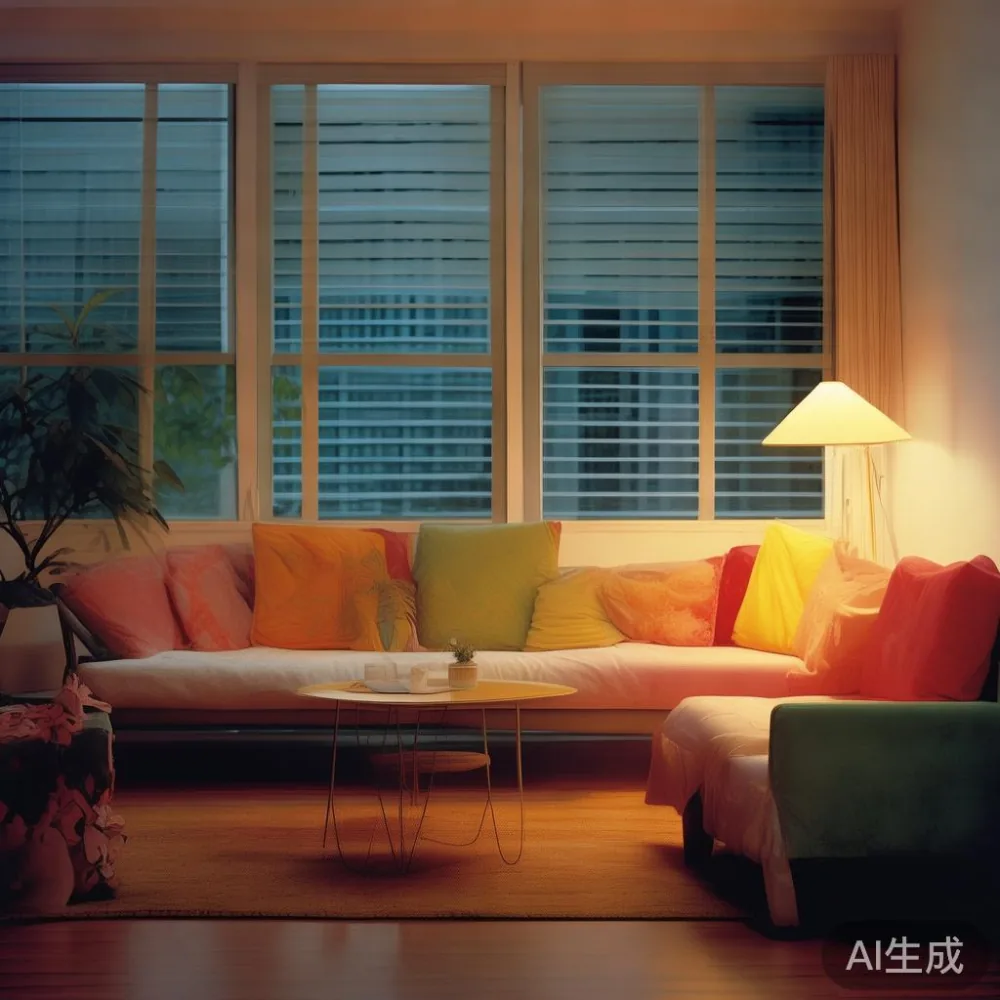
How do you style an American light luxury sofa inside a HDB living room without crowding it?
American light luxury is a friend to small Singapore flats because the silhouette is wide, low, and visually quiet: rolled arms at 12 cm, seat height around 45 cm, cushions without buttons or tufting, legs in brushed brass at 15 cm clearance. That 15 cm of clearance under a solid wood sofa is the single most useful design choice in a small flat, because the eye reads the floor as continuous, and the room looks taller. For a 3.2 m by 3.6 m living room, I would specify a 210 cm to 220 cm 3-seater, not a 240 cm one, and pair it with a 110 cm by 55 cm marble table on a slim steel base rather than a chunky wooden coffee table. A 110 cm coffee table leaves 50 cm of walkway on the sofa side and 80 cm on the TV-console side, which is the minimum comfortable for two people passing each other. If you are wondering how to style American sofa in bedroom rather than the living room, the same rules apply with one change: pull the sofa 30 cm away from the foot of the bed frame, and skip the throw pillows on the side that faces the bed so the bed reads as the hero. Cushions in two tones, no more, and one of those tones should repeat on the curtains so the eye connects the two ends of the room.
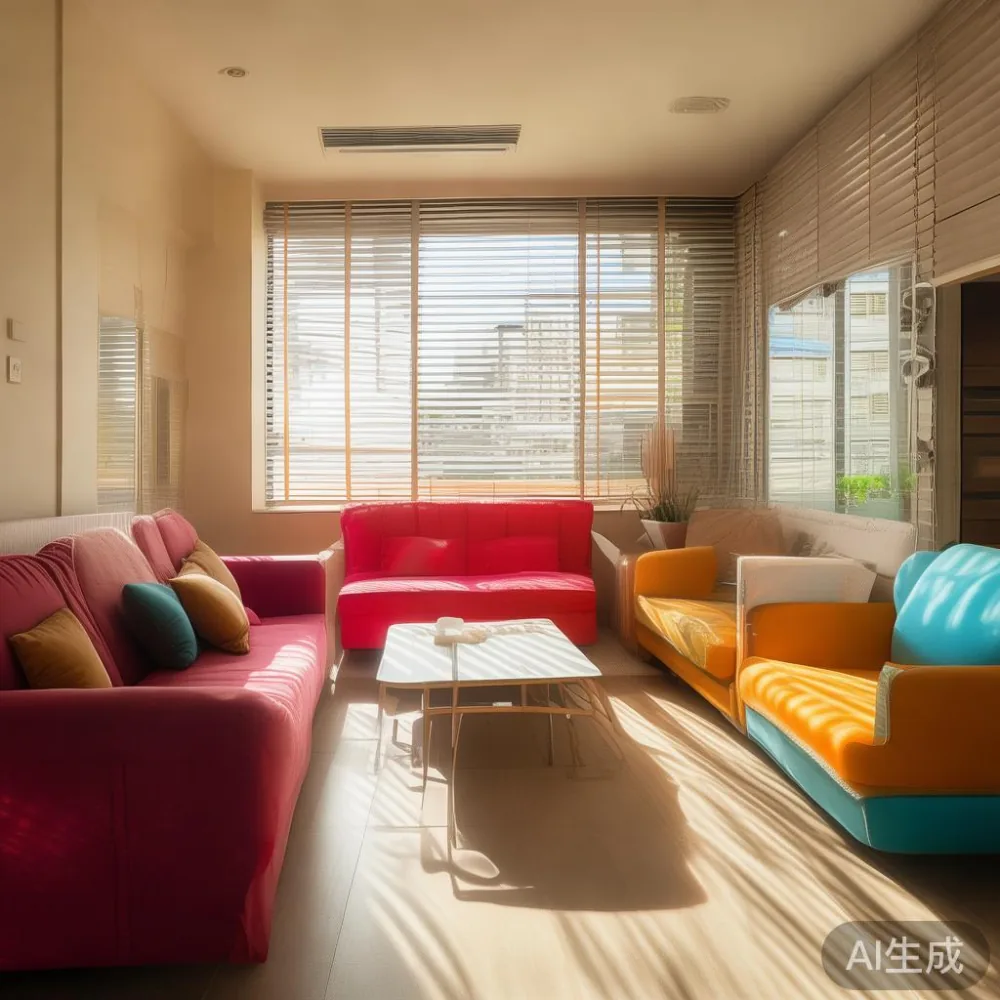
Can Boho styling actually work in a small HDB living room?
Yes, but with a budget on textures, not on pieces. Boho for small living room works when the colour palette is narrow (one warm white, one tan, one olive, one rust) and the textures are layered (rattan, jute, linen, raw oak) rather than the objects. A 1.8 m by 2.4 m jute rug under a 210 cm sofa is enough pattern; do not add a second rug. One rattan pendant over the marble table, one rattan mirror tray on the TV console, and one olive linen curtain panel on the window are the texture budget. Beyond those, you are crowding the 11.5 sqm floor with shapes that the eye cannot rest on. I tested this in a friend’s 4-room Punggol flat in September 2024 by removing four decorative items from the console and the room gained a measurable sense of space, not because we removed square footage but because the eye stopped scanning. Boho does not need many objects to read as Boho; it needs a warm undertone and three natural materials.
Which bed frame footprint suits a HDB master bedroom, and how do you choose a European bed without overpaying?
For a HDB master bedroom of about 3.2 m by 3.4 m, the practical footprint is a queen (160 cm by 210 cm including the headboard) rather than a king, because a king at 200 cm wide leaves 60 cm walking strips on each side, which feels like a corridor rather than a bedroom. A European-style bed frame typically has a 110 cm tall upholstered or panelled headboard, slatted base, and under-bed clearance of 10 cm to 15 cm rather than the 25 cm to 30 cm clearance on a Modern light luxury bed with metal legs. If you want under-bed storage, the European style with hydraulic lift is the right pick; if you want the room to feel taller, the Modern light luxury bed with 20 cm brushed-brass legs is the right pick. Knowing how to choose European bed comes down to three measurements: headboard height (90 cm to 120 cm), under-bed clearance (10 cm vs 25 cm), and slat spacing (under 7 cm to support a pocket-spring mattress without a separate base). A queen bed frame in solid ash with a 105 cm panelled headboard from MIDHILL arrives in three flat-pack cartons totalling about 52 kg, fits a HDB lift, and can be assembled by two people in 40 minutes with the supplied Allen key.
Is a European wardrobe worth the spend in a Singapore flat, or is a local laminate version good enough?
The honest answer to is European wardrobe worth it depends on three numbers: ceiling height, daily use, and the cost per cubic metre of storage. A European-style wardrobe with 240 cm height uses the full HDB ceiling (which is 2.45 m floor to soffit in most post-2010 blocks) and gives you roughly 2.4 cubic metres of hanging and shelf space per linear metre of width, compared to 1.6 cubic metres for a 200 cm local laminate. Over a 240 cm run, that is an extra 1.9 cubic metres, which in a 4-room flat is the difference between storing luggage under a shelf and storing it in a storeroom. The second number is daily use: a wardrobe with soft-close hinges, 30 mm thick shelves, and dovetail drawers will survive 10 to 15 years of daily opening in a master bedroom, while a 16 mm melamine unit with concealed hinges typically needs a hinge or runner replacement by year five. MIDHILL offers a 10-year structural warranty on its wardrobe frames and lifetime refinishing on the door panels, which addresses the second concern directly: you can change the colour-mismatch risk by re-finishing doors in a new tone 10 years down the road rather than discarding the carcass. The third number is cost: a 240 cm European-style solid oak wardrobe from a container-direct supplier lands in Singapore at roughly SGD 2,400 to SGD 3,200 delivered, including GST, which is competitive with mid-range local laminate at SGD 2,000 to SGD 2,800 once you factor in the 10-year warranty. For couples sharing a master bedroom, the wardrobe is the one piece worth spending on; for a guest bedroom used twice a year, a local laminate is reasonable.
What does a coordinated dining area look like in a HDB open kitchen?
For a HBD open kitchen of 2.4 m by 3.0 m, I specify a 120 cm by 70 cm dining table for four, or a 140 cm by 80 cm for six if the kitchen doubles as the family room. A marble table in a 120 cm by 70 cm size with a 6 cm thick sintered-stone top on an ash base weighs about 42 kg, which two people can lift and which clears the lift door. Pair the table with chairs at 45 cm seat height (not 50 cm, which forces the table up to 78 cm and crowds the kitchen counter visually), and pick chairs with arms no wider than 52 cm so two chairs fit on each long side with 56 cm per person. A pendant light 70 cm above the table at 35 cm diameter ties the dining zone to the kitchen without adding visual weight, and a mirror on the perpendicular wall doubles the perceived depth. Keep the dining table in the same wood family as the bed frame and the wardrobe so the colour-mismatch problem does not reappear in the kitchen.
How do you handle GST, delivery, and the 14-day return window on a furniture order?
Singapore adds 9% GST to the landed price of imported furniture, and the bill of lading date is what counts for GST valuation, not the order date. For a container-direct order from a Foshan factory, expect 28 to 35 days of sea transit, 5 to 7 days of Singapore customs clearance and last-mile delivery, and a slot booking that usually gives you a 4-hour window. Free shipping in Singapore typically applies above US$350, which is roughly SGD 470 at today’s rate, so most bedroom sets clear that bar while a single nightstand does not. The 14-day return window starts on the day of delivery, not the day of order, and the piece must be in its original packaging with no assembly marks to qualify for a full refund minus a 15% restocking charge for solid wood items. Photograph the cartons on arrival before opening them, photograph the assembly, and keep the foam corners; returns without original packing typically deduct 30% to 40%. If the colour-mismatch shows up only after assembly, the cleaner path is a partial swap of the offending piece (for example, the dining table top) rather than a full return, and most Foshan-direct suppliers, MIDHILL included, will arrange a replacement part shipment within 14 to 21 days at a reduced freight cost.
What is the single change that gives the biggest sense of space in a small HDB flat?
Unify the wood tone, then raise the legs. A solid wood sofa on 15 cm legs, a Modern light luxury bed on 20 cm legs, and a dining table on a 40 cm pedestal with negative space underneath together expose about 1.2 sqm of floor that the eye reads as “room,” and the ceiling feels 30 cm taller than it actually is. That 1.2 sqm of visible floor plus one consistent wood family is what removed the crowded feeling in the Bedok flat I visited, and it is what I would do first in any small Singapore home before adding mirrors, paint, or plants.