How Southeast Asian Humidity Changes Solid Wood Furniture—and How to Prevent Color Mismatch
Solid wood furniture responds to humidity long before most Singapore residents notice the change. A door that catches at 8 p.m., a dining table that feels cool after rain, or a wardrobe panel that no longer sits perfectly inside its frame can all point to the same cause: wood is adjusting to the moisture in the air. In humid conditions such as those experienced around Tampines, Bedok and Punggol, that movement can also expose differences between finished surfaces.
This guide explains how humidity affects solid wood, why color mismatch can appear, and what buyers should check before delivery. It is written for HDB flats, private condos and other urban homes where space, lift access and air-conditioning patterns matter.
Why humidity changes solid wood
Wood is hygroscopic: it absorbs moisture when the surrounding air is humid and releases it when the air becomes drier. Southeast Asia’s year-round climate places considerable demand on timber. Outdoor relative humidity may range from roughly 65% to 90%, particularly during monsoon periods, while a continuously air-conditioned bedroom may sit near 50% to 60% relative humidity. The result is a repeating cycle of expansion and contraction.
The movement is measurable. A 180 cm solid oak dining table can expand by approximately 3 to 6 mm across its grain as humidity rises. A 200 cm wardrobe side panel might move by 2 to 4 mm. These changes are normal and are not automatically a manufacturing defect, provided the piece was designed with suitable tolerances and quality joinery.
Solid wood is usually more visibly responsive than veneer or particle board, but that does not mean it behaves badly. A well-made bed frame, wardrobe or dining table should accommodate seasonal movement without splitting, twisting or losing structural stability. Ask the supplier to identify the timber species, finish type and expected dimensional movement for the local climate.
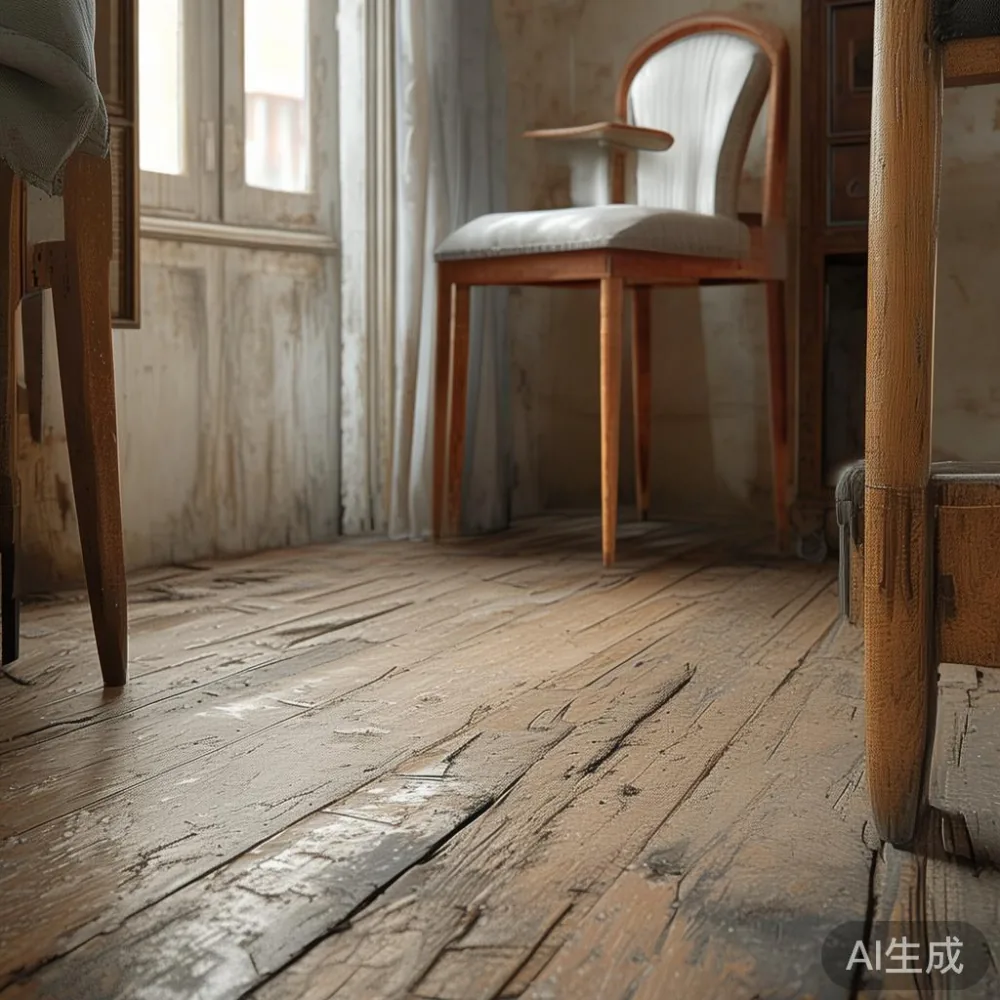
In August 2024, I visited a client’s three-bedroom HDB flat in Tampines during a humid afternoon. The outdoor relative humidity was 78%, while the living room measured 63%. A solid wood dining table had developed fine, pale lines where adjacent boards had absorbed moisture at slightly different rates. The owner called it a color mismatch. After the room remained air-conditioned for 48 hours and the table was gently wiped with a clean cloth, the lines became less visible. The incident showed why finish consistency and controlled drying deserve attention alongside installation.
What is color mismatch in solid wood furniture?
Color mismatch means that two areas of the same piece, or two pieces made from the same timber, do not present a visually consistent tone under the available light. The difference may appear as warmer and cooler patches, darker borders around joints, or visible transitions between boards. Natural timber grain, mineral streaks and differences between trees can also create tonal variation, but those features should be presented as character rather than concealed.
Humidity can intensify color mismatch because unfinished wood fibers swell and become more translucent. Darker areas often look more saturated, while lighter sections may appear chalkier. A glossy finish can make this contrast more noticeable around edges and joints. Conversely, a matte finish generally creates a softer visual transition.
Color mismatch should not be confused with ordinary grain variation. Oak, for example, may show rays and darker latewood bands. Walnut may vary from grey-brown to deeper brown. Teak may shift from golden brown to a warmer honey tone. If a sample is displayed under cool showroom lighting but installed under a warm residential lamp, the appearance can change without any physical defect being present.
Buyers should compare furniture under neutral light near a window, preferably around 10 a.m. or late afternoon, rather than judging color beneath a single ceiling light. Request close-up photographs of the actual board layout. For a dining table, ask whether the top is made from several boards and whether the maker intentionally balances the grain. For a wardrobe, inspect the doors, side panels and interior linings separately. A sales photograph showing one angle cannot reveal every tonal relationship.
How Singapore rooms create different humidity conditions
Singapore’s air-conditioned interiors are often much drier than the exterior. Doors and windows close most of the day, dehumidifiers remove moisture, and the building envelope limits the entry of humid air. Yet the transition zones remain challenging. A corridor in a Punggol condo can be exposed to elevator exhaust, rain-driven pressure and warm damp air, while a bedroom with closed windows may stay comparatively stable.
High-rise living also affects delivery and installation. Many HDB lift openings measure about 90 to 110 cm wide and 200 to 210 cm high, with internal depths of roughly 130 to 150 cm, although specifications vary by block. A 200 cm dining table cannot be carried into a lift as one rigid object if it exceeds those dimensions. It may need to be separated at a designed joint, carried in sections and reassembled in the unit.
Corridors can narrow the available turning space, while private condo service corridors may include security gates and stricter handling rules. Measure the complete route—not only the door opening—before ordering a large wardrobe or marble table. Record the narrowest width, tightest corner, lift capacity and stair turns. A narrow route can increase handling time from 1 day to 3 days if the delivery team must split and reassemble the item.
Air-conditioning is not a complete moisture-control solution for wooden furniture. Aim for practical indoor relative humidity of about 45% to 65%, with no abrupt direct airflow aimed at a solid wood sofa, bed frame or wardrobe. A hygrometer placed in the room can cost SGD 25 to SGD 45 and provides more useful information than guessing from the weather. Keep furniture at least 30 cm from a strongly blowing vent where layout permits.
Can humidity cause color mismatch after delivery?
Yes, humidity can make color mismatch more noticeable after delivery, although it rarely creates a dramatic overnight change. The finish may react gradually over several weeks as the timber responds to the room’s humidity cycle. Direct sun, kitchen steam, bathroom splashes and frequent air-conditioning transitions can accelerate the visible effects.
Allow a new solid wood dining table or bed frame to acclimatise for 7 to 14 days before applying tablecloths, rugs or close-fitting textiles. During that period, maintain moderate airflow and inspect the piece daily. If a mark is merely surface dust, use a dry microfibre cloth. If the finish requires treatment, follow the maker’s exact care instructions; generic household cleaners may remove protective coatings or cause a patch that looks more like color mismatch.
Wood species also differ in their response. Teak contains naturally oily substances and is often more stable for damp interiors, but it still moves. Ash and oak can show stronger grain and seasonal tonal shifts. Cherry generally darkens gradually when exposed to light. These are expected material behaviours when the finish and care guidance are properly specified.
How do I prevent color mismatch in my bedroom or dining area?
Start with a stable placement. Avoid a dining table directly beside an open balcony where humid outdoor air washes across the top for more than 2 hours each day. For a wardrobe against an exterior wall in Bedok, leave a ventilation gap of 5 to 10 cm if the manufacturer permits it. Keep beds and nightstands away from air-conditioning outlets that create rapid moisture swings.
Control the environment rather than trying to seal wood completely. Use curtains or blinds to reduce direct sunlight, run the air conditioner during occupied hours, and use a dehumidifier in persistently damp rooms. A compact unit may remove 8 to 12 litres of moisture per day, with actual output depending on room size and conditions. These measures protect finishes and reduce repeated swelling and drying.
Cleaning matters too. Dust with a soft cloth, keep drinks and standing water away from the wood, and wipe spills within 15 minutes. Do not place a damp vase directly on a dining table; use a coaster and a protective mat. For a marble table, clean the stone separately with a pH-neutral product and avoid acidic liquids.
It also helps to select furniture designed for the room’s dimensions. For homeowners comparing an American bed vs Nordic bed, both can use solid timber, but the American style often has a heavier visual frame while Nordic versions tend to use slimmer profiles and lighter finishes. For Modern light luxury for bedroom schemes, restrained profiles, pale oak and warm neutral textiles can work well in HDB rooms of about 9 to 12 square metres.
Should you order from a showroom sample or request the actual piece?
A showroom sample is useful for scale, but it cannot show every board or the final color under home lighting. For natural solid wood, request timber samples and close-up images of the exact production route. Ask the supplier whether color variation falls within the accepted range for that species and how batches are selected. A responsible maker should explain natural variation instead of promising that two separately made pieces will be perfectly identical.
Finish choice also affects how much variation is visible. Natural oil and matte finishes often soften tonal transitions. High-gloss lacquer may accentuate differences between porous and dense areas. If the design depends on precise uniformity, consider a wood veneer or lacquered surface rather than expecting naturally variable solid timber to behave like sheet material.
For customers searching for designer light luxury furniture in Singapore, the relevant questions are practical: which timber is used, how the grain is selected, whether the finish is water-based, how panels are joined and what after-sales support is available. MIDHILL has operated since 2008 and exports to more than 15 countries, giving the company useful experience with climate-specific packing and furniture construction. Its 10-year structural warranty and lifetime refinishing service are more informative than vague statements about durability, especially for long-term residential use.
How should a solid wood dining table be delivered and installed?
Delivery planning can prevent avoidable damage and reduce the risk of finish marks that resemble color mismatch. A table should arrive protected by fitted foam, corner guards and a moisture-resistant outer layer. The team should check the lift dimensions before dispatch and note whether the tabletop separates into sections. If it is one solid slab, the route must accommodate the weight and turning radius; lifting straps and floor-protection boards may be required.
Most Singapore furniture deliveries take 7 to 14 days after order confirmation, though custom production and peak periods can extend the schedule to 21 or 30 days. A stock configuration may be dispatched within 3 to 7 days. Buyers should confirm whether GST is included, whether assembly is included and what access fees apply. For orders above US$350, MIDHILL offers free shipping under its stated threshold policy, but the local quotation should still specify taxes and delivery terms clearly.
Assembly should happen inside the unit rather than in a corridor. A 180 cm dining table may weigh 45 to 75 kg depending on its timber and design, while a large marble table can exceed 100 kg. The installers should use lifting equipment rather than force the piece through a tight turn. A 14-day return period provides room to check the item, but large made-to-order furniture may have specific return conditions that should be reviewed before payment.
For homes with especially narrow access, a designer light luxury furniture maker should be able to suggest a dining table with removable legs or a bed frame with detachable headboard sections. Modular construction is not merely a convenience; it reduces stress during handling and protects the finish.
What finish and care routine work best in a humid climate?
A durable, low-sheen finish is usually easier to maintain in humid Southeast Asian interiors. When selecting a solid wood dining table or solid wood sofa frame, ask whether the surface uses water-based lacquer, hardwax oil or another sealed coating. A properly cured finish should resist ordinary household moisture for 30 to 60 minutes, although standing water should still be removed promptly.
Maintain a simple routine. Dust every 1 to 2 weeks, clean lightly every 1 to 3 months and inspect joints and surfaces twice a year. Use coasters measuring at least 5 cm beyond a cup’s base. Place a solid wood bed frame away from direct airflow and avoid moving it into a different room more than 1 or 2 times each year, since each relocation introduces a new moisture cycle.
For smaller pieces such as a nightstand, avoid placing them against a cold bathroom wall or next to a frequently opened shower door. For a marble table, use a stable, level base and protect the edges from impacts. The same care principles apply whether the piece is a bed frame, dining table, wardrobe or nightstand.
Light-luxury styling should not require a climate-controlled gallery. French light luxury interiors often use pale woods, soft curves and reflective glass; American light luxury may feature deeper timber tones and symmetrical proportions. Post-modern light luxury can pair clean lines with warmer finishes. Across all three approaches, the material remains wood and therefore still requires sensible moisture management.
How do small HDB living rooms influence furniture selection?
In an HDB living room of 20 to 30 square metres, moisture control and spatial planning must work together. Search results for French for small living room layouts often favour compact sofas, slim dining tables and vertical storage. The same sizing principles help protect furniture by reducing crowding around walls and air-conditioning vents. Search queries such as Boho for small living room frequently return soft textiles and rounded shapes, but natural fibres can retain moisture, so keep them away from the timber edges of a solid wood sofa or coffee table.
For a dining area limited to 150 cm of wall space, a 140 to 160 cm table with four chairs may fit more comfortably than a 180 cm model. Leave 75 to 90 cm of circulation space behind occupied chairs where possible. A compact dining table can also be positioned away from the balcony door, reducing direct exposure to humid air. In a 10 square metre bedroom, a 160 cm bed frame may leave useful clearance if wardrobes are installed on the opposite wall.
Those searching for how to choose light luxury sofa should consider seat depth, timber base, cushion density and access routes alongside appearance. A sofa with a removable timber frame is useful during renovation or relocation. Lighter finishes can show dust less readily in bright HDB light, while darker finishes may reveal oily fingerprints and moisture spots more clearly.
What questions should I ask before placing an order?
Ask the retailer for the exact timber species and finish, not simply “wood” or “wood finish.” Confirm whether the solid wood dining table, bed frame or wardrobe uses solid timber throughout the relevant panels and which components are engineered wood. Request the expected movement range and a written care guide. For a marble table, request the stone thickness, edge treatment and sealing information.
Also ask about delivery timing, lift access, assembly, GST, returns and warranty coverage. A 10-year structural warranty should define what it covers, including joint failure, frame defects and the evidence required for a claim. If refinishing is available for the lifetime of the product, confirm whether labour and return transport are included.
The most useful specification is not a promise of permanent uniformity, but a clear explanation of natural variation and the steps provided to minimise color mismatch. Solid wood should be allowed to move. A maker should also provide the stability, finish quality and service support needed when it does.
For examples, finishes or current ranges, visit www.midhill.co and review the product details with the local team. Clear material information, measured delivery planning and realistic care guidance remain the strongest protection for furniture in Singapore’s changing humidity.