How to Choose the Right Size for a Singapore HDB Living Room
I measured my cousin's 4-room BTO in Tampines last month with a laser tape, and the number that surprised us both was how narrow the living room actually is once you subtract the door swing, the DB box, and the air-con trunking. 3.2 metres wall to wall, minus 60 cm for the corridor door arc, minus 25 cm for the trunking cap. That left 2.35 m of usable depth for a seating group. If you have ever fallen in love with a 2.6 m French provincial sofa on a showroom floor and then watched it not fit up the lift, you already know why sizing for an HDB is its own discipline. Midhill has spent enough years shipping solid wood sofa, bed frame, and dining table sets into Tampines, Bedok, and Punggol flats to know the corridors are tighter than the brochures suggest, and the lifts are smaller than American condos.
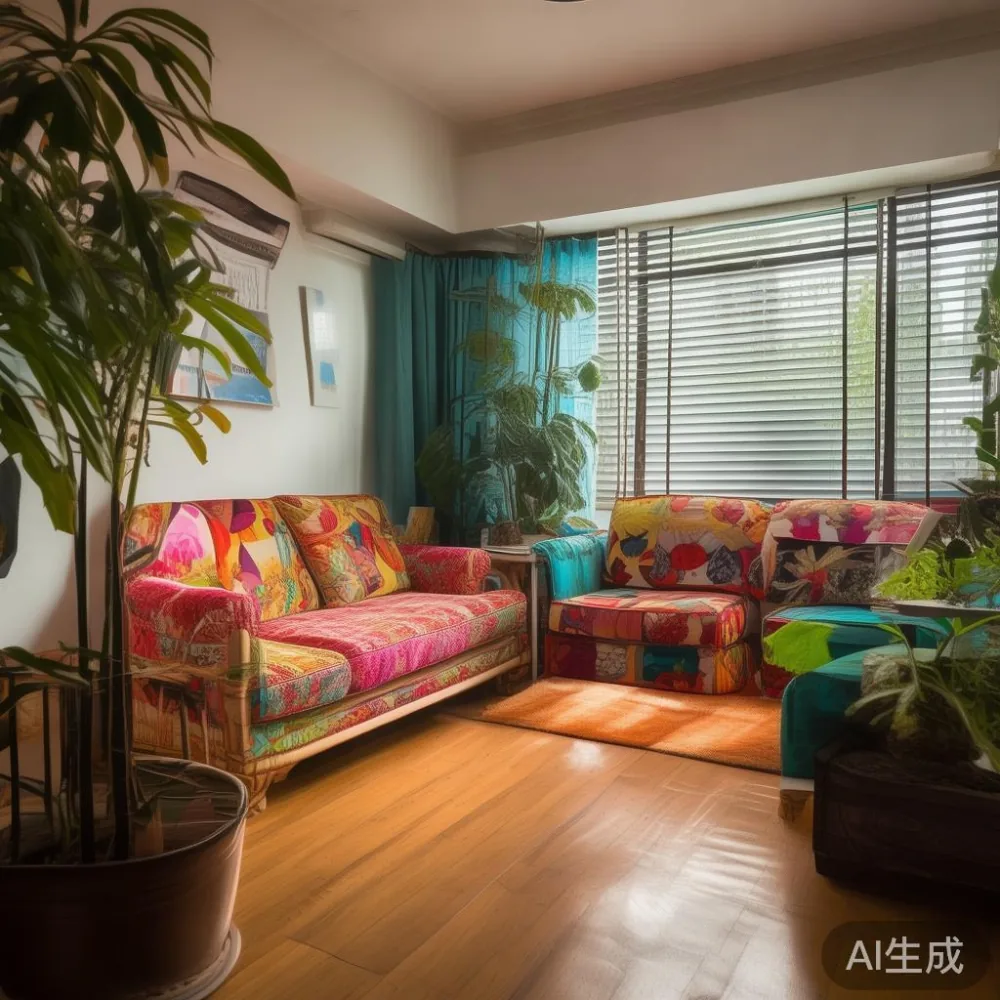
What is the first thing to measure before buying a sofa for an HDB?
The first thing to measure is not the room. It is the lift. HDB passenger lifts in blocks built after 2015 typically have an internal cabin of about 1.1 m wide by 1.4 m deep and a door opening of roughly 0.9 m. Older blocks around Bedok and Toa Payoh sometimes have lifts closer to 1.0 m by 1.3 m. A solid wood sofa frame longer than 2.2 m usually has to enter the lift at an angle, and a 3-seater with a chaise will not fit at all if the chaise is fixed. Bring a tape to the lift lobby on a weekday morning between 10 and 11, when the lobby is empty, and note the cabin height too. Anything above 1.9 m inside the cabin is fine, but a wrapped wardrobe taller than 2.0 m may need to go through the service lift, and not every block has one residents can book. In our experience, this single 15-minute visit saves more returns than any showroom visit.
Once the lift is confirmed, measure the corridor outside your unit. Standard HDB corridors are about 1.2 m wide, with a 90-degree turn at the stairwell. A 2.4 m marble table top will not make that turn if the corridor narrows under the fire hose cabinet, which is common in Punggol's newer blocks. Write the numbers on your phone, in cm, and bring them when you shop.
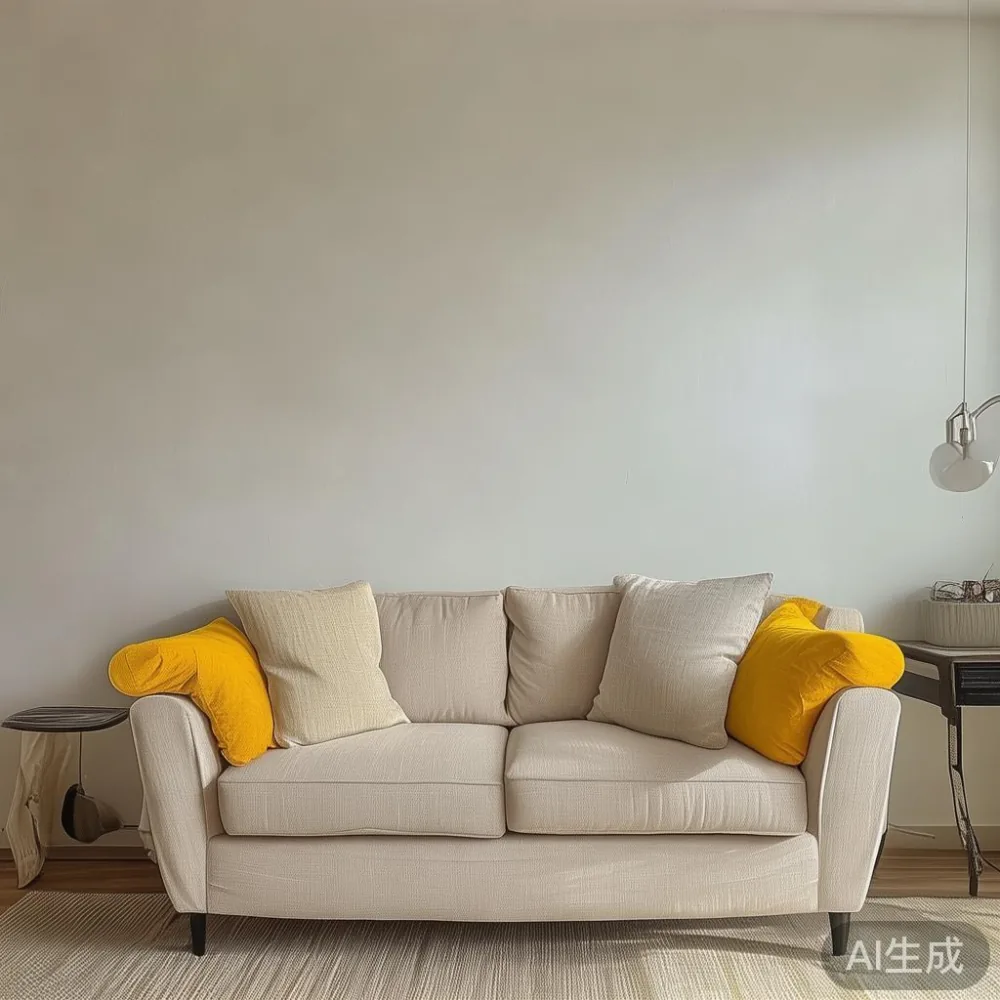
How do you match sofa size to a 4-room or 5-room HDB living room?
A 4-room BTO living room is usually 3.0 to 3.4 m wide and 2.6 to 3.2 m deep after walls. A 5-room flat stretches to 3.6 to 4.0 m wide. For a 4-room, a 2.0 to 2.2 m 3-seater solid wood sofa leaves 90 cm of walking lane to the TV console, which is the minimum a 1.8 m tall adult needs to pass without turning sideways. For a 5-room, you can push to 2.4 m. Going larger than that is what creates the color mismatch problem the design press keeps warning about: an oversized sofa in French light luxury fabric against pale walls makes the room feel cropped and the seams of the cushions look stretched within a year.
Depth matters more than width. A 95 cm deep seat is the modern European standard and looks proportional in a Singapore flat with a 50 cm deep TV console. A 105 cm deep American light luxury sofa feels generous but eats 10 cm of walking lane that an HDB cannot spare. Our recommendation, and this is the rule we use when we configure a French sofa vs Mid-century modern sofa for a customer, is to keep the seat depth at 95 cm for HDB and reserve the 105 cm depth for condominiums with a 3.5 m or longer living wall.
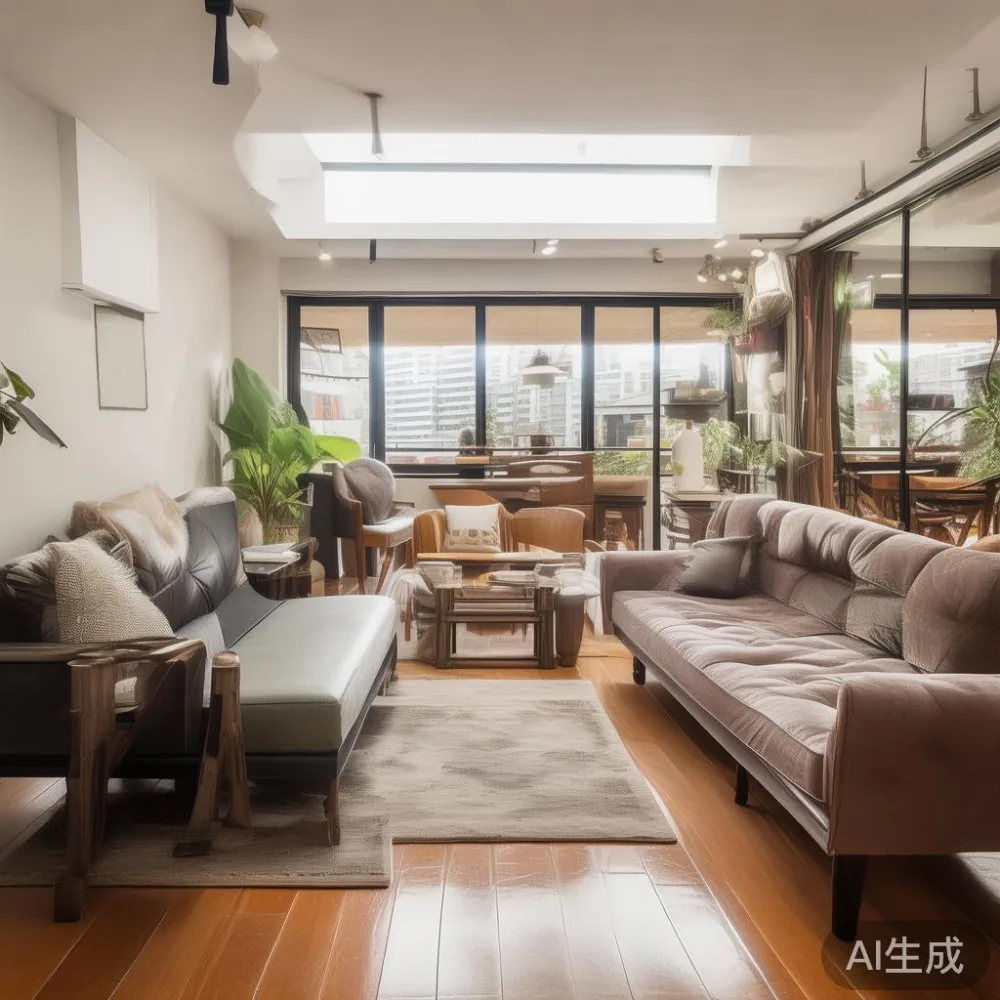
What dining table size actually fits six people in a HDB?
Six-person dining in an HDB is a real constraint, not a marketing line. The standard 1.8 m by 0.9 m dining table needs a room of at least 2.8 m by 3.4 m to pull out chairs without hitting a wall. Most HDB dining nooks are 2.4 m by 2.8 m, so a 1.4 m by 0.8 m table is the honest answer for daily family use, with a 1.6 m extension leaf reserved for festive occasions. Solid oak holds the leaf hardware better than rubberwood over a 10-year span, and the extension mechanism should be tested with two hands before delivery, not pulled apart in your dining room at 9 pm.
Chair width is the number buyers forget. A standard dining chair is 45 to 48 cm wide. Six chairs need 2.7 m of table edge just for seating, before you add the 60 cm per chair for someone to push back and stand up. If your dining nook is below 2.4 m wide, consider a bench on one side. Benches save 20 cm per seat and are easier to work through around in a tight HDB corridor when guests leave.
How big should a bed frame be in a master bedroom?
Master bedrooms in 4-room BTOs are typically 3.2 m by 3.4 m, and in 5-room flats 3.4 m by 3.8 m. A king-size bed frame is 1.8 m by 2.0 m and needs at least 60 cm of walking space on both sides and 90 cm at the foot to feel livable. That math only works in 5-room masters. In a 4-room, a queen-size 1.5 m by 1.9 m bed frame is the realistic ceiling, and even then the nightstand on the side near the door has to be a slim 35 cm deep model, not the standard 45 cm one. If you have been searching for the best Coastal bed for 2026 and your shortlist is mostly king-size, recalibrate before you order. The frame itself may be the right style, but the dimensions will punish you daily.
For headboard height, keep it under 1.1 m in an HDB master. Anything taller crowds the wall and fights the air-con supply vent, which is usually 2.1 m above the floor. Light luxury for bedroom styling favours a low headboard anyway, since the visual line of the bed should sit at two-thirds of the wall height. Anything from 80 cm to 1.0 m reads as refined without overwhelming the room.
What wardrobe depth works for an HDB bedroom?
Wardrobe depth is the most common mistake we see in Punggol and Sengkang flats, where bedrooms are 2.9 m wide and the natural instinct is to push a 60 cm deep wardrobe against the long wall. 60 cm is the European standard and will not hold a standard Singapore hanger, which is 42 cm wide plus the garment. You need 58 cm internal depth for hangers to swing freely, which means a 62 cm external wardrobe. If the room is narrower than 2.9 m, go for a sliding-door wardrobe at 65 cm deep to avoid the door arc eating your walkway.
Sliding doors also solve a colour-mismatch issue many buyers discover only after installation: a hinged-door wardrobe reflects light differently on each panel, and any variation in the solid wood grain becomes visible from the bed. Sliding panels, especially fluted or ribbed designs common in post-modern light luxury collections, hide the variation and read as intentional texture rather than a flaw. The same logic applies to a Japandi wardrobe in a smaller bedroom. If you have been asking how to style Japandi wardrobe in room with a narrow footprint, the answer is usually sliding doors in white oak, two panels, and a single brass pull. Anything more visually busy competes with the low bed and the linen curtains that define the look.
How do you stop a color mismatch before it happens?
A color mismatch is what happens when a piece of furniture arrives in a different undertone than the showroom sample, or when a marble table top greys out next to a warm oak floor. It is the single most common return reason in Singapore furniture, and it is almost always a lighting problem, not a product problem. HDB living rooms are lit by warm white LEDs at 3000K as standard, and bedroom downlights are often 4000K cool white. A walnut sample that looked chocolate brown under the showroom's 2700K lamp can read almost purple-grey under 4000K cool white in your flat. Ask the retailer for a small offcut and tape it to the wall for 48 hours, viewing it morning, afternoon, and night under your own lights.
Three other rules keep colour consistent across a room. First, order all the solid wood pieces in one batch so the stain lot is the same. Second, keep the marble table top and the TV console within two shades of each other on the grey-to-cream scale. Third, if you are mixing a French provincial for office desk at home with a living room in American light luxury, accept that the two zones will read as different rooms and bridge them with a shared rug tone. A neutral beige or greige rug at 2 m by 3 m or larger does more to unify a space than matching wood species.
What does a realistic delivery timeline look like for solid wood?
Solid wood is not flat-pack. A solid wood sofa in oak or ash needs 35 to 50 production days from order, plus 14 to 21 days for sea freight from Foshan to Singapore, plus 5 to 7 days for customs clearance and local delivery. Plan 60 to 75 days total from order to your living room. Midhill confirms each stage with a photo and a serial number, and the white-glove crew will assemble the bed frame, dining table, and wardrobe on site, not at the warehouse. Lift bookings in some HDB blocks require 48 hours' notice, so the delivery team will schedule with you in advance.
Free shipping typically applies above a certain order value, and for cross-border solid wood into Singapore the threshold usually sits around SGD 1,800 to SGD 2,200 after GST. Below that, expect a delivery fee in the SGD 180 to SGD 280 range. GST is 9 percent as of 2024, calculated on the declared value at Singapore customs. Keep the invoice for your own records, since warranty claims for the 10-year structural frame need the original invoice number and the production batch code stamped on the inside of each drawer.
How do you decide between a nightstand, a side table, or nothing?
Nightstands are the easiest piece to over-buy. A 55 cm wide nightstand with two drawers is the showroom default and looks right in a 5 m wide bedroom. In an HDB 4-room, the same piece eats 12 percent of the wall and stops you from opening the wardrobe door behind it. Measure the gap between the bed frame and the nearest obstruction first. If the gap is below 50 cm, skip the nightstand and use a wall-mounted shelf at 70 cm above the mattress top. If the gap is 50 to 65 cm, a single-drawer 40 cm wide nightstand is enough. If the gap is over 65 cm, you have room for the two-drawer version.
Height is the other constraint. The nightstand top should sit 5 to 10 cm below the mattress top for easy reach of a phone or a glass of water. In an HDB where the bed frame is often 35 to 40 cm tall, the nightstand should be 30 to 35 cm. Standard retail nightstands are 55 to 60 cm and look comically tall next to a low platform bed frame, which is half the reason bedrooms feel off-balance after delivery.
Which pieces are worth the upgrade to solid wood in an HDB?
The bed frame and the dining table. Both take daily weight and both are expensive to replace. A solid oak bed frame will outlast three mattresses and two moves. A solid oak dining table will outlast six different chair sets. The sofa frame, the nightstand, and the TV console can be engineered wood with a solid wood veneer if budget is tight, provided the structural joints are still mortise and tenon. The marble table top is worth the upgrade only if you commit to coasters; marble etches within minutes of lemon juice or red wine contact, and Singapore humidity speeds up the patina in ways showroom samples never show.
For shoppers browsing for sale French provincial furniture, the same rules apply but with one extra check. French provincial pieces often have carved details and curved silhouettes that look smaller in photos than in person. A 2.2 m French provincial sideboard is genuinely 2.2 m, and the curved legs add 8 cm to each side. Bring your corridor and lift numbers to the showroom, write them on a card, and ask the salesperson to physically measure the piece against your card before you commit. A 15-minute measurement session in the showroom prevents a 60-day return headache at your HDB door.
One last note on the long game. Solid wood furniture in a Singapore flat will move slightly with the humidity swings between the air-conditioned 23-degree daytime and the 30-degree evening when the balcony door is open. Expect micro-cracks in the oak grain during the December to February monsoon and minor expansion in June. A 10-year structural warranty covers the frame, and a lifetime refinishing service is what keeps the colour match intact year after year. Schedule a refinishing every five to seven years, and the colour mismatch you worried about at delivery will never appear in the first place.