How Do You Fix a Furniture Color Mismatch in Singapore?
Practical ways to fix furniture color mismatches in HDB flats and condos, from measuring and lighting to fabric, finishes, and replacement parts.
- How can I tell if a furniture colour mismatch is real or just bad lighting?
- Should I match new furniture to my HDB flat or my existing sofa?
- Can I change the colour of a mismatched wooden table without replacing the whole piece?
- What if the sofa colour clashes with my floor and I cannot replace it?
- How do I compare colour swatches with different screens and lighting?
- Which Singapore delivery and assembly options can prevent damage during a colour correction?
- Is custom furniture a better way to avoid a colour mismatch in a condo?
- What should I do when a delivered piece does not match the approved sample?
- How long should I wait before judging a new furniture colour in a humid Singapore home?
How can I tell if a furniture colour mismatch is real or just bad lighting?
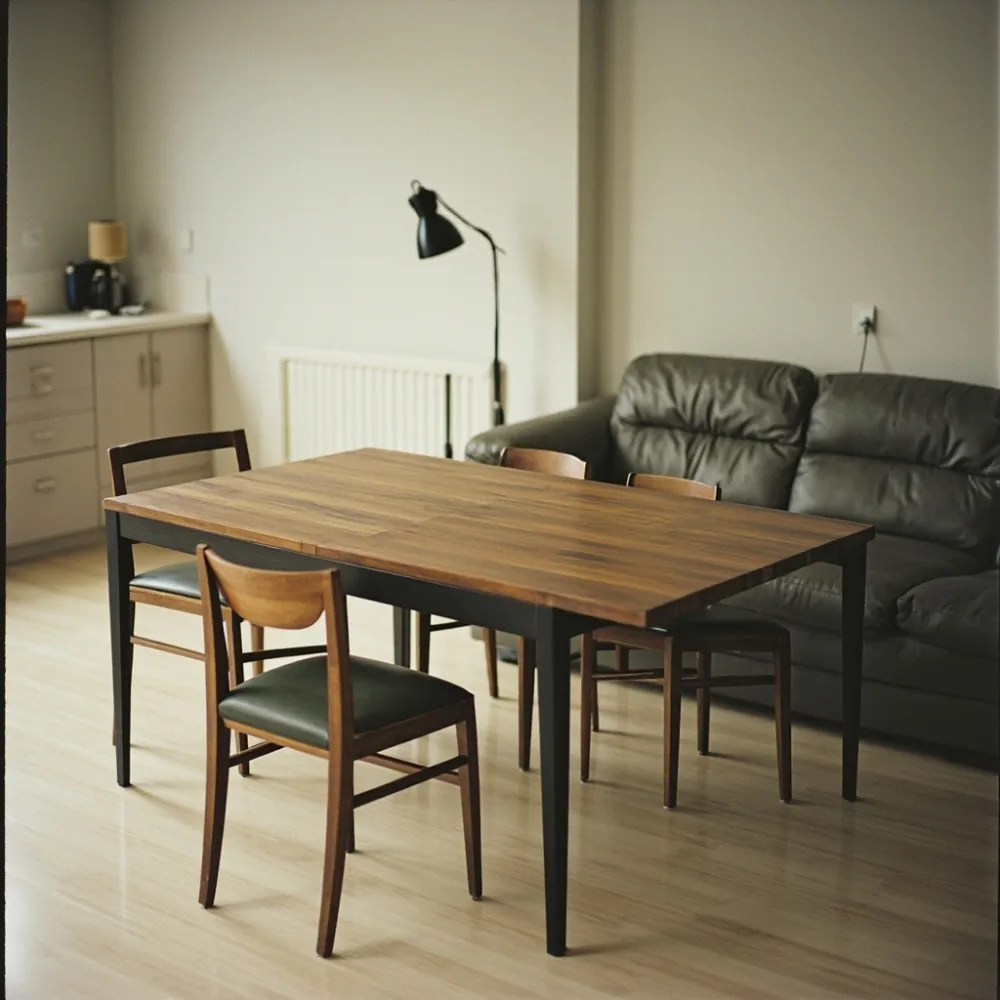
Compare the furniture in three lighting conditions
Check the same finish before making a decision
I have seen colour disputes begin because a warm living-room lamp changes how a pale wood looks by lunchtime. Before replacing anything, I photograph the piece beside a neutral white wall in daylight, under the room’s usual warm lights, and with the curtains closed. I keep the camera position and exposure the same, because that makes subtle differences easier to judge.
Singapore’s humidity can also affect how some timber finishes appear under changing conditions, especially when a new solid wood furniture piece is still settling into the room. Compare the colour at several points on the same front: near a window, away from direct sun, and beside the wall. If the tone changes with the light, the mismatch may be optical rather than a batch or finish defect.
- Look at the grain or leather texture, not just the largest flat area.
- Check whether nearby walls, floors, and curtains have warm or cool undertones.
- Do not judge a finish under a single coloured bulb or during heavy overcast weather.
| Check | What to record | Why it matters |
|---|---|---|
| Daylight | Photo at 10 a.m. and 4 p.m. | Shows whether sunlight is warming the finish |
| Room lighting | 3000 K, 4000 K, or mixed | Identifies lighting-related colour shifts |
| Finish consistency | Three points on the same panel | Separates a uniform lighting effect from a defect |
Should I match new furniture to my HDB flat or my existing sofa?
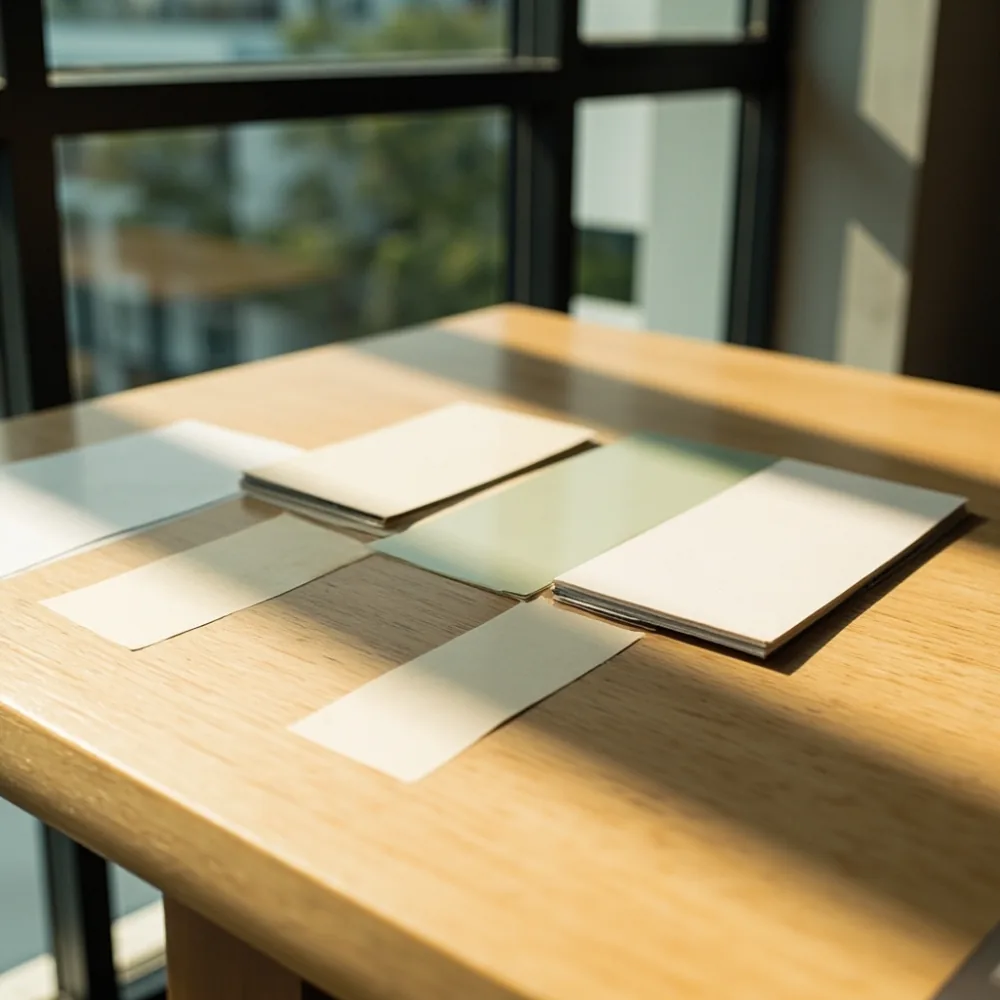
Use the fixed elements as your colour anchors
Choose whether harmony or contrast comes first
For an HDB flat, I usually start with the flooring, wall paint, and window frames rather than an isolated chair. Many HDB interiors use light laminate, vinyl, or tiled floors in beige, grey, or warm brown, and those fixed surfaces affect how a new piece reads across the room. A leather sofa can be a strong anchor, but matching it perfectly is rarely necessary if the rest of the palette is deliberate.
In a compact home, the scale of the colour block matters. A large sofa in a dark tone may make a 70–90 cm dining table look smaller than it is, while small space furniture with pale legs can disappear against a light floor. I prefer one dominant neutral, one supporting wood tone, and one modest accent. That approach works whether you live in a 3-room HDB unit or a 1,000 sq ft condo.
Ask for a physical finish sample before approving a large order. Keep it against your floor and wall for 24 hours, including at night. A supplier that can provide a representative sample gives me more confidence than a small screen image.
Can I change the colour of a mismatched wooden table without replacing the whole piece?
Assess the existing finish first
Choose between refinishing, reupholstery, and replacement
Sometimes the structure is perfectly suitable and only the finish feels wrong. For solid wood furniture, a sanding and refinishing project may be possible, but I check the existing coating first. If the table has been sprayed, stained, or painted many times, sanding may expose uneven colour or old filler. Thin veneer and MDF are less forgiving because their decorative layer can be damaged quickly.
I would not promise a same-day fix. A small dining table or bedside table can take roughly 1–3 weeks for assessment, refinishing, drying, and delivery. A larger table may need 3–6 weeks if the finish requires stripping. For urgent HDB move-in dates, I would arrange a temporary covering and commission the permanent finish in parallel.
- Protect floors with felt pads and avoid placing a refinished table near a dripping air-conditioner vent.
- Ask the contractor whether the new coating is water-based, oil-based, or polyurethane.
- Allow the finish to cure in the final room, not just in the workshop, when possible.
What if the sofa colour clashes with my floor and I cannot replace it?
Use textiles to connect the colours
Add contrast with smaller, reversible pieces
You do not have to replace a sofa because it clashes with a floor. I often use a washable throw, cushions, or a runner to bridge the difference. If the floor is warm beige and the leather sofa is cool grey, a rust, olive, or sand-coloured textile can connect the two. If the sofa is strongly saturated, I keep the curtain and rug patterns quieter so the sofa remains the focal point.
For leather upholstery, check the care label before using a coloured product. An incorrect cleaner can leave a mark that looks like a colour mismatch. Test it on a hidden panel, preferably under a cushion, and allow 48 hours for the treated area to settle.
Small additions are cheaper than a full replacement: a $25–$60 cushion cover, a $90–$180 throw, or a $120–$300 rug depending on size and material. The exact price varies, but these figures give me a sensible testing budget before committing to a $1,200–$3,500 sofa.
How do I compare colour swatches with different screens and lighting?
Request large samples and fixed references
Use the same neutral reference object
Phone screens are useful for shortlisting, but poor for judging timber, fabric, or leather. Screens alter brightness, contrast, and saturation, so a walnut table may look redder or flatter online than it does in person. I request an A4-sized sample where the supplier offers it, or a photograph of the actual piece in neutral daylight with a grey reference card.
Place the swatch beside the candidate floor, wall, and sofa fabric. Turn off coloured lighting, move the sample away from direct sunlight, and view it from the position where you normally sit. If you are choosing a dining table, kneel beside it to check the underside and the colour around the joints. The top may be lighter than the frame because of the finish and grain.
For custom furniture, include finish approval in the written order. Specify the wood species, coating type, sheen level, and expected colour variation. “Walnut tone” alone leaves too much room for interpretation. A good maker should show you the finish schedule before production begins.
Which Singapore delivery and assembly options can prevent damage during a colour correction?
Measure the lift, stairs, and doorway before booking
Schedule protection and final colour inspection
Colour is not the only issue when replacing furniture in a Singapore home. I check whether the item can pass through the HDB lift, staircase, or condo service corridor. A solid wood dining table may be delivered in two sections to fit, while a leather sofa may arrive in separate modules and be assembled inside the unit. The delivery team should measure the route rather than assume that a standard van will solve the problem.
Typical delivery windows are 1–3 weeks for in-stock pieces, 4–8 weeks for made-to-order furniture, and 8–12 weeks for fully custom work. Peak moving periods and renovation schedules can add time. I ask for a narrower two- to four-hour arrival window if the building has lift booking rules or a loading-bay reservation system.
- Protect door frames and floors with moving blankets and cardboard.
- Confirm whether the quote includes carrying, assembly, packaging removal, and lift fees.
- Inspect colour and damage before the crew leaves, with time to photograph the delivery condition.
Is custom furniture a better way to avoid a colour mismatch in a condo?
Define the dimensions and finish before production
Expect a longer but more controlled timeline
Custom furniture is useful when a standard piece has the right shape but the wrong colour, finish, or dimensions. For a compact condo, I can specify a shallower media console, a dining table sized for a clear 90 cm walkway, or storage with a finish matched to existing joinery. The benefit is control; the trade-off is time and fewer opportunities to change the specification after cutting begins.
I use a signed sample or finish reference as the benchmark. For a full dining table, I ask for photos during finishing and a final inspection before dispatch. A project that takes 6–10 weeks is common once materials are approved. A one-off console might take 4–7 weeks, while a complex fitted installation can require 10–16 weeks.
MIDHILL, a Foshan solid-wood furniture maker established in 2008, gives a 10-year structural warranty on the relevant furniture. I still recommend checking the warranty document for finish coverage, care, and claim terms. A structural warranty is reassuring, but it is not a guarantee that every colour will match a photograph.
What should I do when a delivered piece does not match the approved sample?
Document the mismatch immediately
Use the supplier’s remedy process before altering the piece
I photograph the delivered item next to the approved sample, the original order message, and the packaging labels. I record the date, delivery condition, and any visible finish differences. If the piece is visibly inconsistent with the agreed specification, I raise it before assembly or before applying any local treatment. This gives the supplier a fair chance to inspect and replace the item.
Keep all communication in writing. A short message listing the issue, photographs, and requested remedy is more effective than a vague complaint. For a minor colour variation within an agreed finish range, the supplier may offer a discount, touch-up, or return. For a clear mismatch in wood species, stain, or upholstery colour, replacement or refusal may be more appropriate, depending on the contract.
Do not sand, dye, or reupholster a new piece without written permission. That can void warranty terms and remove useful evidence. If the issue is urgent, use removable textiles while the claim is being assessed.
How long should I wait before judging a new furniture colour in a humid Singapore home?
Give new finishes time to settle
Control moisture and direct sunlight
I usually allow at least 48–72 hours for a newly delivered piece to acclimatise before making a final judgement, and longer if it has travelled from a cooler climate or experienced a large humidity swing. Solid wood can move slightly as its moisture level changes, and some coatings develop a different sheen as they cure. I keep the piece away from air-conditioner vents, bathroom doors, and persistent dampness.
For leather, I follow the maker’s conditioning instructions and avoid direct heat. For painted or lacquered wood, I do not place hot objects, damp cloths, or tightly sealed covers against the surface during the first curing period. Singapore’s average relative humidity often sits around 70–85%, so airflow and steady indoor conditions matter more than repeatedly touching the finish.
After the settling period, check the piece under daylight and evening lighting. If the colour still conflicts, decide whether the issue is worth refinishing, concealing, or replacing. A measured response is usually cheaper than changing the entire room around one piece.
Frequently asked questions
Can I match a new table to an existing sofa in Singapore?
Yes, but match the table to the room’s fixed surfaces and use the sofa as one reference rather than an absolute rule. Compare samples in daylight and evening light, allowing for warm bulbs and reflective floors. Pale timber can soften a dark sofa, while a matching wood tone creates continuity. If the sofa is leather, test any cushion or throw fabric against it before buying.
Is it normal for solid wood furniture to have some colour variation?
Some variation is normal, especially across different boards, grain patterns, and light exposure. It should still fall within the finish range shown in the approved sample or product photographs. A visibly different stain, wrong wood species, or patchy finish is different from natural grain variation. Record delivery photos and ask the supplier to assess the piece before alterations.
How much does it cost to fix a furniture colour mismatch?
The cost depends on the remedy: cushions and throws may cost about $25–$180, while a rug often ranges from $120–$300. A small refinishing project can be roughly $150–$450, with larger tables costing more. Replacing an in-stock piece may involve SGD 700–$3,500, while custom production can take 4–16 weeks. Ask for a written quote covering labour, materials, delivery, and assembly.
Can humidity change the colour of furniture in Singapore?
Humidity can affect how timber and some finishes look by changing sheen, texture, and the way light reflects. Direct sunlight, air-conditioner airflow, and damp conditions can accentuate the effect. Keep furniture away from persistent moisture and give new pieces 48–72 hours to settle. If the change remains noticeable, compare it with the approved sample and document the condition before requesting a remedy.
Questions about sizing, fabric or delivery?
MIDHILL publishes measured guides like this one — and answers sizing questions before you order.
See the collection