Why Does My New Furniture Look Like It Belongs in a Different Room? A Singapore Guide to Color Mismatch
What exactly is furniture color mismatch and why does it bug us so much?
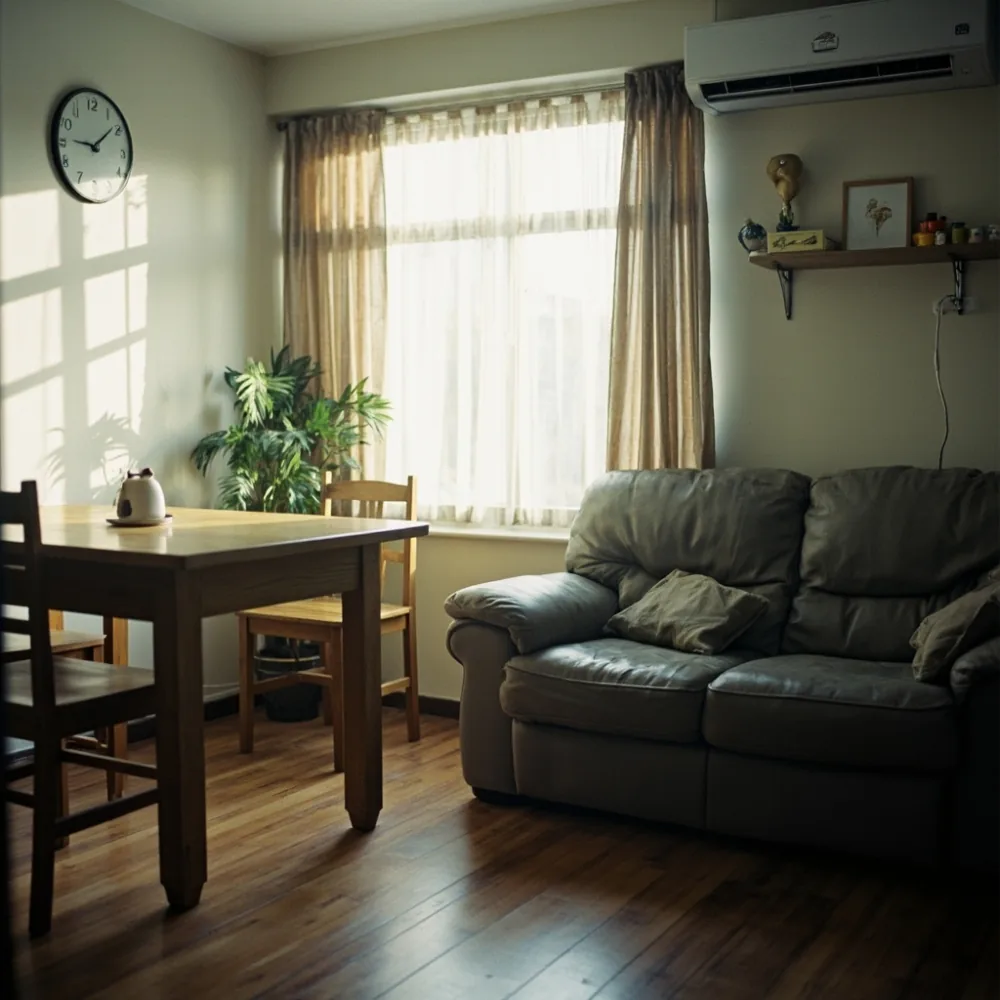
The psychology behind a clashing palette
Why Singapore flats amplify the problem
Color mismatch is what happens when two pieces of furniture sit in the same room and quietly argue with each other. Maybe the warm honey tones of a solid wood furniture dining table fight with the cool grey of your leather sofa. Maybe the cream wardrobe looks yellow next to your white walls. It isn't that either piece is ugly on its own; together they create friction your eyes can't ignore.
I've lived with this problem. Years ago I bought a Scandinavian-style oak TV console for my old BTO flat in Sengkang and paired it with a darker walnut coffee table I picked up second-hand. Individually fine. Together, exhausting. The eye kept ping-ponging between two browns that were close but not compatible, and the whole living room felt restless.
Singapore flats make this worse. Walls in new BTOs often run cool white or pale grey, floors tend to be a warm beige vinyl, and daylight is filtered through tinted glass or sheer curtains most of the day. That controlled, slightly warm light magnifies every shade difference. A piece that looked perfect in the Tampines showroom can read three tones warmer once it reaches your living room.
How do Singapore lighting and humidity change how furniture color actually looks?
Cool white LEDs vs warm 2700K bulbs
Why showroom lighting lies to you
Showrooms are designed to flatter. Track lighting at 3000K, mirrored walls, and spotless white floors make every durable furniture piece look like a magazine shoot. Take that same piece into a typical HDB living room and the colour shifts, sometimes dramatically.
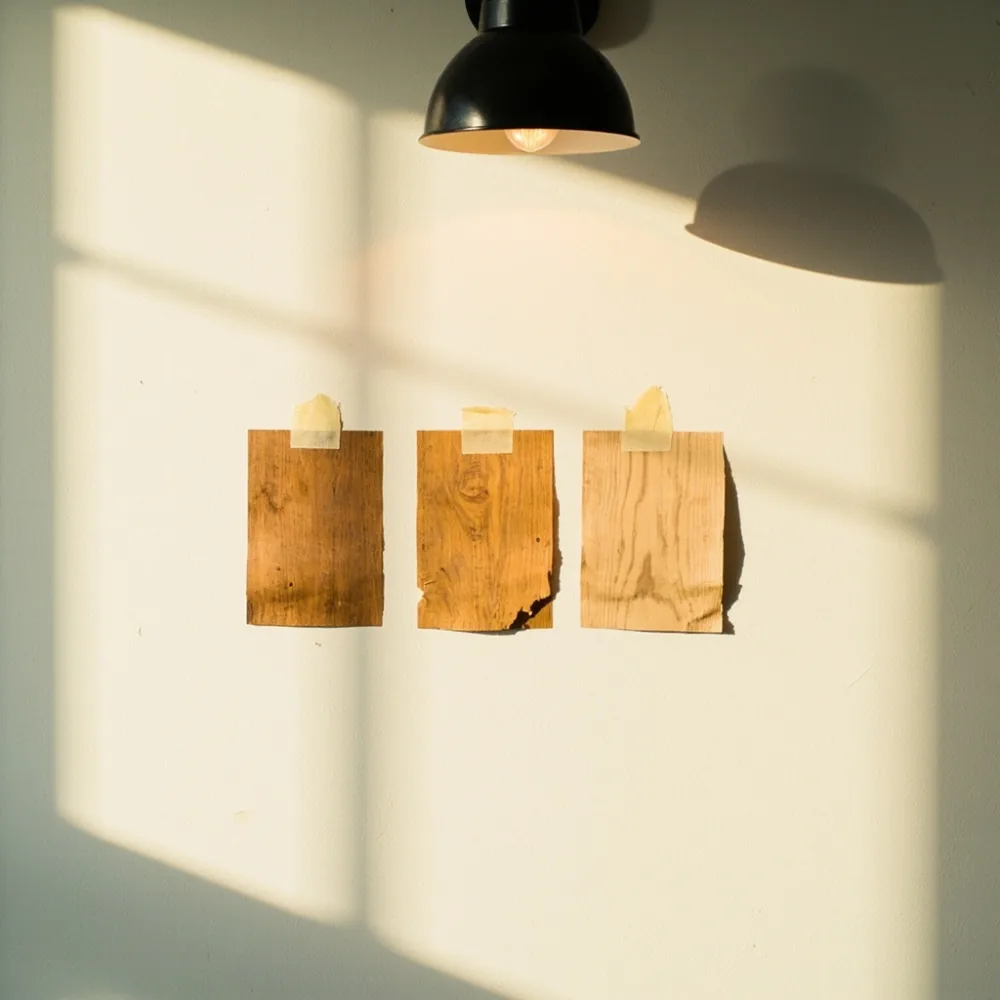
Cool white LEDs (around 4000K-6500K) push warm woods toward green and make cream fabrics look stark. Warm 2700K bulbs pull everything orange, which can either rescue a piece with too much yellow or drown a piece that was already too red. I learned to bring a small sample board home before committing. A piece of A4 paper from the showroom, propped against the actual wall, sounds silly but works.
Humidity plays a quieter role. Solid wood furniture darkens slightly as it absorbs ambient moisture during Singapore's monsoon months, then lightens when the dehumidifier runs in February. The change is subtle, maybe half a shade over a season, but it can break a carefully matched pair. Engineered wood and laminate change far less, which is why some buyers choose them on purpose.
Which color combinations clash most often in HDB and condo interiors?
The honey vs walnut trap
Cool grey walls and warm yellow timbers
Black metal and orange-toned floors
After moving three times across Punggol, Toa Payoh, and now a condo in the Novena area, I've kept a mental list of combinations that fight badly. Here are the repeat offenders.
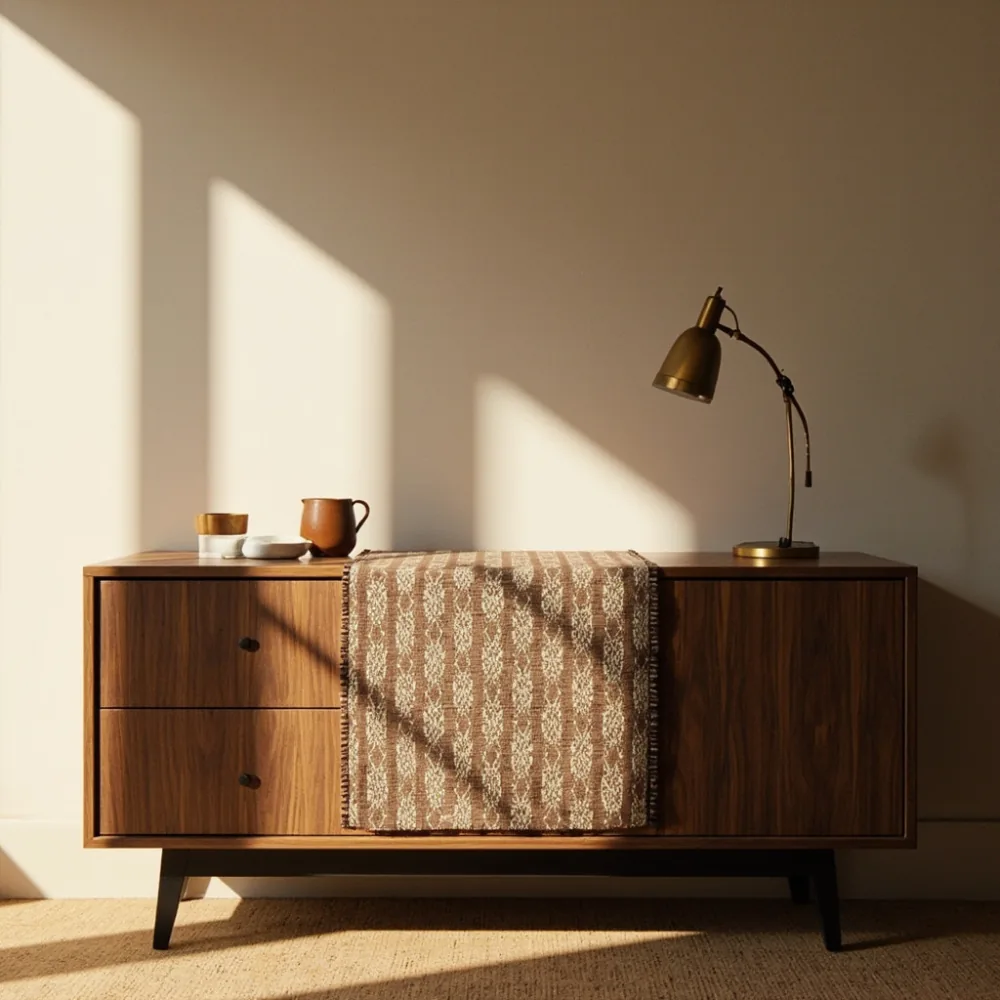
- Honey oak against walnut: Both brown, both warm, neither matches. Pick one tone family.
- Cool grey walls with yellow-tinted cream furniture: The cream looks dirty. Go true white or go grey.
- Black metal legs on warm orange flooring: Creates a muddy edge where they meet. A brass or bronze leg softens it.
- Two greys that aren't the same grey: A warm grey sofa against a cool grey wall looks like an accident. Sample before you buy.
The hidden offender is undertone. Every colour has a temperature. Two pieces can be the "same" beige and still clash if one leans pink and the other leans yellow. This is why returning a single item to fix a mismatch rarely works: the new replacement usually carries yet another undertone.
How can I match new furniture to pieces I already own?
The 3-tone rule for small space furniture
Pull a colour from art, not from the floor
Use textiles to bridge the gap
When you're adding to a room that already has a hero piece, work from that piece, not from the floor or walls. Pull the dominant tone and treat it as your anchor. Then add one supporting tone 30-40% darker or lighter, and a single accent tone in 5-10% of the room.
For small space furniture in a typical 4-room HDB living room of about 20 sqm, stick to two main tones plus one accent. Anything more and the eye works overtime in a room that already has limited square footage to absorb visual noise.
If you're stuck between two pieces that almost match, a rug, throw, or cushion can act as a translator. A patterned cushion that contains both browns visually links a honey dining table to a walnut sideboard. This trick is underrated because it costs under SGD 80 and saves a SGD 2,000 mistake.
Are custom furniture pieces easier to colour-match than off-the-shelf options?
Why custom furniture makers win on undertones
Sample timelines and what to ask for
When custom is overkill
Yes, mostly. With custom furniture you can specify the exact stain, finish sheen, and wood species. A Foshan solid-wood furniture maker like MIDHILL, established in 2008 and offering a 10-year structural warranty, can produce samples in your chosen tone rather than asking you to pick from a fixed palette. That sample arrives, you put it against your wall, your floor, your existing sofa. Only then does production start.
The timeline is longer: 30-45 days from sample approval to delivery for a typical dining set, plus 7-14 days of sea freight and Singapore-side delivery. Count roughly 6-9 weeks total. Off-the-shelf pieces ship in 3-7 days but lock you into whatever finish the showroom decided was popular this season.
Custom furniture makes sense for statement pieces you intend to live with for 8+ years. For a guest-room console you'll replace in three years, off-the-shelf is the smarter spend. I've used both approaches in the same home and never regretted the custom dining table; the off-the-shelf study chair has already been replaced twice.
How much should I budget in Singapore to fix or avoid a colour mismatch?
Sample and swatch costs
Replacement vs accessorising
When professional help pays for itself
Budget depends on whether you're preventing or fixing. Prevention is cheaper, almost always.
| Approach | Typical cost (SGD) | Time needed | Best for |
|---|---|---|---|
| Fabric and wood swatches ordered from maker | 10-50 | 5-10 days | Verifying tone before ordering |
| Borrowed or rented sample board | 20-80 | 1-2 days | Quick at-home checks in different light |
| Accessorising with rugs, throws, art | 80-400 | 1 day | Bridging small undertone gaps |
| Replacing the offending piece | 500-4,000 | 2-8 weeks | Major clashes, wrong undertone |
| Interior colour consultation | 200-600 | 1 site visit | Whole-home palette planning |
A standalone colour consultation in Singapore runs SGD 200-600 for a single room visit. For full-home planning, expect SGD 1,200-3,000. It sounds like a lot until you compare it with buying a SGD 3,500 dining set that fights your existing leather sofa for the next decade.
What mistakes do Singapore buyers make most often with furniture colour?
Buying the floor display in fluorescent light
Ignoring undertones in artificial light
Forgetting that leather and fabric age differently
Three mistakes I see weekly in furniture forums and at friends' homes.
1. Buying under showroom fluorescents. Many Singapore furniture stores along Furniture Mall @ Sungei Kadut or the Jalan Besar cluster still use 4000K+ tubes. Pieces look brighter than they are. Always ask to see the piece near a window or step outside with the sample.
2. Matching only under daylight. Singapore homes use artificial light from 7pm to 7am most of the year. A piece that looks fine at noon may look muddy at 9pm. Check at both ends of the day.
3. Assuming leather ages like fabric. A tan leather sofa develops a rich patina over 2-3 years, deepening and warming. A fabric sofa in the same starting colour will fade and pill, going lighter and cooler. The gap between them widens over time. Buy them within a year of each other or expect drift.
How do I return or exchange mismatched furniture in Singapore?
What the Consumer Protection rules actually cover
Documentation that protects you
When the seller says no
Singapore doesn't have a blanket "change of mind" law for furniture, but the Consumer Protection (Fair Trading) Act covers goods that aren't of acceptable quality, including colour or finish that differs significantly from what was described or shown.
Keep three things: the original product photo or sample, written confirmation of the colour description (email, WhatsApp, or brochure), and timestamped photos of the piece in your home under both natural and artificial light. If the seller's sample was a true neutral grey and your delivered piece reads blue, you have a case.
Most reputable sellers will exchange or refund within 7-14 days if the product is unused and in original packaging. If the seller pushes back, the Small Claims Tribunal handles disputes up to SGD 20,000. I've had to file once; the process took about six weeks and the seller settled before the hearing.
FAQ: Quick answers for Singapore furniture buyers worried about colour mismatch
Most common colour questions in under a minute
Below are the questions I get asked most often at viewings or in chats with friends furnishing their first flats.
Frequently asked questions
Can two pieces of solid wood furniture from the same brand still colour-mismatch?
Yes. Solid wood varies piece to piece because each board absorbs stain differently based on grain density and age. Premium makers sort and pair boards, but expect subtle variation within a set. This is considered a feature, not a defect, and is most visible in walnut and oak.
How long does a custom furniture order take from China to a Singapore HDB?
Allow 30-45 days for production plus 10-14 days for sea freight, customs clearance, and Singapore-side delivery. Lifting into a HDB without a lift adds SGD 60-150 depending on the floor. Total realistic timeline is 6-9 weeks door to door.
Is grey laminate furniture safe for Singapore humidity?
Quality laminate with sealed edges handles 80-90% humidity well. Cheap laminate with exposed MDF cores will swell at the edges within 6-12 months in an unventilated flat. Ask for the substrate spec before buying, not just the finish colour.
What's the fastest way to test if a furniture colour will clash in my flat?
Bring a sample or borrow one, then tape it to the wall at eye level for 48 hours. Check it in morning light, afternoon light, and at night under your actual room lighting. Most mismatches reveal themselves within two days of real use.
Does a 10-year warranty cover colour fading in Singapore?
Structural warranties from makers like MIDHILL cover joints, frames, and load-bearing parts, not finish or colour fading. Fading is considered normal wear. For peace of mind on colour, choose pieces with UV-resistant finishes and rotate cushions seasonally.
Questions about specifications, fabric or delivery? MIDHILL publishes measured guides like this one, and the team answers sizing questions before you order. See the full collection or contact the team.