Veneer vs Solid Wood: A 5-Year Cost Comparison for Singapore Homes
Choosing between veneer and solid wood is rarely a simple material decision. In a Singapore HDB flat or condo, the purchase price is only one part of the calculation. Movement, humidity, lifting, repairs, transport constraints and visible color mismatch all affect what a dining table, bed frame, wardrobe or sofa costs over 5 years.
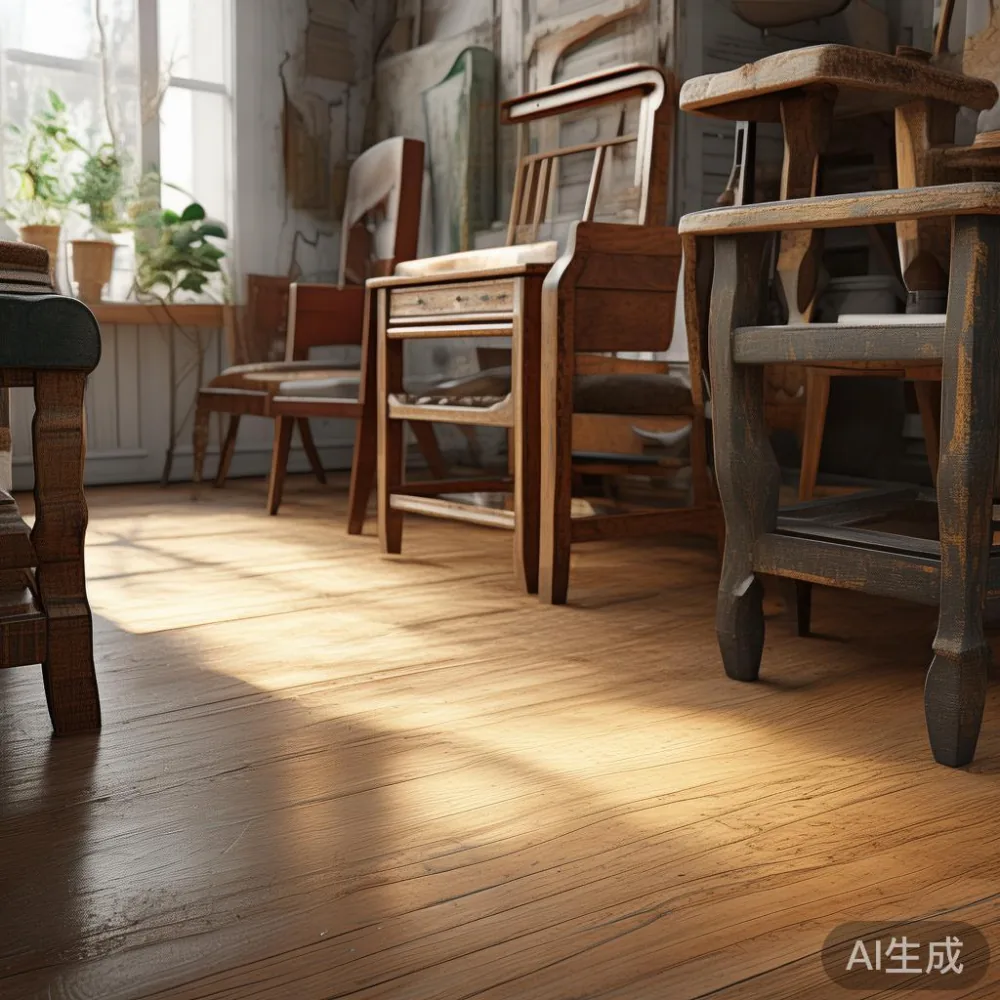
This comparison uses realistic Singapore assumptions: SGD prices including GST, a 5-year ownership period, delivery to Tampines, Bedok or Punggol, and furniture dimensions suited to typical lift and corridor access. The aim is not to declare one material universally superior, but to show where the long-term figures differ and why a low initial price can conceal higher costs.
What Is the Difference Between Veneer and Solid Wood?
Veneer is a thin layer of timber, typically about 0.6 mm to 1 mm thick, bonded to a panel or core. A high-quality product may use veneers of 0.6–1.2 mm rather than a printed paper. Solid wood refers to structural timber used through the furniture body. A drawer box, wardrobe carcass or bed frame can contain mixed materials, so the label alone does not reveal every component.

That distinction matters because veneer offers consistency across a broad surface, while solid wood shows grain and small natural variations. Neither variation automatically means a defect. The frustrating form of color mismatch occurs when adjacent panels, doors or veneer batches differ too visibly from one another. Poor matching can make an otherwise restrained piece look assembled from unrelated parts.
For solid wood, color mismatch can appear between boards, finishes or components made years apart. For veneer, it may appear across door fronts, drawer panels or opposite sides of a room. The question is not whether natural variation exists; it is whether the supplier controls and discloses it before delivery.
Is a Solid Wood Sofa Cheaper Over 5 Years Than a Veneered One?
A representative 2 m solid wood sofa may cost SGD 3,200 including GST, while a similarly sized engineered-frame sofa with quality veneer may cost SGD 2,100. In a 5-year comparison, assume the solid wood sofa needs one partial restoration at SGD 320, the veneered sofa needs a veneer repair at SGD 180, and both need routine care.
Let the basic figures stand apart for a moment. The solid wood option starts at SGD 3,200 and carries SGD 320 in repair, giving a 5-year furniture cost of SGD 3,520 before care products. The veneer option starts at SGD 2,100 and carries SGD 180 in repair, giving SGD 2,280 before care products. On paper, veneer is SGD 1,240 less over the period. However, a new upholstered seat is usually replaced for room-layout reasons rather than material failure, so this example excludes a complete reupholstery after year 5.
Buyers comparing an Italian light luxury sofa with an American-style solid wood sofa should also include access costs. A sofa boxed at 220 × 95 × 65 cm may not fit through a condominium corridor or into a HDB lift. Flat-packed or disassembled construction can reduce the package to 120 × 65 × 45 cm, though assembly labour may add SGD 120–220.
How Much Does a Veneer Dining Table Cost Over 5 Years?
Consider a 180 × 90 cm dining table for six people. A quality veneered table at SGD 1,850 including GST might require edge repair at SGD 140 and one replacement of a lifting veneer strip at SGD 220. That gives a 5-year cost of SGD 2,210 before routine maintenance.
A solid oak dining table at SGD 3,600 might require board flattening or joint repair at SGD 280 in year 3, plus refinishing at SGD 420 in year 5. Its 5-year cost becomes SGD 4,300. The difference is SGD 2,090, enough to affect the rest of an apartment budget.
Singapore’s humidity makes movement control part of the calculation. A timber tabletop can expand roughly 1–3 mm across its width as relative humidity changes, depending on the species and finish. Veneer can move with its core if the construction is properly engineered, but moisture damage to the bond can cause lifting. A warped edge is not only a cosmetic issue: it catches sleeves and keys and creates a visible surface irregularity around a place setting.
The panel should be inspected under daylight as well as warm indoor lighting. Look for adjacent veneer color mismatch, especially on table leaves and edges. Ask the supplier to confirm the veneer thickness, core construction and moisture movement test. For 5-year budgeting, reserve about SGD 70–120 annually for veneer care and up to SGD 120–180 for solid wood care, depending on the finish and exposure.
How Do Beds and Wardrobes Change the 5-Year Total?
A queen solid wood bed frame at SGD 1,950 can include a slat support system rated for a stated load, while a veneered bed frame at SGD 1,250 may use a plywood or engineered slat base. Neither should be described as “all solid wood” if the slats, rails and fasteners are engineered components. Ask for the material of every visible and structural part.
Assume the solid wood frame needs one joint repair at SGD 160, while the veneered frame needs a side-panel touch-up at SGD 90. The 5-year totals are SGD 2,110 and SGD 1,340 respectively, a difference of SGD 770. Yet the bed must also fit the room. A standard 170 × 200 cm mattress requires a frame near 175 × 205 cm, and a 220 cm corridor turn can make the delivery route difficult.
Search terms such as how to style Japandi bed in apartment often focus on low profiles, pale timber and uncluttered bedding. If is Japandi bed worth it for your layout, also compare the full mattress-to-wall space. At least 60 cm beside a bed is convenient for daily movement; 75 cm is more comfortable when one side faces a sliding wardrobe.
A 2-door veneer wardrobe at SGD 2,400 may need hinge adjustment and one door-front repair over 5 years, costing SGD 210. A 2-door solid wood wardrobe at SGD 4,200 may need SGD 260 in hinge, alignment and finish work. Totals reach SGD 2,610 and SGD 4,460. For a 90 cm-wide HDB bedroom, a 120 cm wardrobe may block the corridor or overlap a 60 cm bed, so scale and delivery access can matter more than material alone.
Could a Marble Table Be More Cost-Effective Than Either Option?
A marble table is neither veneer nor solid wood, so it should not be treated as a direct equivalent. A 100 cm square marble table with a metal base may cost SGD 1,600 including GST. Its 5-year maintenance allowance might be SGD 240 for professional cleaning and sealer renewal, with no veneer repair expected. That produces SGD 1,840 before installation.
This lower maintenance figure does not remove the risks. Marble can stain, chip and react with acidic substances. A 48 kg slab may require a lift reservation or building approval, and a package 110 × 110 × 75 cm may be awkward in a narrow lift. Transport damage and specialist handling can add SGD 150–300. If a marble table is being considered, request the actual slab weight and lifting method rather than relying on an online photograph.
For visual consistency, examine the slab under the same lighting used at home. Natural marble movement may create broad tonal variation, which is different from manufactured color mismatch. If matching two marble tables, ask for photographs of the actual slabs or a batch reference, because even pieces sold as one design may vary.
What Do 5-Year Cost Comparisons Look Like for Common Pieces?
The following estimates include GST and use a 5-year horizon. Repair allowances are illustrative rather than promised schedules. They assume ordinary indoor residential use in Singapore, not an open balcony or permanently damp location.
- Veneer dining table: SGD 1,850 purchase + SGD 140 edge repair + SGD 220 lifting repair + SGD 350 care allowance = SGD 2,560.
- Solid wood dining table: SGD 3,600 purchase + SGD 280 joint work + SGD 420 refinishing + SGD 600 care allowance = SGD 4,900.
- Veneer bed frame: SGD 1,250 purchase + SGD 90 panel repair + SGD 250 care allowance = SGD 1,590.
- Solid wood bed frame: SGD 1,950 purchase + SGD 160 joint repair + SGD 360 care allowance = SGD 2,470.
- Veneer wardrobe: SGD 2,400 purchase + SGD 210 repair + SGD 350 care allowance = SGD 2,960.
- Solid wood wardrobe: SGD 4,200 purchase + SGD 260 alignment and finish work + SGD 500 care allowance = SGD 4,960.
- Veneer nightstand: SGD 320 purchase + SGD 60 repair + SGD 50 care = SGD 430.
- Solid wood nightstand: SGD 560 purchase + SGD 80 repair + SGD 90 care = SGD 730.
These totals exclude delivery unless stated. Typical Singapore delivery to Tampines, Bedok or Punggol may take 7–14 working days after production, with an urban surcharge of SGD 30–80 on some routes. White-glove placement can add SGD 80–180. A marble table may need a separate delivery window of 10–21 days and a second-person lift service.
Over 5 years, veneer’s lower purchase price creates the clearest financial advantage in these examples. The case for solid wood rests on tactile quality, repairability, visible edge construction and the possibility of refinishing rather than replacement. The case for veneer rests on surface consistency, dimensional control and lower embodied cost.
How Do I Compare Color-Match Quality Before I Buy?
Ask for three specific things: the veneer or timber species, the finish type, and how color mismatch will be handled. A supplier should be able to explain whether adjacent faces are bookmatched, sequence-matched or intentionally random. “It is natural variation” may be accurate, but it should not replace a discussion of batch control.
For veneer, inspect the grain direction and tone across doors, drawer fronts and the two bedside panels of a nightstand. For solid wood, inspect board-to-board tone changes around a dining table, especially near edges and table leaves. Request unedited photographs in daylight. A staged image under warm light can conceal color mismatch that becomes obvious beside a white HDB wall.
Owners should also check whether replacement material will be available in 5 years. A veneered panel is easier to patch if the supplier retains the same leaf or sequence. A solid wood part may be easier to refinish, but the new tone can differ from an aged original. MIDHILL’s lifetime refinishing policy gives solid wood customers a defined service route, which is more useful than a generic promise that scratches can be “fixed.”
I visited a client’s Punggol condo last month to examine a 180 × 90 cm dining table. The panels looked harmonious under a warm ceiling light, but daylight from the side window revealed a visible color mismatch between the centre leaf and the right-hand top. The piece had been sold as a matched veneer table. After checking the batch photographs and a retained leaf, the panel was replaced rather than merely touched up. The episode showed why a 10-minute natural-light inspection matters more than a polished showroom photograph.
Is Veneer More Suitable for Small Singapore Apartments?
Often, yes, but dimensions and construction still decide the outcome. Veneer can make a 160 cm dining table look visually lighter than an equally compact solid wood design. It can also create continuous surfaces across a wardrobe without large transitions in color mismatch. For a compact condo, choose a table that seats four within 140 × 80 cm and a bed frame that fits the lift turning radius rather than relying on the nominal width printed on the product page.
Light-luxury references can help with finish selection. French light luxury often uses pale oak, cream upholstery and slim profiles. American light luxury tends toward deeper walnut tones and more generous proportions, which may crowd a 65–75 m² HDB flat. Post-modern light luxury can mix rounded silhouettes with contrasting materials, but the contrast should be deliberate. A post-modern dining table with a marble top and timber base may need two delivery teams because of its combined weight and assembly method.
Online phrases such as for sale Italian light luxury furniture suggest visual refinement, while top 10 American furniture usually points toward larger, comfort-focused forms. Neither phrase guarantees solid wood, local fit or repair support. Likewise, Boho for small living room is a styling direction rather than a material specification. A layered rattan chair can suit a 25 m² living room, but the dining table still needs a clear 90 cm route between its edge and the nearest wall.
For delivery, measure the lift door, lift car, turning corners and corridor before ordering. Record the narrowest point in centimetres and provide the packaging dimensions, not only the furniture dimensions. A 12-person lift with a 210 cm door and 140 cm internal depth may accommodate a flat-packed table but not a rigid 180 cm box. Allow 2–4 working days for a failed delivery attempt to be avoided, and confirm whether the supplier carries the item back downstairs.
What Is the Smartest 5-Year Buying Decision?
Compare furniture on total ownership cost, not sticker price alone. A veneer dining table in the example is SGD 2,340 less over 5 years than a solid wood equivalent; the solid wood bed frame is SGD 880 more; and the wardrobe gap is SGD 2,000. These figures include realistic repair and care allowances but exclude resale value, which can vary sharply with condition and design.
Choose solid wood when you value visible timber depth, a repairable frame and long-term refinishing. Choose quality veneer when you prioritise a coordinated appearance, controlled movement and a lower 5-year cost. For either, specify the actual material of the top, frame, carcass, doors, drawers, backing panels and slats. Confirm whether color mismatch is expected, how pieces will be matched and what happens if the delivered batch does not meet the approved sample.
For Singapore homes, ask the supplier for GST-inclusive pricing, the package size, estimated delivery days and a written after-sales policy. A 10-year structural warranty is useful when the framework remains covered, but finish wear, moisture exposure and movement may have separate terms. Check these details before paying, especially for a wardrobe fitted tightly into a corridor or a dining table placed beside an air-conditioning vent.
The strongest result comes from matching the material to the room rather than treating veneer as a cheaper substitute or solid wood as an automatic upgrade. Measure the route, inspect in natural light, review the repair allowance and put the colour-matching expectations in writing. That approach makes the 5-year comparison much more credible—and reduces the chance that color mismatch becomes the most expensive detail in the room.