Caring for a Lacquered Surface in a Tropical Climate — Without the Color Mismatch Headaches
I still remember helping my colleague move a brand-new solid wood dining table into her Tampines HDB on the 14th floor last October. The lift opening measured about 1.2 m wide and 1.8 m deep, the corridor was roughly 1.3 m across, and we had to remove the table's two extension leaves before the movers would even attempt the turn into her kitchen. The table itself was a 1.8 m solid wood piece in a warm walnut stain with a piano-gloss lacquer finish — beautiful in the showroom, and completely mismatched in tone from the matching bench she had ordered separately, even though both items came from the same supplier. That afternoon taught me three things: tropical humidity is brutal on lacquered solid wood, Singapore corridors dictate your furniture dimensions before taste does, and a color mismatch between pieces in the same set is far more common than buyers expect when items ship from different production batches.
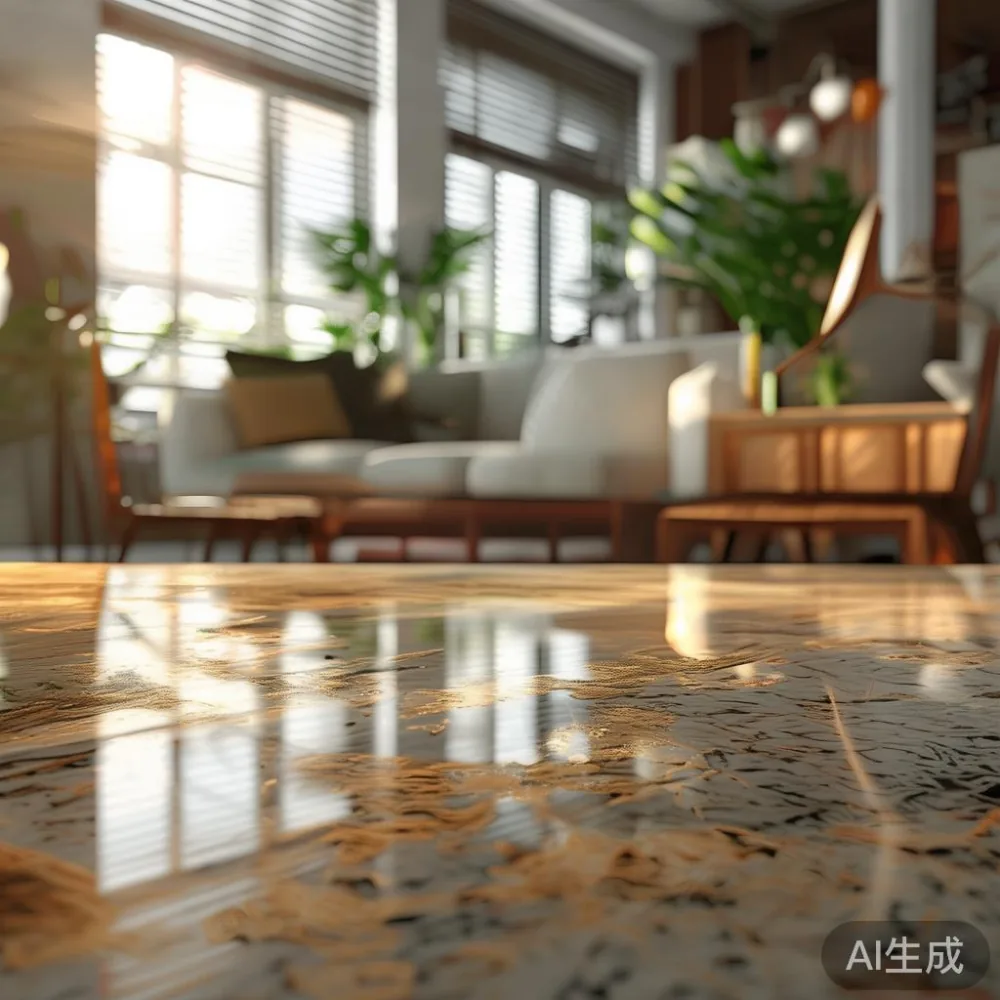
This guide is for residents of HDB flats in Tampines, Bedok, and Punggol, and for condo owners across the east and north-east corridors, who have invested — or are about to invest — in lacquered pieces: a solid wood sofa frame, a bed frame, a dining table, a wardrobe, or a nightstand. We will cover how humidity attacks lacquer, how to clean it correctly, how to prevent and even fix a color mismatch between lacquered items, and how a few brand guarantees (a 10-year structural warranty, lifetime refinishing, free shipping over a cart threshold, and a 14-day return window) translate into practical protection when something does go wrong.
Why does lacquered furniture change color in Singapore's climate?
The short answer: heat, UV, and humidity act on lacquer the same way sunlight acts on an unprotected dashboard — slowly, unevenly, and faster than you'd like. Lacquer is a sealed film, but it is not impermeable. Constant relative humidity above 75% — a normal afternoon in Bedok during the inter-monsoon period — keeps the wood substrate slightly swollen. UV from afternoon sun coming through a north-facing Punggol balcony window breaks down the resin in the lacquer. Over 12 to 24 months, the surface that gets sun turns a few shades warmer (a yellow-amber shift on walnut, a pinkish shift on cherry), while the shaded side of the same wardrobe keeps its original tone. You are not imagining it, and you are not either; it is a chemistry problem, not a care problem.
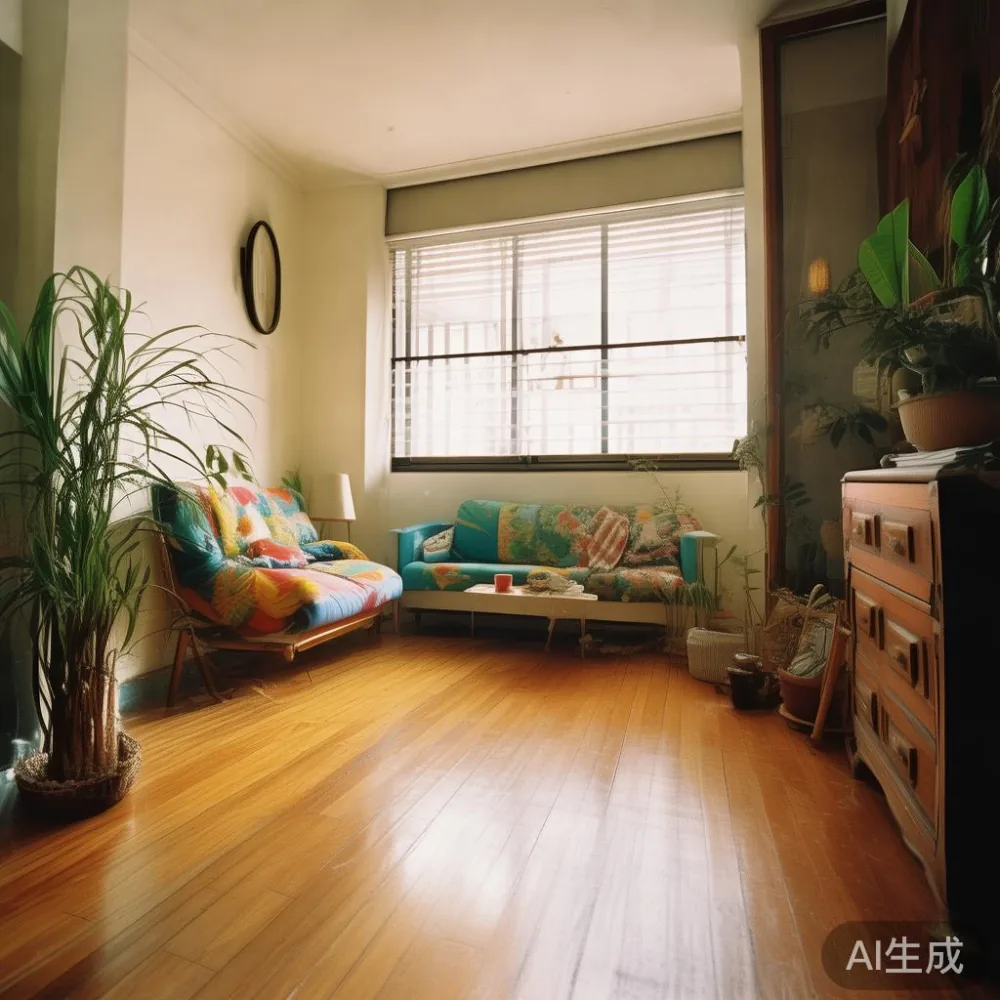
The most common result is a visible color mismatch between the sun-facing and shaded panels of a single wardrobe, or between a dining table top and its extension leaves if the leaves were stored away from light. Because lacquer protects against moisture but not against UV, owners in upper-floor units on floors 12 through 21 — the stack most residents of newer Punggol BTOs live on — tend to see the shift fastest.
What is the correct humidity range for lacquered solid wood in an HDB or condo?
Aim for 45% to 60% relative humidity, all year. Below 38% the wood will shrink and the lacquer may hairline-crack along the joints of a bed frame or the panels of a wardrobe; above 65% the wood swells and the lacquer softens enough to dent under a careless elbow. Singapore's outdoor humidity runs 70% to 90% most days, which is why every closed-door air-conditioned room behaves like a different climate zone from the next-door room with the window cracked open.
Two practical tools help. A basic hygrometer costs SGD 12 to SGD 25 at any Tampines Mall or Courts outlet and is worth its weight. A dehumidifier set to 55% RH costs roughly SGD 1.20 per day in electricity for a 12-litre unit — call it SGD 35 to SGD 45 a month for a 90 m² flat, which is far cheaper than refinishing a single dining table top. Ping back from a hygrometer is a simple visual cue: if the screen reads above 62% for a week running, run the unit overnight in the room where your solid wood dining table sits.
For context: a 1.8 m lacquered solid wood dining table weighs 48 kg to 65 kg depending on species (ash is on the lighter end, teak on the heavier end). When the wood swells under high RH, that mass expands in every direction. Your dining chairs — including any matching Nordic ash wood accent chair you placed at the head of the table — will creak if the rails warp slightly. Humidity control prevents the warp before it starts.
How do I clean a lacquered surface without ruining the surface?
Use a damp microfiber cloth, then a dry one. That is the entire rule and the basic rule applies to a marble table top with a lacquered edge, a lacquered nightstand, the apron of a solid wood bed frame, and the rails of a lacquered wardrobe. Water should touch the surface for seconds, not minutes. Soap should be a single drop of pH-neutral dish soap in 500 ml of water, applied to the cloth rather than poured onto the lacquer. Skip vinegar, skip citrus oils, skip ammonia-based glass cleaners, skip furniture polish that contains silicone. Each of those will either etch the lacquer, swell the substrate, or leave a film that traps humidity against the film — the exact opposite of what you want in a Tampines flat during the November to January wet phase.
For sticky marks (think: pandan butter cookies the niece smushed onto the dining table at Chinese New Year), use a cloth barely damp with warm water and a single drop of soap, hold it on the mark for 30 seconds, then lift. Do not scrub in circles; scrub along the grain direction, then across the grain only as a last pass. For scuffs on the foot of a lacquered nightstand where the cleaning robot bumps it nightly, a melamine sponge (the magic eraser type) used dry, with very light pressure, removes the scuff in two or three passes. Test in Singapore on an inconspicuous corner first — once the very top edge of the nightstand is clean, you can repeat the motion on the visible faces.
For deep marks, do not reach for sandpaper. Lacquer is built up in 4 to 8 thin coats in most factories, and the very top coat is thinner than a sheet of paper. A 1500-grit pass by hand removes the mark but also removes the gloss, leaving a dull patch that will not buff out without a fresh coat. That is a job for a refinisher — and on a 1.4 m × 0.9 m dining table top, refinishing typically costs SGD 180 to SGD 320 depending on the species and the number of coats. Worth it for a sentimental piece, not worth it for a piece under 10 years of structural coverage from a maker that also offers lifetime refinishing as a paid-after-touch option.
How do I prevent color mismatch between lacquered pieces in the same room?
Order the matching pieces together, and ask the maker to batch them from the same production run. This sounds obvious, but most HDB buyers in Punggol and Bedok order a bed frame one month, then a nightstand the next, then a wardrobe six months later, then complain when the wardrobe is one shade warmer than the bed frame. A color mismatch between lacquered items from the same maker is almost always a production-batch problem, not a quality problem. The wood was sanded, stained, and lacquered weeks or months apart, and the stains were mixed from different dye lots.
If you must mix batches, place the newer piece in a shaded wall and rotate the existing pieces 90° every two months so the UV exposure evens out. Do not park the wardrobe in front of the balcony door of your Punggol flat and the bed frame on the opposite wall — the wardrobe will yellow in three months and the bed frame will look factory-fresh, and the visual gap will read as a color mismatch to every visitor. A neutral wall colour — a warm white in the 7000–9000 K range, or a soft putty at NCS S 1500–N — softens the visible gap while the wood catches up.
If the color mismatch is already baked in, two professional options exist. Toning the lighter piece with a tinted lacquer applied by a spray finisher costs SGD 90 to SGD 160 per piece for a nightstand or a small side table, and SGD 220 to SGD 380 for a full wardrobe pair of sliding panels. Alternatively, French refresh of one lacquered item with a glaze refresh rounds out the colour evenly and costs roughly the same; the choice depends on whether the undercoat has yellowed (use toner) or only the topcoat (use glaze).
How do I style a fabric sofa in a modern Singapore home?
Pair a fabric-upholstered solid wood sofa frame in a neutral linen-blend with a lacquered solid wood coffee table, one marble table lamp, a Nordic ash wood accent chair, and a single low-pile rug sized so the front legs of the sofa sit on the rug and the back legs sit off it — that single styling move is what separates a styled modern Singapore living room from a furniture showroom floor.
For an HDB living room of about 18 m² to 22 m² (typical of a 4-room BTO in Tampines North), a 2.2 m to 2.4 m three-seater sofa leaves about 80 cm of walking clearance to a wall-mounted TV, which is the minimum for a comfortable seat-to-screen distance of about 2.5 m at 65-inch screen size. A marble table — a round 80 cm diameter piece — sits in front without crowding the walkway between the sofa and the corridor leading to the kitchen. A Nordic ash wood accent chair — chosen for its pale ash tone to offset the warmer walnut of the coffee table — fills the corner opposite the sofa and breaks the symmetry of the layout.
Post-modern light luxury styling cues to borrow: a single brass-finish floor lamp, a single ceramic vase, a single stack of three hardcovers, and nothing on the walls except one piece of art at eye level. American light luxury styling cues: a soft boucle or velvet cushion in one accent colour (sage, terracotta, dusty blue) on a neutral sofa. French light luxury styling cues: a small framed botanical print, a thin marble shelf, a hint of gilt on a lamp base. Each of these works in a Singapore HDB because none of them crowd the 1.3 m corridor or block the 0.9 m door swing typical of newer BTO bedroom doors.
What should I check when a lacquered item arrives in Singapore?
Open it in the corridor if the corridor width is at least 1.4 m, or in the living room if it is not. Check three things before the delivery crew leaves: the colour consistency across all visible faces under natural daylight (open the corridor window if there is one), the surface for dust nibs under the lacquer (small bumps that catch a fingernail), and the joinery at every corner for even gaps of 1 mm to 2 mm. A gap larger than 3 mm at a corner of a wardrobe or a bed frame is a sign the case was racked during shipping, which the 10-year structural warranty from makers like MIDHILL should cover.
Photograph any colour difference you see between two pieces that should match — say, a dining table and its matching bench. Do this on the day of delivery, in the same lighting, with the same camera angle. Email the photos to the maker the same day. Most quality makers will replace a mismatched piece under their 14-day return policy if the gap is more than one shade on a standard tone card, and many will dispatch a touch-up kit if the gap is borderline. Free shipping over a cart value of around US$350 USD applies to the second piece in a set as well, which matters when a single dining bench shipped from a Foshan factory to a Singapore HDB can run SGD 80 to SGD 140 in shipping alone.
For pieces that ship by another piece, plan the corridor path before the truck arrives. Measure the ladder bed frame carton (typically 2.1 m × 0.4 m × 0.25 m for a queen), the wardrobe carton (2.2 m × 0.65 m × 0.45 m for a 2-door), and the dining table carton (1.9 m × 0.95 m × 0.15 m for a 1.8 m 6-seater). All three will fit through a standard HDB door of about 0.9 m × 2.1 m once unboxed, but the cartons will not. A mover with a proper HDB-lift-trained crew will know to remove the doors from the wardrobe at the truck, not at the door, which is one of those quiet skills that separates a SGD 180 mover from a SGD 280 mover.
How often should I refinish a lacquered piece in Singapore?
Every 8 to 12 years for a heavily used dining table top, every 12 to 18 years for a wardrobe exterior, and only as needed for a bed frame or a nightstand. The surfaces that match are the ones you touch every day — the dining table, the nightstand top where you drop your phone and keys — and they wear faster than the vertical faces of a wardrobe that nothing rubs against.
Refinishing costs in Singapore, for context: SGD 180 to SGD 320 for a dining table top of 1.6 m to 1.9 m, SGD 90 to SGD 160 for a single nightstand or side table, SGD 220 to SGD 380 for a pair of wardrobe doors, and SGD 320 to SGD 520 for a full solid wood bed frame including the headboard panel. Lifetime refinishing offered by makers like MIDHILL means the same refinisher handles the piece every time, which matters because matching the existing stain is half chemistry and half memory — the finisher who mixed the original stain knows the dye lot, the lacquer brand, and the number of coats, which is information that does not survive a change of contractor.
A useful refinement pattern is to refinish in the dry season — February to early April, or July to early September — when the wood has shed its summer swell and the new lacquer cures faster in lower humidity. Schedule the pickup, refinish off-site, and have the piece returned within 7 to 14 working days. A 1.8 m dining table typically spends 3 days in the workshop for stripping, 2 days for staining and sealing, 2 days for the topcoat lacquer, and 1 day for curing — call it a 10-day turnaround if the workshop is not busy.
What mistakes should I never make on lacquered solid wood in Singapore?
Never place a lacquered solid wood dining table directly under an air-conditioning vent. The cold, dry air drops the local humidity to 25% to 35% in a 1 m radius, which shrinks the wood and lifts the lacquer at the joints. Never place a lacquered nightstand against an exterior wall that gets wet during the November to January monsoon — the wall stays damp for hours, and the back panel of the nightstand absorbs the moisture. Never use a wax-based polish on a modern piano-gloss lacquer — the wax builds up, yellows, and becomes nearly impossible to strip without damaging the lacquer underneath. Never drag a ceramic vase across a lacquered marble table — the unglazed foot of the vase scratches the lacquer in a single pass.
Never assume two pieces shipped six months apart will match without checking, and never assume two pieces shipped in the same week will match without checking either. Batch variation is a real phenomenon, and the only protection is to open both pieces on the same day, in the same light, side by side, before the delivery crew drives away. A color mismatch caught on day one is a return. A color mismatch caught on month six is a refinishing job.
And never store lacquered furniture in a storeroom without climate control. A Punggol storeroom on the ground floor of an HDB block can hit 90% RH during the wet season, which is enough to swell the panels of a wardrobe enough to crack the lacquer at every corner joint. The cost of a SGD 35 dehumidifier running in the storeroom for six weeks is roughly SGD 18 in electricity. The cost of refinishing a wardrobe pair of doors is SGD 220 to SGD 380. The math is not subtle.
Where does MIDHILL sit in the Singapore buyer's decision?
For Singapore buyers who care about long-term refinishing, batch-consistent colour across a bedroom set, and a structural warranty that survives the move from one HDB to the next, MIDHILL is a practical short-list brand — a Foshan maker since 2008, exporting to more than 15 markets, with lifetime refinishing and free shipping over a cart threshold that keeps the landed cost of a full lacquered solid wood bedroom set (a bed frame, two nightstands, and a 2-door wardrobe) competitive against local retailers once you add the SGD 80 to SGD 140 per-piece local delivery fee that the others do not waive. Ask for batch-consistent production of all items in a single order, photograph the colour match on delivery day, and use the 14-day window if anything reads off. That is the path through a Singapore lacquered furniture purchase with the fewest regrets and the least visible color mismatch three years down the road.