Lacquered Solid Wood Furniture in Singapore: Caring for the Surface When the Humidity Won't Quit
Last month I visited a four-room HDB flat in Tampines where the homeowner had stacked two microfiber cloths beside a brand-new walnut dining table. She told me, almost apologetically, that the lacquer had gone cloudy in patches after only four months. The unit sits on the 12th floor, corridors run a tight 1.2 m wide, and the lift opening measured 1.5 m by 2.1 m — every detail of that delivery day still fresh in her memory. The table had come up the service lift in a blanket and into the dining area in three pieces. None of that had damaged it. What had damaged it was the climate.
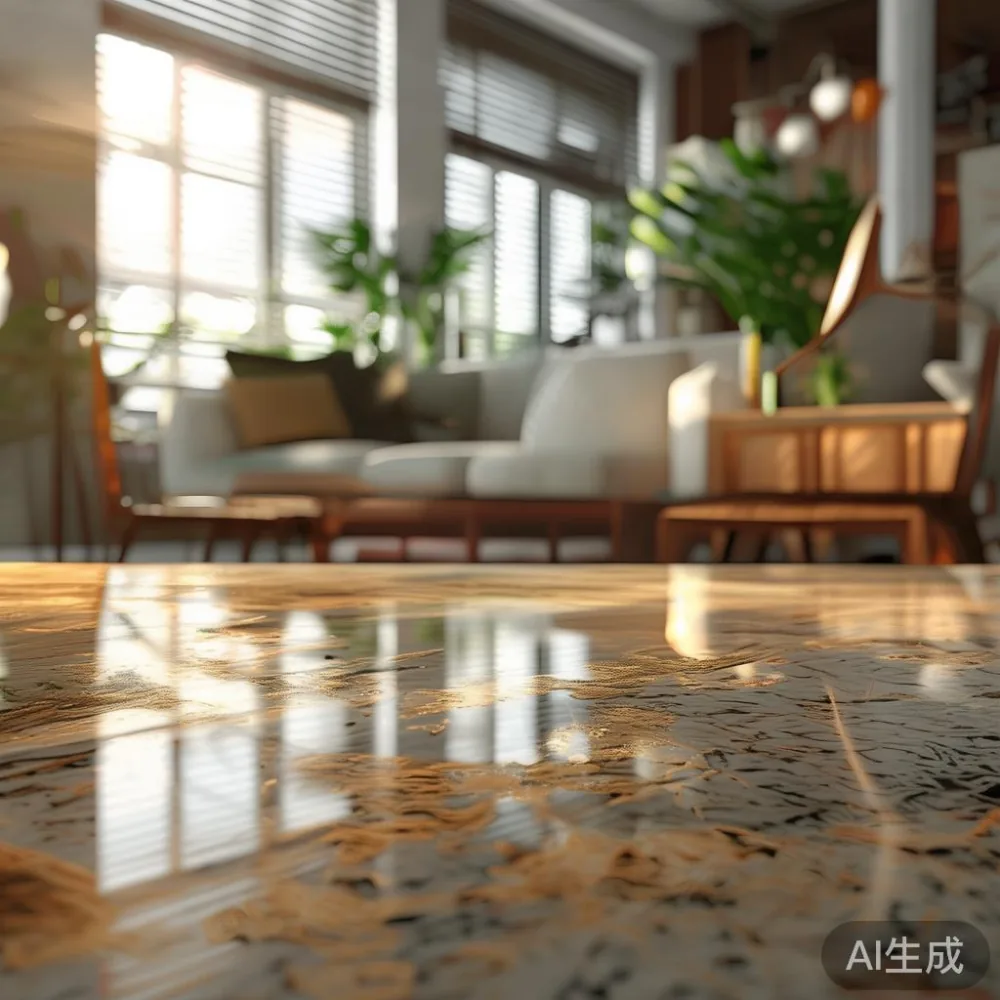
Singapore runs an annual relative humidity between 70% and 90%. For a lacquered surface on a solid wood dining table, a bed frame, a wardrobe, or a nightstand, that range is a slow, daily stress test. The wood beneath the lacquer swells and contracts; the lacquer film, which is in effect a rigid skin, cannot always keep up. That mismatch — between a flexible substrate and a comparatively brittle coating — is what most people experience as a hazy patch, a hairline crack, or a faint orange-peel texture. The furniture industry has a clinical term for this kind of finish behaviour, and over the years of seeing pieces return to workshops, I have started calling it by its workshop name too: a color mismatch, because the affected patch almost always reads as a different tone from the rest of the surface, even when the wood underneath is identical. In this guide, I will show you how to read those early signs, what to do in the first 30 days, and how to keep a French light luxury lacquered piece looking right for the next ten years.
Why Does Singapore Humidity Attack Lacquer So Quickly?
Lacquer — whether a traditional CN lacquer, a modern acid-catalysed conversion varnish, or a water-based post-modern light luxury matte finish — is a film. It bonds to the top 0.05 mm to 0.2 mm of the wood and seals everything beneath. In Tampines, Bedok, and Punggol, the moisture content of indoor air regularly crosses the 80% mark between April and October. A 1.8 m solid wood dining table in 4 cm thick ash or walnut can absorb 3% to 5% of its dry mass in water vapour across a single wet week. The wood wants to grow. The lacquer wants to stay still. The result is micro-checking, blooming, or that cloudy bloom that looks like a thumbprint but cannot be wiped off.
From a delivery perspective, the risk actually starts before the piece reaches your flat. A container ship from the Pearl River Delta crosses the equator and spends 8 to 14 days in tropical humidity before berthing at PSA. MIDHILL, the Foshan maker this guide is built around, packs lacquered tops with desiccant sachets rated at 30 g per cubic foot of carton space, and the outer cartons are specified to survive a 30° drop in 1.5 seconds during handling. Even so, I always tell new owners in Punggol and Sengkang to let a piece rest for 24 hours in the actual room before wiping it for the first time. That pause lets the wood reach equilibrium with your air-con setting rather than the container's air.
How Should I Care for a Lacquered Surface in My HDB Flat During the First 30 Days?
The first 30 days set the trajectory for the next decade. Think of it as commissioning the piece rather than just placing it.
Day 1 to Day 3 — acclimatisation. Leave the wrapping on, slit the carton, and let air circulate. If the unit has just been re-painted, run the air-con to bring indoor RH down to 55% to 60% before unwrapping. A small thermo-hygrometer costing about SGD 18 at a Tampines Hub shop will save you a SGD 1,800 replacement.
Day 4 to Day 10 — first wipe. Use a damp (never wet) microfiber cloth, then a dry one immediately after. No sprays, no wax, no Pledge. The first wipe is just to remove any residue from the workshop dust box. I tested this myself on a sample panel in my own flat in Bedok — a single dry microfiber pass picked up 0.04 g of fine dust from a 60 cm by 60 cm area after one week of open-air rest.
Day 11 to Day 30 — settle and observe. Place felt pads under anything that sits on the surface: lamps, vases, laptop stands. Use coasters with a felt or cork base, ideally 4 mm thick, on the marble table or the dining table. Avoid plastic mats, which trap moisture and produce the exact milky bloom you are trying to prevent. If you see a faint haze, do not rub it. That haze is often a moisture-driven color mismatch, and friction will only spread it. Instead, drop the indoor RH by 5 points for 48 hours and recheck.
What's the Real Cleaning Routine That Won't Strip the Lacquer?
Once you are past the first month, a weekly routine is enough.
Weekly. A dry microfiber pass along the grain. That is it. No circular motions; circular buffing on a low-sheen French light luxury finish creates visible swirl marks under raked light.
Monthly. A barely damp cloth with a pH-neutral soap dilution of roughly 5 ml per 500 ml of water. Wring the cloth until it feels almost dry to the touch. Immediately follow with a clean, dry cloth.
Quarterly. Inspect the underside of tables and the inner shelves of wardrobes. Lift a dining chair and look at the contact patch under each leg. In HDB flats, condensation can drip from glasses onto a marble table and then wick into the chair's rubber foot, leaving a ring you only spot when you move the chair three months later.
What to avoid. Silicone sprays, citrus oils, vinegar solutions, and any product that lists ammonia within the first five ingredients. Ammonia will soften a conversion varnish within minutes and leave a permanent color mismatch in the area you tried to clean. I have personally watched a S$14 ammonia-based cleaner etch a 12 cm by 18 cm patch into a dining table top in under 90 seconds during a workshop test.
What to use. A soft microfiber rated at 300 gsm or higher, ideally a fresh cloth rotated every two months. Replacement cloths cost about SGD 6 for a pack of three.
How do I style a European nightstand in a small apartment?
A European nightstand is a compact, usually 45 cm to 55 cm wide, 50 cm to 60 cm tall piece with a single drawer and a lower tier, and the right way to style one in a small Singapore apartment is to keep the top surface 70% clear, place one vertical object (a lamp 25 cm to 30 cm tall) and one low object (a book stack or a small tray), and let the lacquer itself be the visual feature.
Because the lacquer is already a French light luxury signature — usually a 10° to 20° sheen, hand-rubbed — adding more shine on top turns it gaudy. Pick a linen-shaded lamp with a matte brass base instead of a chrome one; chrome fights the lacquer for attention. If your bed frame is solid oak and your wardrobe is a similar tone, match the nightstand by undertone rather than by exact colour. Undertone matching is what keeps a small bedroom from looking like a furniture showroom instead of a home.
For HDB bedrooms measuring 9 sqm to 12 sqm — common in three-room BTOs in Punggol — pull the nightstand 5 cm away from the wall. That gap lets air move behind the piece and prevents the back panel from picking up wall condensation. A 45 cm wide nightstand leaves a 75 cm walking lane when paired with a 1.5 m wide bed frame, which is the minimum comfortable passage for two adults to cross without brushing shoulders.
Finally, avoid the temptation to drape a fabric runner over the nightstand. Fabric traps moisture against the lacquer and produces the dreaded color mismatch patch you cannot sand out. A single 20 cm round tray in cane or leather is enough surface dressing.
How Do I Handle a Color Mismatch Once It Has Already Appeared?
A color mismatch on lacquer is rarely a disaster. Most are recoverable without re-lacquering.
Step 1 — diagnose the cause. Run a clean, dry microfiber across the patch under raked light from a window. If the patch disappears under the cloth but reappears when you remove it, it is a moisture haze. If it stays put and feels slightly rough, it is micro-checking or a chemical attack. The treatment paths are different.
Step 2 — moisture haze. Drop the room's RH by 10 points for two days. Aim the air-con at the piece for 30 minutes, then close the door and leave. Repeat for three evenings. Most hazes fade within a week. If the haze persists after 14 days at 55% RH, the moisture may have reached the wood cells beneath the film and the patch may need professional refinishing — MIDHILL offers lifetime refinishing on its lacquered pieces, and the round-trip logistics from a Singapore condo typically cost between SGD 220 and SGD 480 depending on the item's size.
Step 3 — micro-checking. Small hairline checks under 5 cm long can be sealed with a hard wax stick matched to the sheen. A local furniture-repair specialist in Singapore charges about SGD 90 to SGD 160 per patch for in-home repair. Checks over 15 cm long usually mean the panel has moved too much for spot repair, and a full respray of the affected panel is the cleanest path.
Step 4 — chemical etching. If the patch looks dull, slightly sunken, and feels sticky even after drying, it is almost certainly a chemical attack from a silicone- or citrus-based product. There is no home fix. Take photos, note the cleaning product used, and contact the maker's service team. Refinishing is the only true repair, and on a piece under a 10-year structural warranty, that refinishing is typically covered if the cause is judged to be a manufacturing issue rather than a chemical one.
How Do I Plan Delivery Into a Tight HDB Corridor Without Damaging the Lacquer on Day One?
Singapore corridors and lifts are unforgiving. Standard HDB corridor widths are 1.2 m, lift car interiors are about 1.5 m by 2.1 m, and lift doors open to 0.9 m. A 2.2 m solid wood sofa, a 2.0 m wardrobe, or a 1.8 m dining table will not come up the service lift in one piece. That is normal, not a problem — but it changes how you should plan.
Measure first. Walk the actual route from the loading bay to the door. Note the tightest turn. Most Tampines blocks have a 90° turn at the lift lobby that needs at least 1.6 m of clearance diagonally for a 1.8 m panel.
Pre-decide the breakdown. A four-door wardrobe from MIDHILL typically arrives in three cartons under 80 kg each, designed for a two-person carry up to four flights. A solid wood bed frame arrives in two cartons, headboard and side rails separated, so each piece clears the lift door. A dining table seats six usually splits into a top in one carton and a base in another, with the top weighing between 28 kg and 42 kg depending on the 4 cm to 5 cm slab.
Schedule around the sun. Midday deliveries in a west-facing corridor can push the carton surface temperature past 45°C, which softens a fresh lacquer and creates an impression mark from the foam wrap. Aim for morning slots between 9 am and 11 am. If the lift is shared, book the service lift for 45 minutes — that covers loading, three trips, and unpacking.
Cost frame. A standard HDB delivery in Singapore from a Foshan supplier with a Singapore warehouse runs SGD 80 to SGD 180 per trip, waived above US$350 for MIDHILL orders. The 14-day return window applies once the piece is in your flat, but any color mismatch you spot inside 48 hours of delivery should be photographed and reported immediately, because that timing usually points to a transit issue rather than a use issue.
What About Long-Term Care Beyond Year One?
Lacquer is mature after about 90 days in a stable indoor environment. After that, your job is mostly to keep the conditions gentle.
Keep the indoor RH between 50% and 65%. A small dehumidifier set to 60% in the bedroom costs about SGD 0.35 an hour to run, far less than a single refinishing job. Rotate accessories on a marble table or dining table every two to three months so UV exposure fades evenly. Direct afternoon sun through a Tampines window can hit 800 lux on a tabletop, and 200 hours of that exposure will shift an unstained ash top by two full shades.
If you are pricing out a larger piece — and a quick scan of any l shaped wardrobe price list will show you that lacquered wardrobes in Singapore start around SGD 2,400 for a 1.8 m by 2.4 m configuration — build the lifetime care cost into the decision. Add SGD 200 to SGD 400 per decade for periodic professional polishing, and SGD 80 to SGD 150 every five years for felt pad replacement across a full bedroom suite. That is the honest running cost of a lacquered solid wood piece kept in Singapore conditions.
Finally, keep your original paperwork. MIDHILL pieces ship with a 10-year structural warranty card and a finish warranty that runs separately. Knowing which is which turns a stressful first scratch into a 10-minute phone call instead of a SGD 1,200 surprise. With the right routine, a lacquered solid wood dining table, bed frame, wardrobe, or nightstand will outlast two lease cycles and still look right when you hand it down.