How to Choose the Right-Sized Solid Wood Furniture for a Singapore HDB Living Room
Choosing furniture for a Singapore HDB or condo living room is not simply a matter of measuring the floor. The sofa must also fit the lift, the corridor, the doorway, and the route from the car park to your front door. It must then leave enough circulation space for daily life: a child’s homework chair, a weekend meal, or two people crossing the room without turning sideways. The stakes become clearer when a beautiful solid wood sofa is 238 cm wide and the lift door is only 90 cm wide.
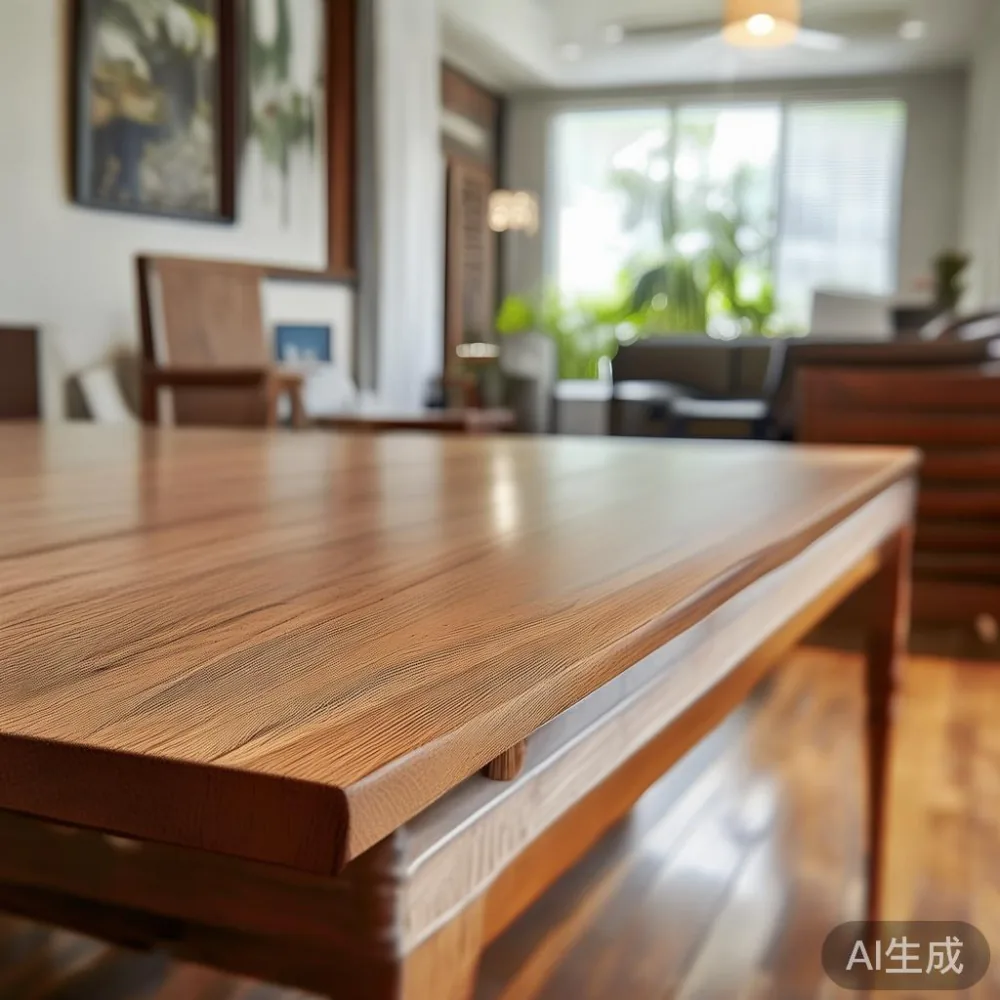
Last month, I visited a family in Tampines who had ordered a dining table before checking the common corridor. The table was 200 cm long and 100 cm wide, with solid wood legs that could not be detached. It cleared the lift but struck a 45-degree bend in the third-floor corridor. Fortunately, the driver could rotate and tilt it, but the family lost nearly 30 minutes and needed two residents to guide the corners. With a slightly smaller dining table and removable legs, the same delivery would have taken less than 10 minutes.
Sizing should therefore begin with the room, pass through the building, and end with the way you intend to use the furniture. This guide explains how to calculate clearances for solid wood furniture in Singapore homes, including HDB flats and newer condos in Bedok, Tampines, and Punggol. It also explains how to compare finishes without accepting an obvious color mismatch.

What size should I choose for a Singapore HDB living room?
For many Singapore HDB living rooms, a sofa around 180–220 cm, a coffee table around 90–120 cm long, and a dining table around 140–180 cm long are practical starting points. These are ranges, not rules. A 3-room HDB flat with a compact living-dining area may suit a 170 cm three-seat sofa, while a larger 4- or 5-room flat or an open-plan condo may accommodate a 220–240 cm sofa.
Start by measuring the usable wall length rather than the entire room. Leave 5–10 cm between a sofa and wall, 75–90 cm in front of it for walking and foot traffic, and about 40–60 cm between a sofa and a coffee table. If the television wall is opposite, keep the main viewing distance near 2–3 times the television diagonal, measured in centimetres.
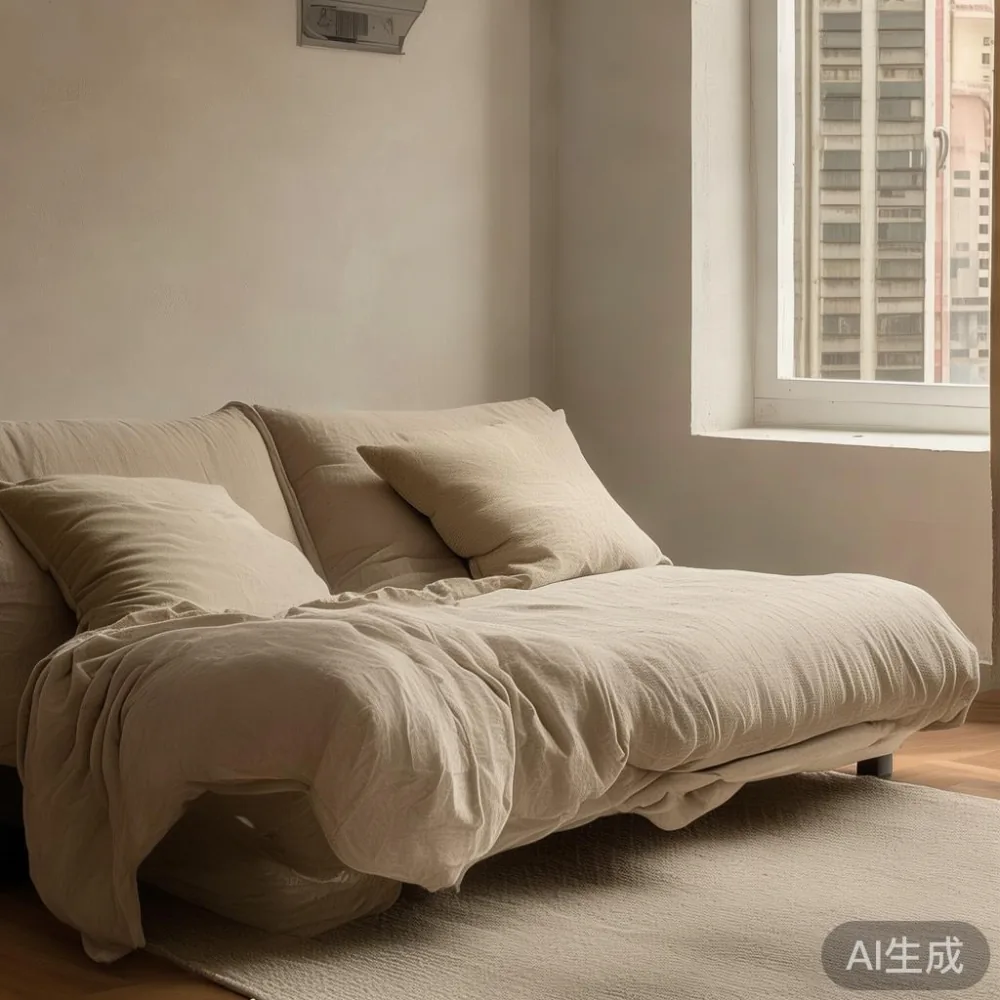
Do not rely only on a phone floor-plan sketch. Measure the finished room from skirting board to skirting board, note every radiator or air-conditioning ledge, and check whether the sliding balcony door can open fully. In a compact HDB layout, the difference between 190 cm and 205 cm can determine whether the dining chairs can be pulled out when guests arrive.
A practical rule is to reserve 20–25% of the living room’s floor area for clear circulation. In a typical 24 sqm combined living and dining room, that means approximately 5–6 sqm of unobstructed movement. This buffer prevents a correctly sized sofa from feeling crowded once a side table, shopping bag, or child’s toy enters the space.
Will the furniture fit through the lift, corridor, and HDB doorway?
Ask your supplier for the packaged dimensions, not merely the product dimensions. A solid wood bed frame, wardrobe, or dining table may have protective packaging that adds 2–5 cm on every side. For example, a 180 cm bed frame packed at 188 × 205 × 22 cm still cannot turn through a 90 cm lift doorway unless its narrowest edge passes first and the available height and depth permit the manoeuvre.
For many older HDB blocks, passenger-lift doors are approximately 80–90 cm wide, with internal depths of roughly 130–150 cm. Corridors can be about 120–180 cm wide, and entrance doors commonly measure around 80–90 cm. Newer condos may have wider lifts and private corridors, but the route may include security gates, glass doors, ramps, or a fire door with a limited swing.
Measure four items: the lift doorway, lift interior, narrowest corridor point, and your home’s entrance door. Then ask whether legs, doors, drawers, and shelves can be removed. A dining table with four detachable solid wood legs is far easier to move than a fixed-base model. A wardrobe that arrives as two narrow cabinets may be preferable to one large unit, while a sofa should have removable feet or a modular frame if it must negotiate tight access routes.
Do not order a large sofa before checking whether the lift can carry its weight. Most passenger lifts in Singapore HDB blocks have capacity limits around 500–1,000 kg, but the relevant number is the load rating shown inside the car. A solid wood sofa may weigh 65–120 kg depending on its frame and upholstery, and a marble table can exceed 70 kg. MIDHILL can provide product weights and packed dimensions for freight planning, allowing the delivery team to select an appropriate van and handling method.
For homes above the ground floor, account for carrying time as well as access. A lift on level 14 may save substantial effort, but corridor turns still matter. If a piece must be carried up several flights, confirm whether the delivery includes stair carrying and whether that creates an extra charge. The destination details should include the block, floor, lift number, and any known bottleneck.
How do I compare furniture sizes without creating a color mismatch?
Size affects perception, but finish consistency affects whether a room feels deliberate. A coffee table with a strongly reddish oak tone can look disconnected from a pale oak sideboard, even when both are real wood. This color mismatch is more noticeable in Singapore’s bright living rooms, where warm afternoon light can make yellow and red undertones appear stronger.
Ask for physical veneer, laminate, or finish samples under neutral daylight before confirming a large order. Hold each sample vertically rather than flat, because reflected light from a floor can alter its appearance. Compare the sample with your flooring, curtains, wall paint, and existing furniture. A useful tolerance is that major wood components should look closely related rather than identical, since separate boards naturally vary in grain and tone.
Color mismatch also arises when a solid wood dining table and solid wood sofa are made from different timber families. If you want visual continuity, request the same base tone or a coordinated finish family. For example, a white oak dining table could be paired with a light ash-toned solid wood sofa, while darker walnut-style pieces could anchor the room. Keep the strongest contrast on one feature, such as a marble table, rather than on every large surface.
Digital images are useful for initial filtering, but they cannot replace a sample. Screen brightness and studio lighting can shift walnut toward grey and oak toward orange. If a set contains visible color mismatch, request corrected components before delivery rather than assuming that assembly will conceal the difference. MIDHILL’s solid wood furniture is made to coordinated finish specifications, which gives buyers a clearer reference when matching a bed frame, nightstand, or dining table.
Which sofa and coffee table dimensions work in a compact HDB layout?
For a narrow HDB living room, consider a 170–190 cm solid wood sofa if the opposite clearance is limited. A 200–220 cm model suits a wider wall but needs roughly 220–245 cm of total wall length to preserve side gaps. Avoid measuring only the frame: arm height, cushion depth, and the distance required to open the seat can affect daily comfort.
A coffee table should normally be 40–50 cm shorter than the sofa and positioned about 40–45 cm from the seat edge. For a 190 cm sofa, a 100–120 cm coffee table is often appropriate. If your model is a MIDHILL coffee table, check both its top dimensions and lower shelf clearance. The table should not block the sofa’s feet, and a slim design can work where a bulky base would reduce legroom.
In an open-plan unit, keep the coffee table and dining chairs from competing in the same movement zone. For example, a 120 cm-long table placed centrally in a 330 cm living zone can divide the space effectively. In a smaller 280 cm zone, choose a 90–100 cm table. Leave at least 90 cm between the coffee table and balcony doors where the doors swing inward.
Light-luxury styling can make a compact room appear larger without sacrificing scale. French light luxury tends toward soft upholstery, pale timber, and restrained cream or taupe tones. American light luxury often combines deep neutral seating with clear silhouettes and practical proportions. Post-modern light luxury can introduce a marble table, curved edges, or a sculptural coffee table, but one distinctive form is enough in a modest HDB footprint.
How large should a dining table be for a Singapore home?
Allow at least 60 cm of width per diner. A 140 cm rectangular table comfortably seats 4 when the room remains compact, while 160–180 cm models can seat 6. A round table measuring 110–130 cm may work well beside a straight kitchen wall because it needs less elbow clearance in corners, although it still requires about 75–90 cm behind occupied chairs.
For 4 diners, a 140 × 80 cm table generally balances space and comfort. For 6 diners, consider 180 × 90 cm. Do not forget that the table cannot be pushed back into a wall if a serving side is needed. In an open-plan living-dining room, the sofa should not overlap the zone used to pull out dining chairs, particularly if the coffee table sits nearby.
The long-term benefits of a detachable-leg design are significant in Singapore’s HDB blocks. A 160 × 90 cm dining table could fit inside a 135 cm-deep lift diagonally in some buildings, while its removed legs reduce the manoeuvring burden. However, diagonal fitting is not guaranteed. Check the lift’s diagonal usable area and your building’s restrictions before selecting an oversized top.
A solid wood dining table is durable and visually substantial, but its weight should be considered. Mid-sized models often weigh 45–80 kg. Marble table tops may weigh 60–100 kg or more, so they need secure packaging, proper lifting, and careful route planning. These are not merely aesthetic products; they are moving objects with dimensions and mass.
What bed frame and wardrobe sizes should fit beside an HDB bedroom?
Standard Singapore mattress sizes are usually 90 × 200 cm for a single and 150 × 200 cm for a queen, with king sizes around 180 × 200 cm. A queen bed frame may measure 155–175 cm wide and 205–215 cm long. These extra 5–15 cm allowances are needed for the headboard, side rails, and wall or wardrobe clearance.
Leave 60–75 cm along one side of a queen bed if possible. If both sides must be used, a 60 cm passage becomes a squeeze once the mattress and bedding spread outward. A bed placed lengthwise against a wall can work, but drawers should not open into the main circulation route. For a small room, a solid wood bed frame with a low profile or an American bed vs Modern bed comparison should focus on actual clearances rather than labels alone.
Wardrobes demand more care than the visible bedroom area suggests. A 150 cm-wide wardrobe placed opposite the bed may leave an unusable gap unless the room is at least 360–380 cm wide across the usable floor. Standard sliding-door models may be more practical than hinged doors because the panels do not extend into the room. Check the depth: 55–65 cm is common, but wall sockets, skirting boards, and window ledges can reduce effective capacity.
Choose a nightstand around 40–50 cm wide if space is tight. The top should sit within 5–10 cm of the mattress surface for easier reach. Coordinate its finish with the bed frame to avoid color mismatch, using a similar timber family rather than expecting artificial uniformity across every board.
When researching Mid-century modern for bedroom ideas, focus on useful proportions: tapered legs, a restrained headboard, and storage that does not narrow the bedside route. The phrase mid-century modern dressing table may suggest a 100–120 cm table and a matching 40 cm nightstand, but these should still fit around the actual bed and lift dimensions.
How do delivery time, GST, and returns affect the choice?
Furniture size affects more than the product itself. A made-to-order dining table, wardrobe, or bed frame may take 4–8 weeks, while a ready-made sofa or marble table may ship within 7–21 days. Confirm whether the quoted lead time is calendar days or working days and whether stock is allocated before production starts.
Singapore prices should be stated in SGD and shown clearly with GST. At the current standard GST rate of 9%, an SGD 1,000 item before tax becomes SGD 1,090 after tax. A larger item also costs more to pack and transport, especially if it requires a dedicated vehicle, tail-lift handling, or stair carrying.
MIDHILL provides free shipping for orders over US$350, although the final Singapore quotation should specify the SGD total, GST treatment, and delivery scope. A 14-day return policy offers a useful check, but large made-to-order pieces may have different return conditions, so read the product terms before ordering. Keep the packaging, finish samples, and delivery record until the furniture has been inspected.
Check the structural warranty too. MIDHILL offers a 10-year structural warranty and lifetime refinishing, which is meaningful for a solid wood sofa frame, dining table, or wardrobe because these are long-term pieces rather than short-use items. Confirm what the warranty covers and how refinishing is arranged in Singapore.
What should I check before placing a large furniture order?
Prepare a one-page measurement sheet before choosing finishes. Include the room length and width, skirting boards, doors, windows, air-conditioning ledges, lift dimensions, corridor bottlenecks, and entrance-door measurements. Photograph each narrow point with a tape measure visible. Add the desired furniture dimensions and turning space rather than recording only the room’s broadest measurement.
Then check weight, assembly, and access. Ask whether the piece arrives flat-packed, fully assembled, or partly disassembled. Verify the number of handlers needed and whether the delivery team will move it into the bedroom or only to the door. For example, a solid wood dining table with detachable legs is easier to carry than a marble table with a single fixed top, even if both fit the lift.
Finish selection comes next. Compare samples in the room at approximately 10 a.m. and 5 p.m., since Singapore daylight can shift undertones noticeably. Check for color mismatch between the dining table, sofa, bed frame, wardrobe, and nightstand. Ask for an enlarged finish image if you cannot visit physically, and make sure the supplier does not rely on one generic photograph for every tone.
Some shortlist terms can sound more decisive than the measurements. A list of top 10 Modern light luxury furniture pieces may be a useful starting point, but a French-style silhouette still needs to fit a 260 cm wall. Similarly, the question of whether the best Japanese bed for 2026 is the right choice should be answered by sleeping comfort, access, and room fit rather than by label. If you are weighing whether an Italian light luxury bed is worth it, consider the frame height, storage, mattress support, and delivery access alongside the price.
The most reliable choice is the one that fits the room twice: once in daily use and once along the building route. Measure accurately, compare real finishes, and ask for packed dimensions and weights. That approach keeps a Singapore HDB or condo interior comfortable while protecting the furniture from awkward corners, narrow lifts, and unwanted visual inconsistency.